
Antibiotic-Free Broiler Meat Production: Feasibility and Economic Viability
A.Ališah *, A. Pivić, M. Smajlović, N. Kapo-Dolan, E. Šaljić, P. Bejdić and A. Gagić
Ajla ALIŠAH1*(corresponding author), ajla.alisah@vfs.unsa.ba, orcid.org/0009-0000-5951-0871; Admir PIVIĆ2, a_pivic@yahoo.com; Muhamed SMAJLOVIĆ3, muhamed.smajlovic@vfs.unsa.ba, orcid.org/0000-0003-3455-1647; Nadža KAPO-DOLAN4, nadzakapo@gmail.com, orcid.org/0000-0002-9922-8034; Ermin ŠALJIĆ4, ermin.saljic@vfs.unsa.ba, orcid.org/0000-0001-5399-4916; Pamela BEJDIĆ5, pamela.bejdic@vfs.unsa.ba, orcid.org/0000-0002-4938-6333; Abdulah GAGIĆ1, abdulah.gagic@gmail.com, orcid.org/0000-0002-5525-3844.
1Department of Animal Production and Biotechnology, University of Sarajevo, Veterinary Faculty, 71000 Sarajevo, Bosnia and Herzegovina
2Federal Ministry of Agriculture, Water Management and Forestry, 71000 Sarajevo, Bosnia and Herzegovina
3Department of Food Safety and Environmental Protection, University of Sarajevo, Veterinary Faculty, 71000 Sarajevo, Bosnia and Herzegovina
4Department of Clinical Sciences of Veterinary Medicine, University of Sarajevo, Veterinary Faculty, 71000 Sarajevo, Bosnia and Herzegovina
5Department of Basic Sciences of Veterinary Medicine, University of Sarajevo, Veterinary Faculty, 71000 Sarajevo, Bosnia and Herzegovina

https://doi.org/10.46419/cvj.57.5.1
Abstract
The excessive use of vaccines, antibiotics, and other preventive therapeutic agents in conventional broiler production has resulted in the frequent occurrence of antibiotic residues in edible tissues, posing risks to both animal and human health. These residues contribute to the global problem of antimicrobial resistance, highlighting the need for alternative approaches to poultry disease prevention. This study aimed to evaluate whether a comprehensive preventive programme encompassing biosecurity, hygiene, and an antibiotic-free prophylaxis regimen could eliminate the need for prophylactic antibiotic therapy, thereby enabling the production of broiler meat free of antibiotic residues. This approach was contrasted with the conventional production system, in which less rigorous preventive practices necessitate the prophylactic use of broad-spectrum antibiotics, ultimately resulting in detectable residues within the muscle and liver tissues of conventionally reared chickens. Ross 308 broilers were reared under field conditions. in. The control group was reared using conventional prophylactic protocols, including broad-spectrum antibiotics, vitamins, bio-stimulants, mineral supplements, and acidifiers via drinking water. The experimental group received no antibiotics; and instead were treated with hydro-soluble probiotic preparations containing vitamin C, lactose, fructose, and baker’s yeast, combined with continuous water disinfection throughout the fattening period. Microbiological analyses showed the presence of antibiotic residues in the soft tissues of conventionally reared broilers, while no residues were detected in the experimental group. Production performance indicators—mortality rate, vitality, final body weight, and overall cost—were similar to or superior to those in the antibiotic-free group, confirming that broiler meat production without antibiotics is both feasible and economically viable.
Keywords: antimicrobial resistance, broilers, prophylaxis, stable liquid chlorine dioxide
Introduction
In conventional poultry production, the high production potential—an inherent genetic trait of commercial poultry—often results in problematic health resilience. This factor represents a significant weakness in the production chain (Gagić, 2013a). Consequently, it is essential in practice to adopt a comprehensive approach to protecting the health of commercial poultry through both general and specific preventive measures (Ališah, 2018; 2023b). This is especially critical for broilers, which have a short lifespan and must meet high production demands within a limited time frame to produce substantial quantities of high-quality food for humans. To ensure poultry health throughout the production cycle, appropriate and continuous measures are required as an integral part of production technology. This trend is evident in the activities of veterinary professionals, whose involvement is crucial to modern poultry farming (Latinović and Toljaga, 2015; Ross 308). The direct and indirect use of chemopharmaceuticals serves as a crucial tool for prevention. Veterinary experts have observed patterns in professional activities similar to those of their medical counterparts. Globally, advocates for both animal and human health emphasise chemoprophylaxis and chemotherapy as essential components of the quality of life. However, this approach has led to less favourable outcomes over relatively short periods. The widespread use of chemopharmaceuticals, particularly antibiotics and vaccines, initially gave people a sense of control over microorganisms, predominantly bacteria. This perception altered not only human lives but also the lives of other organisms under professional care. As a result, the chemopharmaceutical industry experienced significant growth, continuing to generate and sustain new trends and expert opinions regarding resource use in both human and veterinary medicine (ECDC, 2020; EAA, 2021). This shift led humanity to awaken from a state of relative security into a daunting reality characterised by residues, mutations, antibiotic resistance, superbugs, superinfections, and similar issues (Kavazović, 2008; Kavazović et al., 2011; Gagić, 2013b).
Materials and methods
The study was conducted under real commercial production conditions at the Agro d.o.o. farm (Bijelo Polje, Montenegro) during two fattening cycles from July to August, in two years (2023 and 2024). The study involved heavy-type broilers of the Ross 308 hybrid line, reared in two identical closed housing units, each with a usable floor area of 920 m² and equipped with modern, fully functional Big Dutchman broiler production technology. The nominal stocking capacity of each facility was 13,000 day-old chicks, corresponding to the technological standards of approximately 36 kg/m² live broiler weight after 42 days of fattening. The ventilation system was designed to provide 100,000 m³/h fresh air per facility, or an average of 2.5 m³/h per kilogram live weight. One facility was designated as the experimental unit and the other as the control unit, with flocks managed according to their respective prophylactic programmes. All broilers were fed purpose-formulated commercial diets (starter, grower, and finisher I and II), prepared simultaneously and identically for both groups, meeting the required hygienic and nutritional quality standards.
The facility housing the experimental flock was disinfected with a liquid concentration, diluted into operational working solutions, that is designed for highly effective and prolonged sanitary action in both primary and final stages of livestock production. The active component of the preparation is stable liquid chlorine dioxide (ClO₂), produced by a domestic manufacturer based in Sarajevo. Including continuous drinking-water disinfection, a total of 10 litres of concentrate was consumed per fattening cycle: 6 litres for surface disinfection and 4 litres for continuous waterline sanitation.
In the control facility, three types of commercial disinfectants routinely applied in conventional poultry prophylaxis were used. The active substances in two of these preparations were hydrogen peroxide (H₂O₂) and chlorine or chlorine-based compounds, while the third preparation contained formaldehyde (CH₂O). Per fattening cycle, the control facility consumed 2 kg, 15 litres, and 12 units (blocks) of these disinfectants, depending on the product form.
For all preventive and medicinal treatments of experimental chickens, only the water-soluble probiotic preparation Actiferm Primo and Actiferm Pro (Lek Veterina, Slovenija) were used. These probiotics were administered exclusively via drinking water in the total amount of 5 kg per production cycle. These products contain vitamin C, lactose, fructose and baker’s yeast but do not contain probiotic bacteria.
In contrast, the prophylactic medicated treatments in the control group followed conventional fattening protocols and involved a total of 16 litres of commercial preparations per cycle, including broad-spectrum antibiotics (lanflox, neocolestin, tilomax), liposoluble vitamins of the AD₃E complex, biostimulants containing amino acids, macro- and microelements, and acidifiers for drinking water.
Screening and Hygiene Monitoring
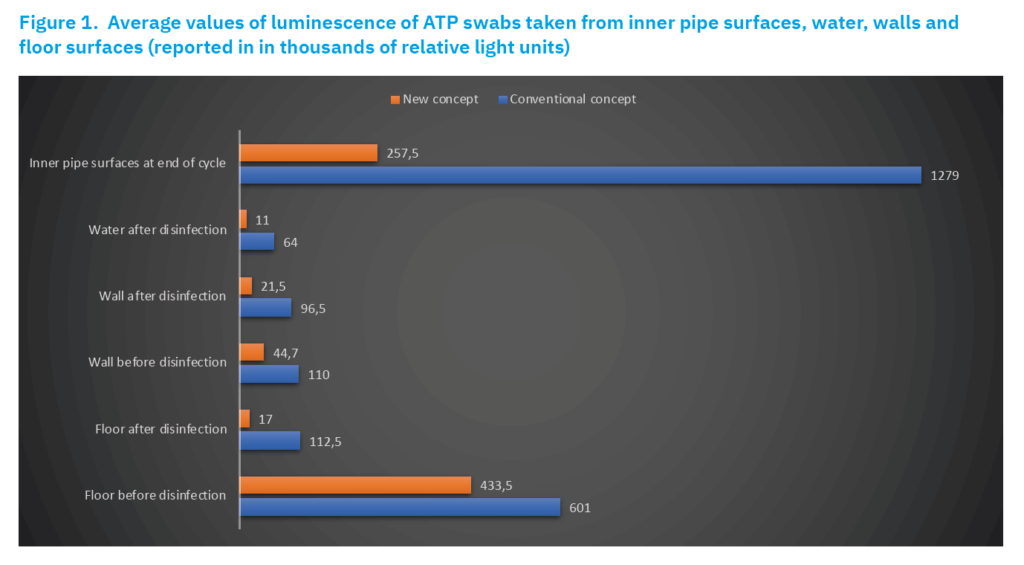
Quantitative assessments of sanitary and hygienic cleanliness in selected critical points were performed using an ATP luminometer (Charm Sciences Inc., USA) for rapid detection of organic residue levels. Surface samples were collected using the manufacturer’s PocketSwab Plus swabs. Surface sampling was conducted by swabbing an approximately 10 × 10 cm area using a multidirectional pattern (vertical, horizontal and diagonal strokes) under consistent pressure to ensure uniform contact. After sampling, swabs were activated by breaking the internal reagent ampoule, mixed, and analysed within 30 seconds in the luminometer, with results expressed in Relative Light Units (RLU). Sampling was performed in both the experimental and control poultry houses, at two time points: before cleaning and after cleaning and the application of the selected disinfectants. Sampling locations were selected based on their relevance for contamination transfer in broiler production systems and included: nipple drinkers, water, floor surface and side walls. These surfaces represent high-frequency contact points where organic residues, biofilm accumulation, and microbial load are most likely to occur. At each critical sampling point, three separate swabs were collected, providing triplicate measurements for every hygiene-relevant surface.
The process of emptying the facility and preparing for the new fattening cycle—known as the inter-session break—included thorough mechanical cleaning and washing of the internal surfaces of the facility, and both fixed and dismantled equipment. After the previous flock was moved out, all internal surfaces of the building and equipment underwent a double sanitary wash, and all pipes in the water supply system were mechanically washed with cold water under pressure to evacuate any residual contents.
The method for performing the “shock” treatment of the water supply system in the experimental group was carried out as outlined below.
The dosing units at the beginning of the system were set to the 1:80 position and connected to a container filled with a specific amount of the experimental disinfectant concentrate. The final section of the pipes was left open to allow the drainage of water that was collected in 50-litre containers. The first 20 litres of water containing the experimental disinfectant solution were allowed to flow through each line of the pipeline. After this, each line was closed and left filled with the solution for the next 2 hours, after which time the remaining disinfectant solution was drained from each tube. Prior to draining, dosing units were turned off to ensure that the system was rinsed only with water after being emptied. Once rinsed, the dosing units were reconnected, and a new amount of disinfectant solution is added to the system, repeating the entire procedure. During this repetition, 20 litres of solution per pipe was no longer dispensed; instead, the pipe was closed immediately after a continuous stream of the new disinfectant solution was observed. This procedure was repeated two more times, with the pipes left filled with the experimental disinfectant solution until the new chicks were introduced to the facility. Just before moving in the new chicks, the pipes of the water supply system were flushed with water intended for drinking. This water contains minimal residual chlorine dioxide following permanent liquid disinfection (1 L disinfectant: 35,000 L water).
To clean and disinfect the water supply system for the control chickens, a hydrogen peroxide-based disinfectant was used according to the manufacturer’s instructions. In contrast, continuous liquid disinfection was not performed for the control chickens, as their drinking water—sourced from a centralised supply (city water)—constantly met hygiene standards.
Water analysis
Microbiological, physical, physico-chemical and chemical analyses of drinking water were carried out by the Institute of Public Health of Montenegro, Centre for Hygiene and Environmental Health, Laboratory for Water Testing, using accredited and validated analytical methods. Water sampling was performed in accordance with MESTISO5667-5:2020.
Physical and physico-chemical parameters were analysed using standardised procedures, including thermometric temperature measurement (P-IV-1), assessment of colour (P-IV-5-B*), odour (P-IV-2*), taste (P-IV-3*), and turbidity determined by the turbidimetric method according to ISO 7027-1:2016. Electrical conductivity was measured following EPA 120.1, while pH was determined potentiometrically using MEST ISO 10523:2013. Oxidisability (KMnO₄ consumption) was assessed using P-IV-9a, and free residual chlorine was quantified spectrophotometrically according to MEST EN ISO 7393-2:2019. Inorganic anions—including chlorides, nitrites, nitrates and fluorides—were determined by ion chromatography according to MEST ISO 10304-1:2012, whereas ammonium ions (NH₄⁺) were analysed using the internal validated method P-V-2/B*. Metal concentrations, specifically iron (Fe) and manganese (Mn), were measured using inductively coupled plasma optical emission spectrometry (ICP-OES) in accordance with ISO 11885:2007. Evaluation of analytical results and statements of conformity were conducted using Rule No. 1 – split-risk decision rule, as defined in the internal laboratory guidance (Q3.CHE.UP.02). All measured parameters were assessed for compliance with Appendix 1 of the Ordinance on health suitability parameters for water for human consumption (Official Gazette 64/18; 101/21). The expanded measurement uncertainty was expressed using a coverage factor k = 2, corresponding to a 95% confidence level.
Daily, weekly, and total food and water consumption were monitored and processed using software integrated with feeding equipment manufactured by Big Dutchman. Production costs, costs per kilogram of live weight for broilers, and the price of broiler meat were calculated according to the methodology outlined by the production organiser.
Microbiological analysis
At slaughter, 140 broiler neck samples, representing the combined number of samples submitted for analysis during the 2023 and 2024 production cycles, were collected and examined for the presence of Salmonella spp. Laboratory testing was performed at the Specialist Veterinary Laboratory, Department of General Microbiology and Parasitology, Podgorica, Montenegro, using the accredited horizontal method MEST EN ISO 6579-1:2017/A1:2021, in which each sample underwent non-selective pre-enrichment in buffered peptone water (BPW) to enable recovery of potentially stressed or sublethally injured Salmonella cells. After incubation, aliquots were transferred into selective enrichment media, including Rappaport–Vassiliadis (RV) broth and Müller–Kauffmann tetrathionate broth (MKTTn) tosuppress competing flora and promotethe proliferation of Salmonella spp. Following selective enrichment, cultures were streaked onto selective differential agar media, specifically Xylose Lysine Deoxycholate (XLD) agar and Hektoen Enteric (HE) agar, which enabled visual identification of presumptive Salmonella colonies based on characteristic biochemical reactions. Where present, presumptive colonies were subjected to biochemical confirmation according to ISO 6579-1, including triple sugar iron (TSI) reactions, urease activity and lysine decarboxylase testing.
Microbiological analyses of broiler meat also included the quantitative assessment of Staphylococcus aureus, Escherichia coli, Enterobacteriaceae, sulfite-reducing clostridia and total aerobic mesophilic bacteria. Samples were processed within 24 hours of collection, and 25 g of each sample was aseptically homogenised in buffered peptone water using a laboratory stomacher. Serial decimal dilutions were prepared according to standard microbiological practice for quantitative enumeration. The analytical procedures were performed in accordance with internationally recognised ISO methodology. Enumeration of total aerobic mesophilic microorganisms was carried out in accordance with standard ISO colony-count methodology (ISO 4833-1:2013), using Plate Count Agar incubated at 30°C for 72 hours. Quantification of Escherichia coli was performed using standard ISO procedures for enumeration of β-glucuronidase-positive E. coli (ISO 16649-2:2001). Dilutions were plated on TBX agar and incubated at 44°C for 24 hours, after which characteristic colonies were counted. Enterobacteriaceae were enumerated according to standard ISO colony-count techniques (ISO 21528-2:2017), by plating dilutions on VRBG agar and incubating at 37°C for 24 hours. Typical colonies showing glucose fermentation were counted. Assessment of Staphylococcus aureus was performed following standard ISO methodology for coagulase-positive staphylococci (ISO 6888-1:2021), using Baird–Parker agar with egg-yolk tellurite. Plates were incubated at 37°C for 24–48 hours, and presumptive colonies were verified by coagulase testing. Detection and enumeration of sulfite-reducing clostridia were conducted according to standard ISO methods for anaerobic spore-forming bacteria (ISO 15213-1:2021). Dilutions were plated on SPS agar and incubated anaerobically at 37°C for 24–48 hours.
Antibiotic residue analysis
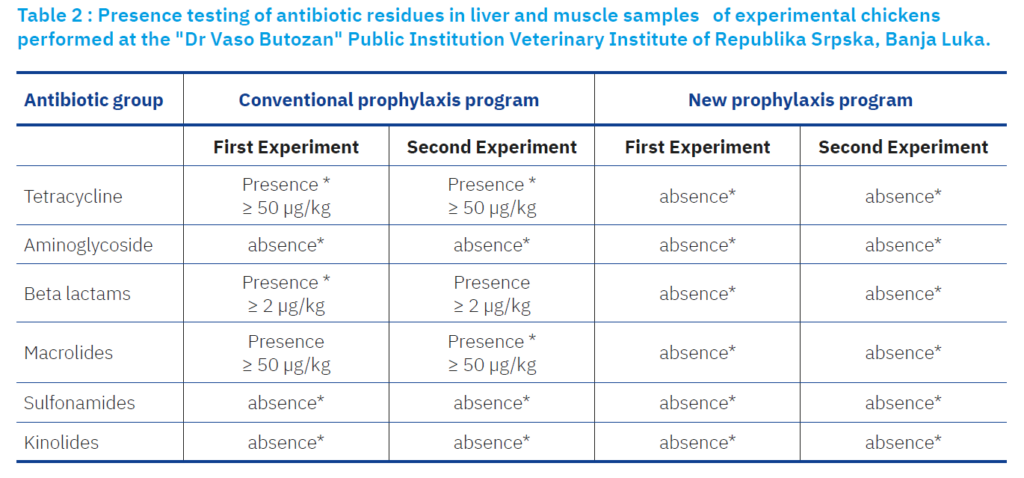
The presence of antibiotic residues in muscle tissue (n=260) and liver (n=260) samples from experimental and control chickens was determined at the slaughterhouse in line with the implementation directives of ISO 22000 and HACCP. Screening for antimicrobial residues was performed at the “Dr Vaso Butozan” Public Institution Veterinary Institute of the Republic of Srpska, Banja Luka. A validated qualitative inhibition method 22 UMI5, method 6 plates, edition 2 was applied in both cycles, following the official National Reference Laboratory protocol: Methodický pokun na stanoveni rezidui inhibičních látek ve tkáních, mléce, vejcích a potravinách (SOP4 SVU Praha, NRL SVS ČR, 1.6.2008). The method is based on the detection of antimicrobial activity through the growth inhibition of Bacillus subtilis on agar plates. Tissue samples were placed onto inoculated agar and incubated for 18–24 h at 37°C. The presence of an inhibition zone indicated a positive screening result. The applied method belongs to biological, qualitative, non-selective orientation tests, which do not identify individual antimicrobial molecules nor quantify their concentration, but detect only the presence of defined antimicrobial groups.
Statistical analysis
Statistical analyses were performed at the flock level, as all productive and economic indicators represented aggregated outcomes for each fattening cycle. For continuous variables (mortality rate, average body weight, feed conversion ratio, water consumption per kilogram of feed, and production price per kilogram of live weight), descriptive statistics were calculated and expressed as the mean and standard deviation (mean ± SD), where SD reflected variation between the two production cycles within each treatment group. Comparisons between the conventional and antibiotic-free prophylaxis programs were performed using Welch’s t-test, which does not assume equal variances and is appropriate for small sample sizes (n = 2 flocks per treatment group). This test was applied to flock-level mean values to assess whether differences between treatments were statistically significant.
A p-value <0.05 was considered statistically significant. All statistical calculations were conducted using standard formulas for flock-level data.
Results
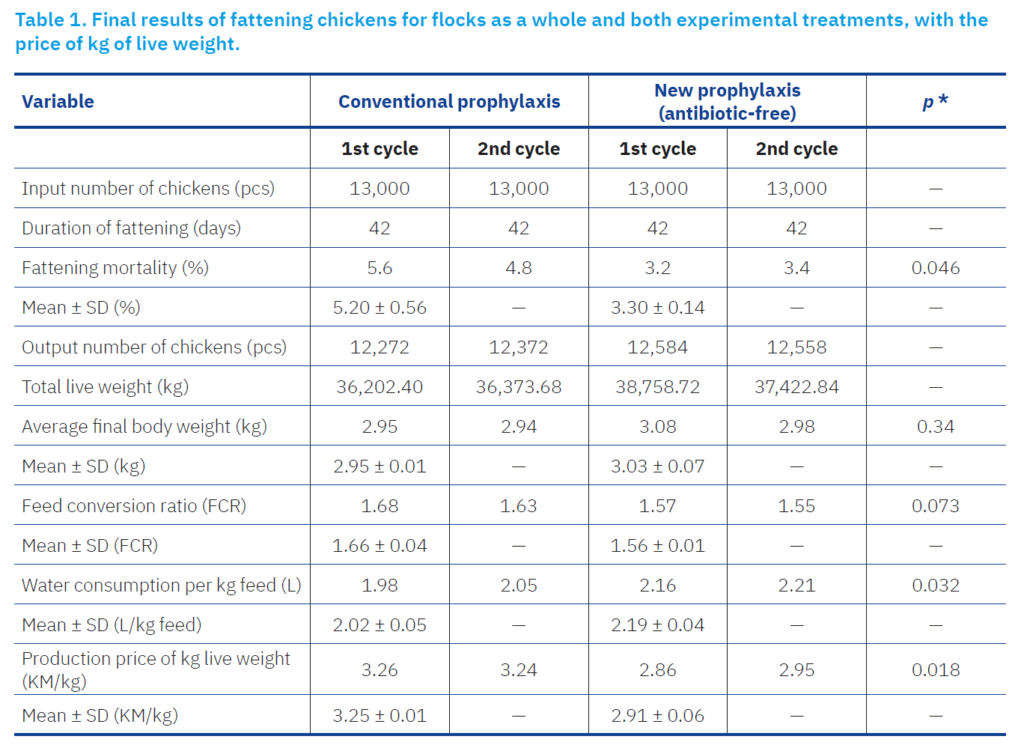
The results of our research are presented in Tables 1 and 2 and Figure 1.
Table 1: Final results of fattening chickens for flocks as a whole and both experimental treatments, with the price of kg of live weight.
Discussion
The overuse of vaccines, antibiotics, and other preventive and therapeutic agents in conventional broiler production has led to frequent antibiotic residues in edible tissues, posing risks to both animal and human health. These residues contribute to the global problem of antimicrobial resistance, highlighting the need for alternative approaches to poultry disease prevention. When interpreting the results, it is necessary to clearly distinguish two crucial facts: (1) the presence of antibiotics in the tissues of conventionally treated chickens (control group) and (2) the absence of antibiotics in chickens from the new concept of prophylaxis (experimental group). Although it is logical to expect that antibiotics will not be detected in the experimental group if they were not administered; however, the essence of the finding is not in the absence itself, but in the fact that the broilers from the experimental group (new prophylaxis concept) maintained physiological resistance, stable health status and production results without any pharmacological support. As Ališah (2020) stated, this is precisely the key difference between the experimental and conventional approaches. In conventional production, water distribution systems are often burdened with biofilm formations, which conventional disinfectants can hardly or almost never remove (Gagić et al., 2013a; Ališah et al., 2018, 2023a; Ali, 2019, Jović, 2019). The presence of biofilm in drinking water impairs the immune status of broilers, increases microbiological pressure and contributes to the appearance of non-specific infections, which is why various chemopharmaceuticals are subsequently administered via drinking water. Thus, water, rather than being an irreplaceable nutrient for life, becomes a transporter of pharmaceutical substances.
In contrast, the new prophylaxis concept in the experimental group demonstrated that the maintenance of health and natural resistance can be achieved without antibiotics, provided that optimal zoohygienic, technological, and ethological parameters are maintained. In this sense, for the success of the experimental approach, alongside quantitative-qualitative nutrition, microbiological quality of the water was achieved through continuous disinfection with stable liquid chlorine dioxide and a prior “shock” treatment of the water distribution system.
The results clearly show that the hygienic status and microbiological purity of drinking water, in addition to the previously mentioned factors, are key determinants for the health and resistance of broilers. Production performance indicators—mortality rate, vitality, final body weight, and overall cost—were similar or superior in the antibiotic-free group. The results confirm that broiler meat production without antibiotics is both feasible and economically viable. Poultry production has evolved into large-scale industrial farming in which the status of the individual bird has been replaced by that of the flock—or even by the production category itself. Under such conditions, individual treatment is virtually impossible, leading to the mass medication of entire flocks, regardless of the health status of individual chicks. This practice creates substantial problems in the long term. Whether for therapeutic or preventive purposes, mass treatments require selecting an appropriate route of administration through the most convenient medium. Consequently, drinking water has become the dominant method for administering most of these substances (Flees, 2021, 2005; Sadarman, 2021), ensuring simplicity and universality of application. In practice, this has effectively transferred responsibility to farmers, including laypersons, who frequently carry out procedures such as vaccination independently (Ališah, 2020). Departing from the prevailing “green” concept—which tends to associate the production of health-safe poultry products with exclusivity and high market prices accessible only to affluent consumers (Ališah, 2020; Mohammadi et al., 2023)—this research confirmed that even under intensive production conditions, it is possible to maintain active animal health, achieve economically viable production outcomes, support animal welfare, and provide affordable, high-quality, and health-safe poultry meat for consumers. The results of this study further validated these findings. Improvements were observed in both production outcomes (Table 1) and microbiological findings revealed the presence of antibiotic residues in the tissues of broilers from the control group, in contrast to the experimental group, where residues were not detected (Table 2). Our findings confirmed previous reports (Gagić et al., 2013b; Ališah et al., 2018; Ali, 2019; Jović, 2019) that stable liquid chlorine dioxide, as the active component of the applied disinfectant line, is an effective, safe and superior agent against harmful microorganisms. According to Liu (2023) and Ališah (2025), the disinfectant is safe, test-confirmed, and demonstrates excellent disinfectant efficiency and microbiological purity, with strong efficacy against highly resistant bacterial species such as Salmonella spp., while its use in liquid disinfection leaves no harmful residues (Ališah 2025). The findings of the reference laboratory, which detected no elevated levels of free chlorine in any water sample, further confirm the safety of the applied disinfection protocol. These results are fully consistent with our previous reports, in which no increased or technologically concerning chlorine concentrations were identified. The drinking water of the control group, i.e., without continuous disinfection, showed an increasing level of internal contamination throughout the fattening period, reaching high values by the end of the cycle. Conversely, the experimental group consistently received microbiologically cleaner water, confirming earlier assumptions that production animals provided with hygienically adequate feed and clean drinking water achieve superior health and performance. Furthermore, the complete elimination of chemical and pharmaceutical additives safeguarded both animal health and water quality, while preventing potential contamination of animal-origin products and reducing associated public health risks.
Conclusion
Based on the results of our examination of the new concept of broiler fattening prophylaxis, we have drawn the following conclusions:
- The new approach to fattening prophylaxis, implemented during two separate cycles (years) of broiler chicken fattening under field conditions, demonstrated the potential for profitable chicken meat production while resulting in a lower price for the final product.
- Antibiotic residue testing of liver and breast muscle tissue from the control chickens showed positive results for the presence of antibiotic residues. In contrast, no antibiotic residues were detected in the same tissue samples of chickens from the experimental group.
- We confirmed the effectiveness of using stable liquid chlorine dioxide to disinfect drinking water, and of administering the probiotic products via the treated water. This was compared to conventional, potentially harmful agents based on active chlorine, formaldehyde, and pharmaceuticals used in the drinking water of control groups. When all other essential conditions for the production technology were met, chickens from the experimental groups maintained their health and achieved the expected fattening results.
- Considering the increasing global concern regarding the emergence of antimicrobial resistance, we believe that this new prophylaxis concept offers a viable opportunity to reduce the use of antibiotics in both therapeutic and subtherapeutic doses.
References [… show]
Proizvodnja mesa broilera bez antibiotika: izvodljivost i ekonomska isplativost
Ajla ALIŠAH1*(dopisni autor), ajla.alisah@vfs.unsa.ba, orcid.org/0009-0000-5951-0871; Admir PIVIĆ2, a_pivic@yahoo.com; Muhamed SMAJLOVIĆ3, muhamed.smajlovic@vfs.unsa.ba, orcid.org/0000-0003-3455-1647; Nadža KAPO-DOLAN4 , nadzakapo@gmail.com, orcid.org/0000-0002-9922-8034; Ermin ŠALJIĆ4, ermin.saljic@vfs.unsa.ba, orcid.org/0000-0001-5399-4916; Pamela BEJDIĆ5, pamela.bejdic@vfs.unsa.ba, orcid.org/0000-0002-4938-6333; Abdulah GAGIĆ1, abdulah.gagic@gmail.com, orcid.org/0000-0002-5525-3844.
1Katedra za animalnu proizvodnju i biotehnologiju, Veterinarski fakultet Univerziteta u Sarajevu, 71000 Sarajevo, Bosna i Hercegovina
2Federalno ministarstvo poljoprivrede, vodoprivrede i šumarstva, 71000 Sarajevo, Bosna i Hercegovina
3Katedra za zdravstvenu ispravnost namirnica i ekologiju, Veterinarski fakultet Univerziteta u Sarajevu, 71000 Sarajevo, Bosna i Hercegovina
4Katedra za kliničke nauke veterinarske medicine, Veterinarski fakultet Univerziteta u Sarajevu, 71000 Sarajevo, Bosna i Hercegovina
5Katedra za temeljne nauke veterinarske medicine, Veterinarski fakultet Univerziteta u Sarajevu, 71000 Sarajevo, Bosna i HercegovinaPrekomjerna upotreba cjepiva, antibiotika i drugih preventivnih terapijskih sredstava u konvencionalnoj proizvodnji brojlera rezultirala je čestom pojavom ostataka antibiotika u jestivim tkivima, što predstavlja rizik za zdravlje životinja i ljudi. Ovi ostaci doprinose globalnom problemu antimikrobne rezistencije, ističući potrebu za alternativnim pristupima prevenciji bolesti peradi. Cilj istraživanja bio je procijeniti može li sveobuhvatni preventivni program koji obuhvaća biosigurnost, higijenu i režim profilakse bez antibiotika eliminirati potrebu za preventivnom antibiotskom terapijom i time omogućiti proizvodnju mesa brojlera bez ostataka antibiotika. Ovaj pristup uspoređen je s konvencionalnim proizvodnim sustavom, u kojem su manje rigorozne preventivne prakse zahtijevale profilaktičku upotrebu antibiotika širokog spektra, što je rezultiralo detektabilnim ostacima u mišićnom i jetrenom tkivu konvencionalno uzgojenih pilića. Istraživanje je provedeno na brojlerima Ross 308 uzgojenim u poljskim uvjetima, podijeljenim u kontrolnu i eksperimentalnu skupinu. Ostaci antibiotika u tkivima testirani su prema normi ISO 22000, načelima HACCP-a i Pravilniku o maksimalno dopuštenim količinama farmakološki aktivnih tvari u proizvodima životinjskog podrijetla (Službeni glasnik Bosne i Hercegovine 84/22), korištenjem metode 22 UMI5*. Kontrolna skupina uzgajana je primjenom konvencionalnih profilaktičkih protokola, primajući 16 litara različitih komercijalnih pripravaka, uključujući antibiotike širokog spektra, vitamine (AD3E kompleks), biostimulanse, mineralne dodatke i zakiseljivače putem vode za piće. Eksperimentalna skupina nije primala antibiotike; umjesto toga, tretirana je s 5 kg hidrotopivih probiotičkih pripravaka koji sadrže vitamin C, laktozu, fruktozu i pekarski kvasac, u kombinaciji s kontinuiranom dezinfekcijom vode tijekom cijelog razdoblja tova. Mikrobiološke analize pokazale su prisutnost ostataka antibiotika u mekim tkivima konvencionalno uzgojenih brojlera, dok u eksperimentalnoj skupini nisu otkriveni ostaci. Pokazatelji proizvodnih performansi – stopa smrtnosti, vitalnost, konačna tjelesna težina i ukupni trošak – bili su slični ili bolji u skupini bez antibiotika. Rezultati potvrđuju da je proizvodnja mesa brojlera bez antibiotika izvediva i ekonomski isplativa. Uz odgovarajuće strategije upravljanja i preventivne higijene moguće je proizvoditi brojlere bez antibiotika, čime se doprinosi sigurnijoj hrani za potrošače i smanjuje antimikrobna rezistencija.
Ključne riječi: antimikrobna rezistencija, brojleri, profilaksa, stabilni tekući klor dioksid
