
Prevalence of arrhythmias in dogs examined at the Clinic for Internal Diseases, Faculty of Veterinary Medicine, University of Zagreb, Croatia (2018-2020)
M.Torti, I. Šmit*, I. Jović and I. Filipčić
Marin Torti1, mtorti@vef.unizg.hr, orcid.org/0000-0001-9260-743X; Iva Šmit1* (corresponding author), ismit@vef.unizg.hr, orcid.org/0000-0001-7685-2785; Ines Jović, ijovic@vef.unizg.hr, orcid.org/0000-0002-2289-3837; Ivana Filipčić2, ifilipcic0@gmail.com.
1 Clinic for Internal Diseases, Faculty of Veterinary Medicine, University of Zagreb, 10000 Zagreb, Croatia
2PPD Thermo Fisher Scientific, 10000 Zagreb, Croatia

https://doi.org/10.46419/cvj.57.4.5
Abstract
The aim of this retrospective study was to determine the prevalence of arrhythmias in dogs admitted to the Clinic for Internal Diseases, Faculty of Veterinary Medicine, University of Zagreb, Croatia. Medical records of 307 dogs that underwent electrocardiographic examination between October 2018 and October 2020 were analysed. The study population (65 breeds, median age 9 years, median body weight 15 kg) showed arrhythmias in 36.2% of cases. The most common arrhythmia was atrial fibrillation (18% of the total population; 26.7% of dogs with heart disease), followed by premature ventricular and atrial contractions. Arrhythmias were also detected in 18.6% of dogs without primary cardiac disease, most often associated with systemic disorders such as tumours, epilepsy, hypoadrenocorticism and arterial hypertension. The results confirm that arrhythmias are frequent in dogs, occurring both in the presence of heart disease and as a consequence of non-cardiac conditions, emphasising the importance of routine electrocardiographic screening in veterinary clinical practice.
Key words: dog, arrhythmia; electrocardiography; atrial fibrillation
Introduction
Cardiac rhythm disorders, also known as arrhythmias or dysrhythmias, refer to abnormalities in impulse generation or conduction that can occur in any part of the heart (Goldner and Batinić, 1989), and are relatively common in veterinary medicine. Arrhythmias can cause significant clinical signs, including sudden cardiac death (SCD), but may also appear asymptomatic (occult) or with nonspecific clinical manifestations (Ware, 2011). Arrhythmias represent deviations from normal heart function and can generally be classified according to heart rate, rhythm regularity, and abnormalities in impulse formation or conduction (Matijatko, 2012).
Research on the prevalence of arrhythmias in the general dog population is limited in veterinary cardiology. Most published studies focus on specific arrhythmia types, such as atrial fibrillation, ventricular tachyarrhythmias, and breed-specific inherited arrhythmias (Moise et al., 1994; Meurs et al., 1999; Paslawska et al., 2004; Noszczyk-Nowak et al., 2008).
Reported prevalence rates vary widely (from 3 to 40%) depending on the study (Detweiler, 1981; Gabriel, 1992; Noszczyk-Nowak et al., 2017). The most frequently reported arrhythmias in dogs are atrial fibrillation, with a prevalence of 9.7–15.9% (Saponaro et al., 2013; Tanner et al., 2013; Noszczyk-Nowak et al., 2017; Filipčić et al., 2018), and premature atrial contractions, with a prevalence of 8–35% (Gabriel, 1992; Tanner et al., 2013; Noszczyk-Nowak et al., 2017). In healthy Dobermans, 83% exhibited at least one premature atrial contraction in 24 hours (Eberhard and Wess, 2020).
Treatment of arrhythmias can be medical, using antiarrhythmic drugs, or interventional, such as ablation therapy or pacemaker implantation. Antiarrhythmics aim to restore normal heart rhythm, improve clinical condition, and prevent SCD. Their classification is complex, as many act via multiple mechanisms. Practically, they are categorised by the Vaughan Williams classification: Class I – sodium channel blockers, Class II – beta-adrenergic blockers, Class III – potassium channel blockers, Class IV – calcium channel blockers, and Class V – drugs with other or unknown mechanisms (Bilušić and Bilušić, 2010). Commonly used veterinary antiarrhythmics include lidocaine, mexiletine, atenolol, sotalol, esmolol, amiodarone, diltiazem, and digitalis preparations (digoxin and methyldigoxin) (Perego and Ramera, 2024).
The objectives of this study were to review the clinic’s electronic medical archive, collect data on dogs that underwent electrocardiography, determine arrhythmia prevalence, describe population structure, identify common arrhythmia types, describe causes, and gather data on treatment.
Materials and methods
Electronic medical records of all dogs examined at the Clinic for Internal Diseases, Faculty of Veterinary Medicine, University of Zagreb, between 1 October 2018 and 10 October 2020 were reviewed. Only dogs that underwent electrocardiographic (ECG) examination interpreted by an experienced veterinary cardiologist were included. Collected data included breed, age, sex, body weight, clinical signs, and treatment information. Additional diagnostics included haematology, blood biochemistry, and diagnostic imaging (radiography, echocardiography, abdominal ultrasonography) to identify the underlying cause of rhythm disorders.
The ECG diagnosis was based solely on electrocardiographic findings, considering clinical data and other tests. ECGs were recorded using Aspel AsCARD Mr. Silver (Poland) and Philips ECG PageWriter TC20 (Netherlands) devices, with standard six-lead configurations (I, II, III, avR, avF, avL). For the ECG recording, dogs were minimally restrained in right lateral recumbency.
Dogs with incomplete diagnostics or missing records were excluded. Data were analysed using descriptive statistics in MedCalc (MedCalc Software Ltd, Belgium).
Results
During the study period, electrocardiographic examination (ECG) was performed on a total of 620 dogs. Of these, 313 dogs were excluded due to incomplete electronic medical records, resulting in a final analysis of 307 dogs with complete documentation and diagnostic procedures.
General characteristics of the study population
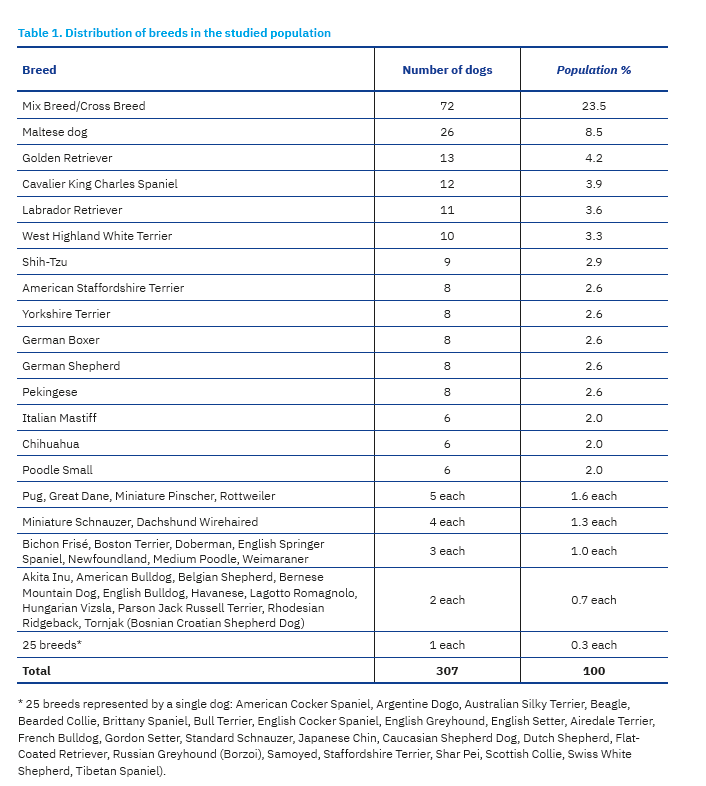
The study population consisted of 65 breeds, including mixed-breed dogs (Table 1). Most dogs were purebred (235 dogs; 77%), while mixed-breed dogs accounted for 23% (72 dogs). Mixed breeds were the most represented group (72), while among the purebreds, the most common were Maltese (26), Golden Retrievers (13), Cavalier King Charles Spaniels (12), Labrador Retrievers (11), West Highland White Terriers (10), Shih Tzus (9), and American Staffordshire Terriers, Yorkshire Terriers, Boxers, German Shepherds, and Pekingese (8 each). Other breeds were represented in smaller numbers.
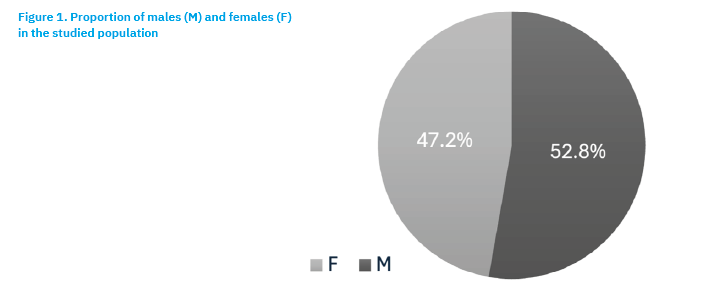
Median body weight was 15 kg (range: 2–76 kg). Regarding sex, the population included 162 males (52.8%) and 145 females (47.2%) (Figure 1). The median age at admission to the Clinic was 9 years (range: 1–17).
General Electrocardiographic Characteristics of the Studied Population
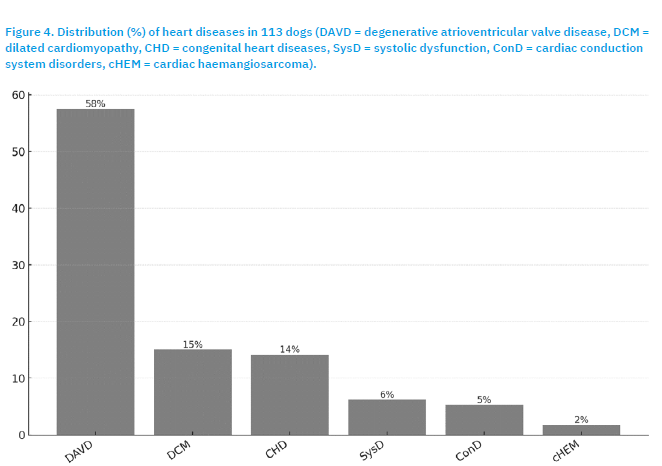
In the total population of 307 dogs, sinus rhythm or respiratory sinus arrhythmia was recorded in 196 dogs (63.8%), while cardiac rhythm disturbances were detected in 111 dogs (36.2%). The most common disturbance was atrial fibrillation, recorded in 20 dogs (18%). No cardiac disease was found in 194 dogs (63.2%), while 113 dogs (36.8%) were diagnosed with various heart diseases.
Occurrence of Arrhythmias in Dogs Without Heart Disease
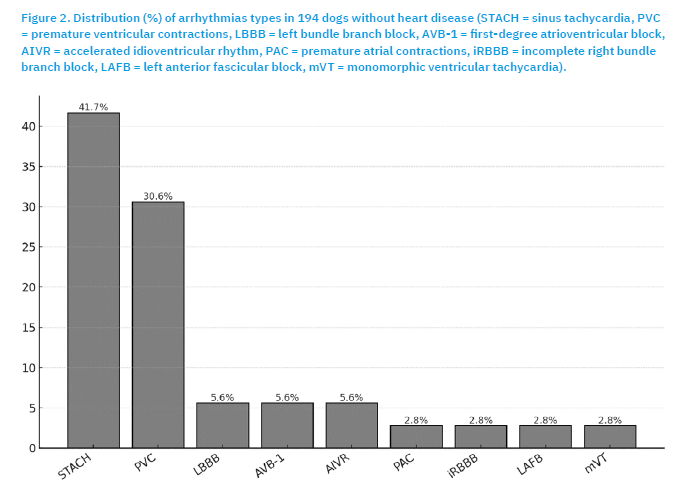
In the population of 194 dogs without heart disease, the most frequent ECG findings were sinus rhythm in 103 dogs (53.1%) and respiratory sinus arrhythmia in 55 dogs (28.3%). Arrhythmias were detected in 36 dogs (18.6%): sinus tachycardia (STACH) in 15 dogs (41.7%), premature ventricular contractions (PVC) in 11 dogs (30.6%), left bundle branch block (LBBB), first-degree AV block (AVB-1) and accelerated idioventricular rhythm (AIVR) in two dogs each (5.6%), and premature atrial contractions (PAC), incomplete right bundle branch block (iRBBB), left anterior fascicular block (LAFB), and monomorphic ventricular tachycardia (mVT) in one dog each (2.8%) (Figure 2).
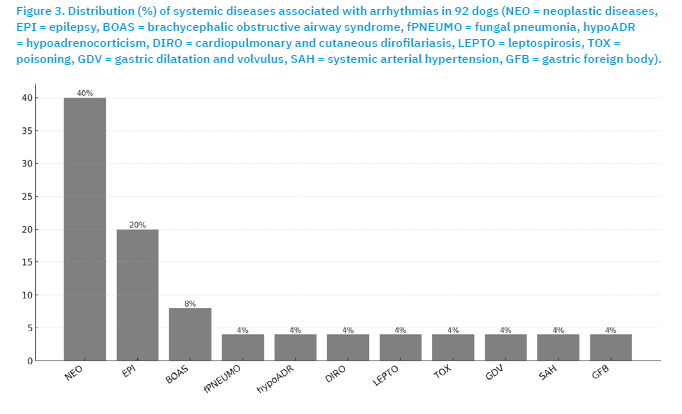
In the studied population, 92 dogs (47.4%) had a confirmed systemic disease. Of these, 67 dogs (73%) showed sinus rhythm or respiratory sinus arrhythmia, while 25 dogs (27%) exhibited arrhythmias. Arrhythmias were most common in dogs with neoplastic diseases (40%), particularly in cases of splenic tumours, where ventricular arrhythmias (PVC and AIVR) predominated. Other causes of arrhythmias included epilepsy (five dogs; 20%), brachycephalic obstructive airway syndrome (two dogs; 8%), and individual cases of fungal pneumonia, hypoadrenocorticism, dirofilariasis, leptospirosis, poisoning, gastric dilatation and volvulus, systemic hypertension, and gastric foreign body (Figure 3).
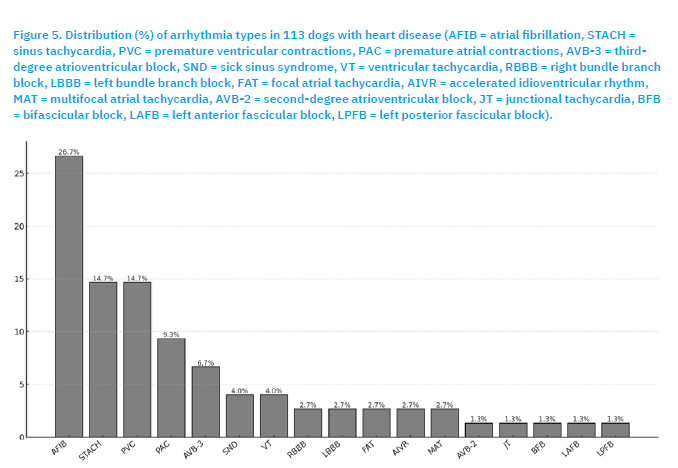
Of these 113 dogs, arrhythmias were recorded in 75 dogs (66.4%), while sinus rhythm and respiratory sinus arrhythmia were each recorded in 19 dogs (16.8%). The most common arrhythmias were atrial fibrillation (AFIB) in 20 dogs (26.7%), sinus tachycardia (STACH) in 11 dogs (14.7%), premature ventricular contractions (PVC) in 11 dogs (14.7%), premature atrial contractions (PAC) in seven dogs (9.4%), third-degree atrioventricular block (AVB-3) in five dogs (6.7%), sick sinus syndrome (SND) in three dogs (4%), and ventricular tachycardia (VT) in three dogs (4%). Less frequently observed arrhythmias (each in two dogs; 2.7%) included right bundle branch block (RBBB), left bundle branch block (LBBB), focal atrial tachycardia (FAT), accelerated idioventricular rhythm (AIVR), and multifocal atrial tachycardia (MAT). The rarest arrhythmias (each in one dog; 1.3%) were second-degree atrioventricular block (AVB-2), junctional tachycardia (JT), bifascicular block (BFB), left anterior fascicular block (LAFB), and left posterior fascicular block (LPFB) (Figure 4).
Discussion
This retrospective study on the occurrence of arrhythmias in dogs admitted to the Clinic for Internal Medicine highlights both similarities and certain differences compared with previously published research. The study population included 65 different breeds, which is notably higher than reported by Noszczyk-Nowak et al. (2017), which encompassed 10 breeds, and Pasławska et al. (2004), which described rhythm disturbances in 44 breeds of dogs. The higher diversity of the study population, i.e., diversity of breed composition, can be explained by the population selection method, as both clinically healthy and diseased dogs were included in this study, whereas the populations in Pasławska et al. (2004) and Noszczyk-Nowak et al. (2017) consisted exclusively of dogs with heart disease. The most common breeds were mixed-breed dogs (23%), Maltese (8%), Golden Retriever (4%), and German Boxer, German Shepherd, and Yorkshire Terrier (3% each), which is similar to the findings of Noszczyk-Nowak et al. (2017). It can be assumed that the breed distribution reflects not only the general popularity of certain breeds, but also the patient structure of the population presenting to specific veterinary clinics or hospitals.
The median body weight in this study was 15 kg (range 2 to 76 kg), which is lower than in the studies by Pasławska et al. (2004) and Noszczyk-Nowak et al. (2017), where large and giant breeds predominated. The sex ratio (52.8% males and 47.2% females) was similar to that reported in previous studies (Pasławska et al., 2004; Noszczyk-Nowak et al., 2017).
Electrocardiogram interpretation showed that sinus rhythm and respiratory sinus arrhythmia were the most common findings, present in 63.8% of dogs, which corresponds to the literature (Tilley, 1989; Pasławska et al., 2004). Cardiac rhythm disturbances were recorded in 36.2% of all dogs, which is comparable to a 40% incidence reported by Pasławska et al. (2004) and Noszczyk-Nowak et al. (2017). However, our results differ from those of Gabriel (1992), who described arrhythmias in only 3% of dogs, and Kersten et al. (1969) and Tilley (1989), who both reported 20%. This discrepancy may be explained by the criteria used for animal selection, i.e., in our study, ECG was primarily performed based on clinical examination findings in all dogs where arrhythmia was suspected during the clinical assessment.
The most frequently recorded arrhythmia was atrial fibrillation (AFIB), present in 16.5% of the general population and 26.7% of dogs with heart disease. AFIB was particularly common in dogs with dilated cardiomyopathy, confirming the findings of Filipčić et al. (2018), but was also observed in dogs with degenerative atrioventricular valve disease, confirming its association with the two most common acquired cardiac diseases in dogs. Premature atrial contractions (PAC) and premature ventricular contractions (PVC) were recorded in up to 30% of dogs, depending on whether they had cardiac disease, systemic disease, or were clinically healthy, which aligns with findings from earlier studies by Pasławska et al. (2004) and Noszczyk-Nowak et al. (2008). Less common arrhythmias, such as third-degree atrioventricular block, sinus block, ventricular tachycardia, or fascicular blocks, were observed sporadically, yet their presence underscores the clinical importance of ECG evaluation in the general canine population.
Arrhythmias were also recorded in dogs without primary heart disease (18.6%). In this group, arrhythmias were associated with diseases such as neoplasia, epilepsy, hypoadrenocorticism, and systemic arterial hypertension. Ventricular arrhythmias were most frequent in dogs with splenic tumours, which is consistent with earlier reports (Keyes et al., 1993; Marino et al., 1994). In these dogs, ventricular arrhythmias most likely develop secondary to myocardial ischemia caused by anaemia, as well as myocardial necrosis resulting from systemic coagulation disorders and generalised catecholamine release (Muir and Weisbrode, 1982; Johnson et al., 1989; Hammer et al., 1991).
Among other causes of arrhythmias in dogs with noncardiac diseases, PAC and PVC were observed in dogs with idiopathic epilepsy, sinus block in a dog with hypoadrenocorticism, and PVC in dogs with systemic arterial hypertension. In epileptic dogs, cardiac rhythm disturbances may occur both during the interictal period and in status epilepticus. Possible mechanisms include sympathetic (and parasympathetic) stimulation with consequent catecholamine release, as well as acidosis, hypoxemia, and electrolyte imbalances. Arrhythmia occurrence is often accompanied by reduced cardiac output and diminished systolic function (Musteata et al., 2017; Trevisan et al., 2024).
Hypoadrenocorticism, particularly Addisonian crisis, is primarily associated with bradyarrhythmias, ranging from sinus bradycardia to sino-ventricular rhythm. The occurrence of bradyarrhythmias in dogs with hypoadrenocorticism is a consequence of elevated serum potassium concentration, which directly affects electrical impulse conduction through the cardiac conduction system, as well as myocardial contractility (Klein and Peterson, 2010). Systemic arterial hypertension is one of the major causes of cardiac remodelling, primarily in the form of concentric left ventricular hypertrophy. Additionally, systemic hypertension is accompanied by haemodynamic changes, neuroendocrine activation, and atrial myocardial remodelling. Histologically, myocardial fibrosis—a key substrate for arrhythmogenesis—is observed as a consequence of structural remodelling. Furthermore, chronic systemic hypertension is associated with pathological expression of ion channels and junctional complexes, which further increases myocardial susceptibility to ectopic electrical activity (Lip et al., 2017).
This study has several limitations that should be considered when interpreting the results. As a retrospective study based on data extracted from existing electronic medical records, the accuracy of documented clinical data could not be fully controlled. Furthermore, since only dogs that underwent electrocardiographic examination as part of their diagnostic workup were included, intermittent arrhythmias may have been missed, potentially leading to an underestimation of their true prevalence in the general canine population. Finally, cases with incomplete medical records were excluded, which may have affected the representativeness of the population in favour of more thoroughly documented cases.
In conclusion, arrhythmias were present in a significant proportion of the canine population that underwent electrocardiographic examination, with arrhythmias detected in 36.7% of dogs. Sinus rhythm and respiratory sinus arrhythmia were the predominant ECG findings (recorded in 63.8% of cases), while atrial fibrillation was the most common arrhythmia, particularly among dogs diagnosed with heart disease, where it accounted for 26.7% of arrhythmias. This finding confirms the well-established association between atrial fibrillation and cardiac diseases such as idiopathic dilated cardiomyopathy and degenerative valve disease. It is important to emphasise that cardiac rhythm disturbances also occur in dogs without heart disease (18.6%), where arrhythmias were associated with systemic disorders such as neoplasia, epilepsy, infections, and metabolic abnormalities. These findings highlight that arrhythmias may develop secondarily as a consequence of noncardiac disease.
Ultimately, the obtained results support the importance of routine electrocardiographic screening in dogs with both cardiac and noncardiac diseases, as early detection of arrhythmias can contribute to more effective treatment and improved clinical outcomes.
Acknowledgments
The data used in this study are part of the data published in the master’s thesis “Poremećaji srčanog ritma u pasa” (Cardiac arrhythmias in dogs) by Ivana Filipčić, defended on 30 October 2020 at the Clinic for Internal Diseases, Faculty of Veterinary Medicine, University of Zagreb. The master thesis is available (in Croatian) at the following link: https://zir.nsk.hr/islandora/object/vef%3A532.
References [… show]
Pojavnost poremećaja srčanog ritma u pasa pregledanih u Klinici za unutarnje bolesti Veterinarskog fakulteta Sveučilišta u Zagrebu (2018.-2020.)
Marin Torti1, mtorti@vef.unizg.hr, orcid.org/0000-0001-9260-743X; Iva Šmit1* (dopisni autor), ismit@vef.unizg.hr, orcid.org/0000-0001-7685-2785; Ines Jović, ijovic@vef.unizg.hr, orcid.org/0000-0002-2289-3837; Ivana Filipčić2, ifilipcic0@gmail.com.
1Klinika za unutarnje bolesti, Veterinarski fakultet Sveučilišta u Zagrebu, 10000 Zagreb, Hrvatska
2PPD Thermo Fisher Scientific, 10000 Zagreb, Hrvatska
Cilj je ovog retrospektivnog istraživanja bio utvrditi pojavnost aritmija u populaciji pasa zaprimljenih u Kliniku za unutarnje bolesti Veterinarskog fakulteta Sveučilišta u Zagrebu. Pretraženi su elektronički kartoni 307 pasa kod kojih je u razdoblju od listopada 2018. do listopada 2020. učinjena elektrokardiografska pretraga. U istraživanoj populaciji (65 pasmina, medijan dobi 9 godina, medijan tjelesne mase 15 kg) poremećaji srčanog ritma zabilježeni su u 36,2 % pasa. Najčešća aritmija bila je fibrilacija atrija (18 % ukupne populacije; 26,7 % pasa sa srčanom bolešću), a učestalo su zabilježene i preuranjene ventrikulske i atrijske kontrakcije. Aritmije su bile prisutne i u 18,6 % pasa bez srčane bolesti, najčešće povezane sa sistemskim bolestima poput: tumora, epilepsije, hipoadrenokorticizma i arterijske hipertenzije. Rezultati potvrđuju da su poremećaji srčanog ritma česti u pasa, ne samo sa srčanim bolestima nego i kao posljedica nesrčanih stanja te naglašavaju važnost rutinske elektrokardiografske pretrage u veterinarskoj kliničkoj praksi.
Ključne riječi: pas, aritmija, elektrokardiografija, fibrilacija atrija
