
Selected Shark Species Recorded in the Adriatic Sea: A Comparative Review of their Biology and Conservation
A.Bradić, L. Devčić*
Antonio BRADIĆ1, abradic@vef.unizg.hr; Lucija DEVČIĆ2* (corresponding author), lucija.devcic@vef.unizg.hr, orcid.org/0000-0002-3991-6150.
1Faculty of Veterinary Medicine University of Zagreb, 10000 Zagreb, Croatia
2Department of Anatomy, Histology and Embryology, Faculty of Veterinary Medicine University of Zagreb, 10000 Zagreb, Croatia

https://doi.org/10.46419/cvj.58.1.9
Received: 11 July 2026
Accepted: 2 September 2026
Online publication: 30 November 2026
Abstract
Elasmobranchs are a morphologically and ecologically diverse group that occupy key trophic positions in marine ecosystems. The Adriatic Sea, a semi-enclosed northern sub-basin of the Mediterranean Sea, is an important regional area of Mediterranean elasmobranch diversity. Despite this, many shark populations are declining due to anthropogenic pressures, including overfishing, bycatch and habitat degradation. Using a comparative literature-based approach, data from scientific publications, specialised books and IUCN assessments were synthesised to evaluate the morphology, feeding ecology, reproductive strategies, distribution and conservation status of 17 selected shark species recorded in the Adriatic Sea. Notable inconsistencies were identified in reported values for maximum body size, reproductive classification, and distributional data across sources, revealing important knowledge gaps and challenges in comparing biological information among species. Among the selected species, seven are classified as Critically Endangered in the Mediterranean Sea, and three additional species are classified as Endangered. These findings indicate that a substantial proportion of the species included in this review face a high regional conservation risk. By integrating scattered and often variable data into a single comparative framework, this study provides the first consolidated synthesis of biological, ecological and conservation data on the selected Adriatic shark species and highlights the need for further research, verified species records, improved bycatch reporting and standardised monitoring of their regional populations.
Keywords: elasmobranchs; Adriatic Sea; feeding ecology; reproduction; conservation status.
Introduction
Elasmobranchs are a taxonomically and ecologically diverse group of cartilaginous fishes occupying key trophic positions in marine ecosystems (Ebert et al., 2013). Due to their generally slow growth, late maturity, and low fecundity, many shark species are particularly vulnerable to anthropogenic pressures (Fowler et al., 2005; Dulvy et al., 2008). Global assessments indicate that a substantial proportion of elasmobranch species are threatened with extinction, primarily due to overfishing, bycatch, habitat degradation, and the cumulative effects of long-term fishing pressures (Dulvy et al., 2008). The Mediterranean Sea is recognised as one of the most heavily impacted marine regions worldwide, characterised by intense and historically persistent exploitation of marine resources (Cavanagh and Gibson, 2007; Colloca et al., 2017). Elasmobranch populations within this basin have experienced marked declines in recent decades, with several species now classified in high-threat categories (Cavanagh and Gibson, 2007; Colloca et al., 2017). In this context, a comparative synthesis of the available literature is needed to integrate the data on Adriatic shark species, identify inconsistencies among published sources, and provide a consolidated overview of their biology and conservation status.
The Adriatic Sea, a semi-enclosed northern sub-basin of the Mediterranean, is a distinct ecological and fisheries system. Historically, it has hosted considerable Mediterranean shark diversity, with 30 shark species confirmed among the 54 cartilaginous fish species reported for the region (Balàka et al., 2023). However, many of these populations have suffered significant declines (Lipej et al., 2004). Reflecting their conservation concern, the selected species fall into several national legal and fisheries categories, including strictly protected species, species subject to retention, landing and sale prohibitions, and commercially harvested or fishery-recorded taxa. These categories are considered separately from International Union for Conservation of Nature (IUCN) conservation status because they refer to different legal and management frameworks. Although numerous publications address individual species or specific biological aspects, no recent integrative synthesis has evaluated Adriatic shark species within a unified analytical framework. In particular, comparative information on morphology, distribution, conservation status, and documented human-interaction risks remains scattered across sources. Such an approach is necessary to identify research biases, highlight knowledge gaps, and support evidence-based conservation and monitoring strategies.
The aim of this review was to synthesise and compare the available literature on the selected shark species in the Adriatic Sea, with emphasis on differences among species in morphology, ecology, distribution, conservation status and potential interactions with humans, while identifying inconsistencies and key knowledge gaps relevant to future research and conservation. The review uses morphological, ecological, reproductive and distributional data to assess Adriatic-specific documentation, species identification reliability and conservation relevance. Particular attention is given to species identification, since morphologically similar taxa and historically inconsistent records have contributed to uncertainty in the literature. This is especially relevant for rare or poorly documented species, for which misidentification, taxonomic changes and limited regional data may affect the interpretation of their occurrence, distribution and conservation status. Therefore, a further aim was to identify which of the selected species are well documented or poorly documented in the Adriatic Sea, which biological traits and habitat associations may increase vulnerability to fisheries pressure, and which knowledge gaps currently limit species-specific conservation assessment.
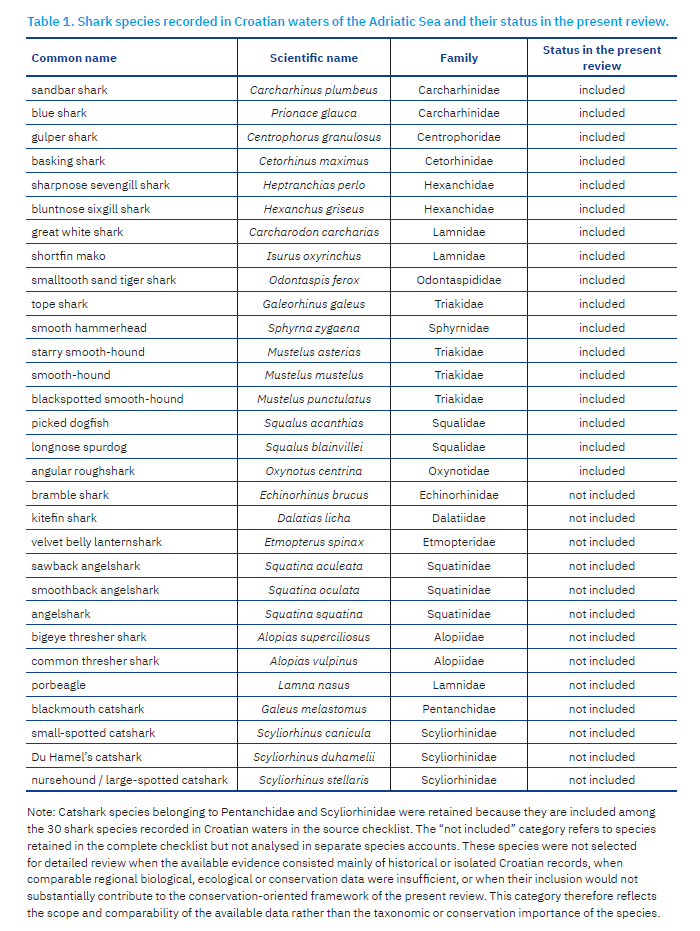
The shark species recorded in Croatian waters of the Adriatic Sea are listed in Table 1, together with their common names, scientific names, family-level taxonomic affiliation and status in the present review. The list was compiled according to Balàka et al. (2023), who reported 30 shark species from Croatian waters based on historical records, published literature and citizen science data.
Material and methods
Literature search and data compilation
This study is a comparative review of selected shark species recorded in the Adriatic Sea, based on a comprehensive literature search conducted between September 2024 and January 2026. The 17 species included in the detailed comparative review were selected from shark species recorded in the Adriatic Sea, based on the availability of relevant published information on their biology, ecology, distribution and/or conservation status, with priority given to Adriatic and Mediterranean sources. Species selection was based on a combination of criteria, including confirmed Adriatic occurrence, availability of Adriatic and/or Mediterranean biological and ecological data, conservation relevance, legal protection status, ecological role, and representation of major shark lineages, habitat types and trophic strategies. The selection was not based solely on the number of available occurrence records.
Species with only isolated occurrence records or insufficient biological and conservation data were excluded from the analysis. Species not selected for detailed review were retained in the complete checklist but were not treated in separate species accounts when they were outside the main conservation-oriented comparative framework of the review, or when the available regional biological and ecological data were limited. When regional information was limited, data from other geographic regions were used only as supplementary biological context and not as direct evidence for Adriatic populations.
Relevant publications were identified using the Web of Science and Google Scholar databases. Additional information was obtained from specialised books on shark biology and the Adriatic ichthyofauna, as well as the IUCN Red List of Threatened Species database (IUCN, 2024). Searches were performed using combinations of scientific and common species names together with keywords including “Adriatic Sea”, “Mediterranean Sea”, “morphology”, “body size”, “dentition”, “diet”, “feeding ecology”, “reproduction”, “distribution”, “habitat”, “conservation status”, “human interactions” and “attack”. The search was conducted in English and Croatian, where applicable. Search results were screened based on title, abstract and, where necessary, full text. Publications were retained if they provided species-specific information relevant to morphology, feeding ecology, reproduction, distribution, habitat, conservation status or human interactions. Duplicate publications, repeated records and sources not relevant to the aims of the review were excluded. As this was a comparative review, the literature was synthesised qualitatively, without meta-analysis.
For each species, data were extracted on morphology, feeding ecology, reproductive biology, distribution, habitat preferences, conservation status and documented interactions with humans. When multiple sources reported conflicting information, preference was given to Adriatic and Mediterranean studies, recent peer-reviewed publications, official IUCN Red List assessments and taxonomically updated sources. When discrepancies remained, they were presented and discussed as limitations of the available literature rather than resolved by excluding individual sources. Where taxonomic discrepancies occurred among sources, the nomenclature used in the manuscript was retained for consistency, while relevant uncertainties were noted in the corresponding table or species discussion.
Results and discussion
The Results and Discussion section addresses the main comparative questions defined in the Introduction. The reviewed data were interpreted in relation to species documentation in the Adriatic Sea, rarity and frequency of occurrence, biological traits associated with conservation vulnerability, differences between Adriatic and wider Mediterranean or broader-range data, and knowledge gaps that limit reliable species-specific conservation assessment. Descriptive information on morphology, body size, coloration, dentition, feeding ecology and reproduction was used to support interpretation of identification reliability, ecological diversity and conservation relevance, rather than as isolated species descriptions.
Adriatic shark species exhibit marked variation in body size, colouration and external morphology, reflecting diverse ecological strategies ranging from small demersal mesopredators to large apex predators and large planktivorous species. Because the availability of Adriatic data differs considerably among species, information from the wider Mediterranean Sea and other parts of species’ geographic ranges was included only where regional data were limited, and interpreted as supplementary biological context rather than direct evidence for Adriatic populations.
Body shape and coloration patterns
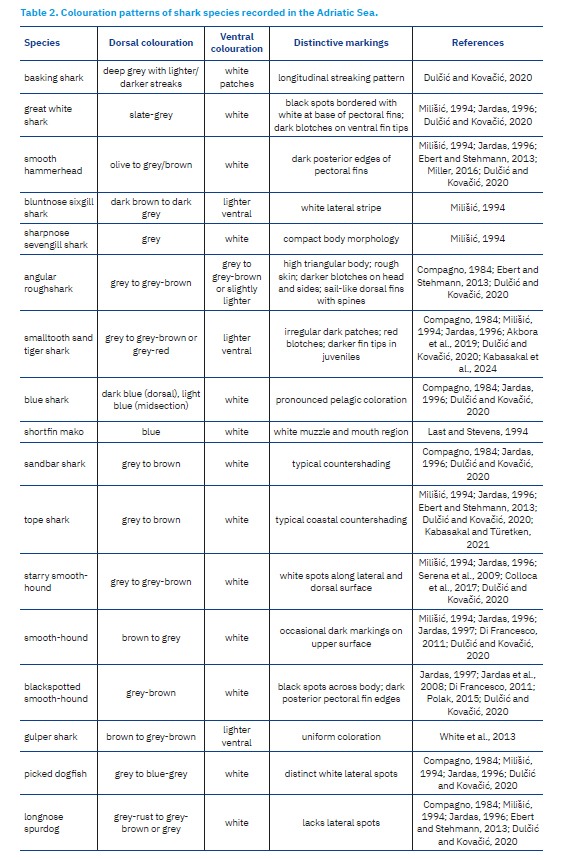
Adriatic shark species exhibit substantial diversity in body shape, although most share a generally spindle-shaped (fusiform) body plan. Despite this common body plan, variation in body proportions is evident among species. Houndsharks (Triakidae) and dogfish sharks (Squalidae) show more slender or elongated forms (Compagno, 1984; Jardas, 1997; Jardas et al., 2008; Di Francesco, 2011; Ebert and Stehmann, 2013; Polak, 2015; Dulčić and Kovačić, 2020). Similar variation is also observed in deep-water species such as the gulper shark (Centrophoridae) (White et al., 2013). These external characteristics are relevant for species identification because body shape, colouration, and distinctive markings are commonly used in diagnostic keys and field identification guides. Colouration patterns among Adriatic shark species show additional variability and are summarised in Table 2.
Body size patterns
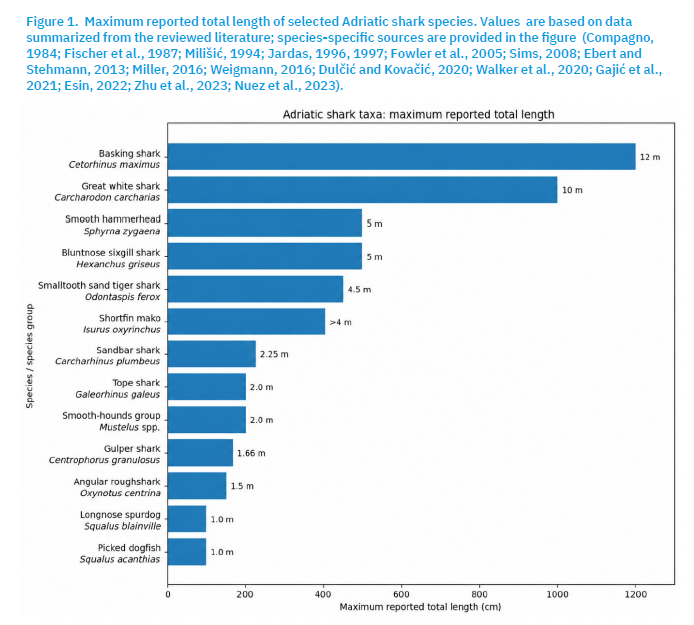
The maximum reported total length of selected shark species recorded in the Adriatic Sea is shown in Figure 1. The reviewed species exhibit a broad size gradient, ranging from large-bodied species such as the basking shark, great white shark and bluntnose sixgill shark to smaller demersal species such as angular roughshark, picked dogfish, and longnose spurdog. This pattern highlights the pronounced morphological and ecological heterogeneity of Adriatic sharks, which include planktivorous, apex predatory, pelagic and demersal species.
Differences in reported maximum body size among sources may reflect geographic variation, differing sampling histories, and inconsistencies in the available literature. Therefore, the values presented in Figure 1 should be interpreted as comparative reference points rather than standardised regional estimates. Body size is also relevant for conservation. Larger shark species are often characterised by slow growth, late maturity and increased vulnerability to fishing pressure. In contrast, smaller demersal species may be more frequently represented in regional fishery records and bycatch data.
External morphological traits
External traits support species identification, help distinguish morphologically similar taxa and illustrate the morphological diversity of sharks recorded in the Adriatic Sea. These traits are important diagnostic traits used in species identification. Most selected Adriatic sharks possess two dorsal fins and five pairs of gill slits, whereas the sharpnose sevengill shark and bluntnose sixgill shark are readily distinguished by a single dorsal fin and seven or six gill openings, respectively (Jardas, 1996, 1997; Lack, 2006; Ebert and Stehmann, 2013; Guallart et al., 2019; Dulčić and Kovačić, 2020). Additional diagnostic differences include head shape, fin morphology, and the presence or absence of dorsal-fin spines and anal fins. The angular roughshark is particularly distinctive because of its high, laterally compressed body, short blunt snout, rough skin, two sail-like dorsal fins with spines and absence of an anal fin (Compagno, 1984; Ebert and Stehmann, 2013; Dulčić and Kovačić, 2020).
Head morphology ranged from broad, dorsoventrally flattened forms, as observed in the sandbar shark, sharpnose sevengill shark, bluntnose sixgill shark, smalltooth sand tiger shark, smooth-hounds, picked dogfish and longnose spurdog, to elongated, conical snouts seen in the blue shark, gulper shark, basking shark, great white shark, shortfin mako and tope shark (Compagno, 1984; Milišić, 1994; Jardas, 1996, 1997; Di Francesco, 2011; Ebert and Stehmann, 2013; White et al., 2013; Polak, 2015; Dulčić and Kovačić, 2020; Kabasakal and Türetken, 2021). The smooth hammerhead is distinctive because the head is laterally expanded into a cephalofoil, with the eyes positioned at its distal ends (Milišić, 1994; Jardas, 1996; Ebert and Stehmann, 2013; Miller, 2016; Brennan, 2020; Dulčić and Kovačić, 2020; Ebert et al., 2021).
Fin morphology also provides useful diagnostic characters. For example, the picked dogfish, longnose spurdog, gulper shark and angular roughshark have dorsal-fin spines but lack anal fins, whereas the shortfin mako, great white shark and basking shark have large crescent-shaped caudal fins. These traits support species-level identification and help distinguish morphologically similar taxa in regional checklists and field guides (Compagno, 1984; Milišić, 1994; Jardas, 1996, 1997; Ebert and Stehmann, 2013; White et al., 2013; Dulčić and Kovačić, 2020; Díaz-Delgado, 2024).
Dentition
Tooth morphology varies markedly among selected Adriatic shark species, reflecting differences in prey type and foraging strategy. Large predatory species such as the great white shark, sandbar shark and blue shark possess broad, triangular, serrated teeth well suited to cutting through large prey, whereas the smalltooth sand tiger shark and shortfin mako have elongated, pointed teeth adapted for gripping fast-moving prey (Jardas, 1996, 1997; Fowler et al., 2005; Bergman et al., 2017; Dulčić and Kovačić, 2020). In contrast, smooth-hounds possess blunt molariform teeth associated with feeding on hard-shelled benthic prey, particularly crustaceans and molluscs (Polak, 2015). Dogfish, gulper sharks and angular roughshark have cusped or otherwise specialised teeth, whereas hexanchiform sharks show distinctive multicuspid or comb-like tooth arrangements that support species recognition (Moyer and Bemis, 2016, 2017; De Sousa Rangel et al., 2019). Although detailed descriptions vary, these dental traits are mainly relevant as diagnostic characters and as indicators of trophic specialisation rather than as direct evidence of Adriatic feeding patterns (Compagno, 1984; Milišić, 1994; Jardas, 1996; Ebert and Stehmann, 2013; Akbora et al., 2019; Dulčić and Kovačić, 2020; Kabasakal et al., 2024).
Diet and feeding ecology
Adriatic shark species occupy a broad spectrum of trophic positions, ranging from specialised planktivory to active predation on fish, cephalopods and benthic invertebrates. Teleost fish represent the most widely reported prey category across several species, while cephalopods are particularly important for pelagic predators, and crustaceans dominate the diet of benthic triakid sharks. The basking shark is distinct from all other reviewed species because it relies on ram filter feeding to consume zooplankton (Sims, 2008).
Regional dietary data are uneven among species. For some taxa, such as the smooth-hound and picked dogfish, Adriatic data are available. Research on smooth-hound specimens collected in the eastern Adriatic showed that the diet consists mainly of decapod crustaceans and teleost fish (Jardas et al., 2007), a pattern further supported by histochemical findings in specimens from the central Adriatic (Devčić et al., 2025). Similarly, dietary analysis of the picked dogfish in the Adriatic Sea revealed that teleost fish are the dominant prey, followed by crustaceans, decapods, polychaetes and cephalopods (Díaz-Delgado, 2024).
For several other species, information is available mainly from Mediterranean or extra-Mediterranean studies and should therefore be interpreted as supplementary biological context rather than direct evidence for Adriatic populations. Mediterranean data indicate that the great white shark feeds on marine mammals, fish and other prey groups, although recent geochemical evidence suggests spatial variation in its feeding ecology (Boldrocchi et al., 2017; Assemat et al., 2024). Eastern Mediterranean data for the gulper shark indicate a diet dominated by fish and cephalopods (Megalofonou and Chatzispyrou, 2006), while data from the Gulf of Valencia confirm opportunistic feeding in the bluntnose sixgill shark, including the consumption of marine mammals (Ruiz-García et al., 2023). The angular roughshark is described as a suction feeder that mainly consumes worm-like prey, including sipunculids and polychaetes, as well as other marine invertebrates and small bony fishes (Gajić et al., 2021). Other available studies suggest that the sandbar shark, tope shark, smalltooth sand tiger shark, starry smooth-hound, blackspotted smooth-hound, sharpnose sevengill shark and longnose spurdog exploit different combinations of fish, cephalopods, crustaceans and other benthic prey depending on species, size class and habitat (Compagno, 1984; Milišić, 1994; Jardas, 1996; Saïdi et al., 2007, 2009; Bonnici et al., 2018; Dulčić and Kovačić, 2020; Gül and Demirel, 2021; Ruiz-García et al., 2023; Assemat et al., 2024; Carbonara et al., 2025).
Overall, feeding data for Adriatic shark populations remain limited and unevenly distributed among species. Commercially harvested or more frequently encountered demersal species are better represented in regional studies. In contrast, data for rare, highly migratory or threatened species often come mainly from Mediterranean or extra-Mediterranean sources. This limits interpretation of their ecological role in the Adriatic food web and highlights the need for standardised regional dietary studies, including stomach content analysis, stable isotope analysis and complementary histochemical or molecular approaches.
Reproductive strategies
Reproductive strategies in sharks are characterised by internal fertilisation and include several developmental modes. Live-bearing reproduction predominates among the selected Adriatic shark species reviewed here, although terminology varies among sources. To avoid ambiguity, this review distinguishes between aplacental viviparity, in which embryos develop within the uterus and rely primarily on yolk reserves without forming a yolk-sac placenta, and placental viviparity, in which the yolk sac contributes to placental formation and enables maternal-embryonic nutrient exchange. The term ovoviviparity is retained only where it appears in older sources and is treated here as broadly corresponding to yolk-dependent aplacental viviparity. Additional forms of maternal provisioning, such as oophagy and adelphophagy, are discussed separately where relevant.
Aplacental viviparity has been reported for several selected species, including the gulper shark, sharpnose sevengill shark, bluntnose sixgill shark, shortfin mako, tope shark, angular roughshark and starry smooth-hound, although terminology varies among sources (Compagno, 1984; Milišić, 1994; Jardas, 1996; Ebert and Stehmann, 2013; Colloca et al., 2017; Brevé et al., 2020; Dulčić and Kovačić, 2020; Osgood et al., 2020; Walker et al., 2020; Gajić et al., 2021). In this reproductive mode, embryos develop within the uterus without a yolk-sac placenta and rely primarily on yolk reserves, although additional intrauterine nutrient sources may occur in some taxa.
In some lamniform sharks, aplacental viviparity is associated with additional forms of intrauterine nutrition. The great white shark and shortfin mako are generally described as oophagous (Compagno, 1984; Milišić, 1994; Jardas, 1996, 1997; Dulčić and Kovačić, 2020). Similar intrauterine feeding mechanisms have also been suggested for the smalltooth sand tiger shark, although available information remains limited (Jardas, 1996; Dulčić and Kovačić, 2020). In this context, oophagy refers to embryonic consumption of unfertilised eggs, whereas adelphophagy refers to embryonic consumption of sibling embryos.
Placental viviparity, characterised by the formation of a yolk-sac placenta, has been reported in several selected species, including smooth-hound, blackspotted smooth-hound and smooth hammerhead (Milišić, 1994; Jardas, 1996, 1997; Capapé et al., 2006; Ebert and Stehmann, 2013; Polak, 2015; Colloca et al., 2017; Dulčić and Kovačić, 2020; Miller, 2016). In these species, the yolk sac contributes to placental development and enables maternal-embryonic nutrient transfer during gestation.
Several species show pronounced disagreement between sources. The picked dogfish is classified as aplacental viviparous or viviparous with a yolk-sac placenta (Compagno, 1984; Tsang and Callard, 1987; Jardas, 1996; Koob and Callard, 1999; Stehlik, 2007; Ebert and Stehmann, 2013; Dulčić and Kovačić, 2020; Díaz-Delgado, 2024). Similarly, the longnose spurdog is described either as aplacental viviparous or as viviparous with a yolk-sac placenta in the reviewed literature (Compagno, 1984; Cannizzaro et al., 1995; Jardas, 1996; Kousteni and Megalofonou, 2011; Ebert and Stehmann, 2013; Kousteni et al., 2016, 2017; Marongiu et al., 2020; Dulčić and Kovačić, 2020). The blue shark is generally described as viviparous, although this term is often used without clear specification of placental development (Zhu et al., 2023). The basking shark is similarly considered viviparous, though its reproductive biology remains poorly understood (Francis and Duffy, 2002). Such inconsistencies highlight the need for further research and more standardised terminology in the study of shark reproduction.
Distribution and habitat
Adriatic shark species occupy habitats from shallow coastal and channel zones to deep-sea environments, demonstrating marked ecological heterogeneity. Species distribution within the Adriatic varies considerably, from widely distributed and common species to rare or occasional visitors.
The blue shark is considered the most common pelagic shark species in the Adriatic (Jardas, 1996; Dulčić and Kovačić, 2020), whereas species such as the tope shark and smooth-hounds are more frequently associated with coastal and channel habitats (Milišić, 1994; Jardas, 1996; Dulčić and Kovačić, 2020). The picked dogfish is widely distributed throughout the Adriatic, with the highest abundance recorded in central and northern areas, especially in channel zones (Milišić, 1994; Jardas, 1996; Dulčić and Kovačić, 2020; Balàka et al., 2023), while the blackspotted smooth-hound is also considered a common species, occurring even in northern regions such as the Gulf of Trieste (Milišić, 1994; Jardas, 1996; Colloca et al., 2017; Dulčić and Kovačić, 2020). The smooth-hound is more frequently encountered in channel and coastal zones than in open waters (Jardas, 1996, 1997; Lauria et al., 2015; Dulčić and Kovačić, 2020; Bastiančić, 2023), while the starry smooth-hound is distributed across channel areas, most commonly in central and southern regions. Milišić (1994) reported notable abundance around the islands of northern Dalmatia. However, data from the eastern Adriatic indicate that within the genus Mustelus, the starry smooth-hound occurs less frequently than the other two congeners (Ćetković et al., 2021). The longnose spurdog shows a more restricted distribution, primarily occurring in deeper parts of the central and southern Adriatic (Milišić, 1994; Jardas, 1996; Dulčić and Kovačić, 2020).
Other species are considerably less frequent and are only occasionally recorded in the Adriatic Sea despite their wide global distributions. The shortfin mako is regarded as an uncommon species, with only sporadic records in recent decades (Milišić, 1994; Jardas, 1996; Udovičić et al., 2018; Dulčić and Kovačić, 2020). Eight records were documented in the Adriatic Sea between 2014 and 2017, representing the first confirmed occurrences of the species in the region since 1972 (Udovičić et al., 2018). This decline is primarily attributed to long-term exploitation and inadequate management practices. The authors emphasised the importance of systematic reporting and raising awareness among fishers, as well as the significant role of public platforms in monitoring the presence of rare and protected marine species. An additional concern in the central Mediterranean and the Strait of Sicily is the continued capture of juvenile shortfin mako specimens (Shea et al., 2024). These findings suggest that juvenile shortfin mako sharks may be particularly vulnerable to incidental capture in parts of the Mediterranean (Camhi et al., 2009; Shea et al., 2024). Similarly, the smalltooth sand tiger shark is rarely encountered, with records limited and often associated with the western Adriatic or deeper offshore habitats (Milišić, 1994; Jardas, 1996; Dulčić and Kovačić, 2020; Fergusson et al., 2008; Kabasakal et al., 2024). Hammerhead sharks are also considered rare in the region, with only occasional or historical records reported (Milišić, 1994; Dulčić and Kovačić, 2020).
Depth distribution further contributes to the observed variability in habitat use. Species such as the gulper shark and bluntnose sixgill shark are primarily associated with deep-sea environments, occurring along continental slopes and at bathyal depths, typically ranging from approximately 180 to over 1000 m (Milišić, 1994; Last and Stevens, 1994; Ayas et al., 2019). The angular roughshark is another demersal to bathydemersal species of conservation concern in the Adriatic Sea. Earlier and recent eastern Adriatic records confirm its occurrence in the region, while recent data indicate records along the Croatian coast, with several findings concentrated in the central Adriatic and most specimens recorded as trawl bycatch at depths between 40 and 125 m (Dragičević et al., 2009; Gajić et al., 2021; Balàka et al., 2023). Such species are rarely encountered and are often documented through fisheries bycatch rather than systematic monitoring. In contrast, species inhabiting continental shelves and coastal zones are more frequently observed and better documented. The basking shark is a distinct case, combining a broad global distribution with irregular regional occurrence. In the Adriatic Sea, records are primarily concentrated in the Kvarner region (Dulčić and Kovačić, 2020). Several studies have reported increased sightings during specific periods, particularly between 2000 and 2002 and again between 2011 and 2014, suggesting potential links to environmental factors such as zooplankton availability and climate variability (Zuffa et al., 2001; Soldo et al., 2008; Carlucci et al., 2014).
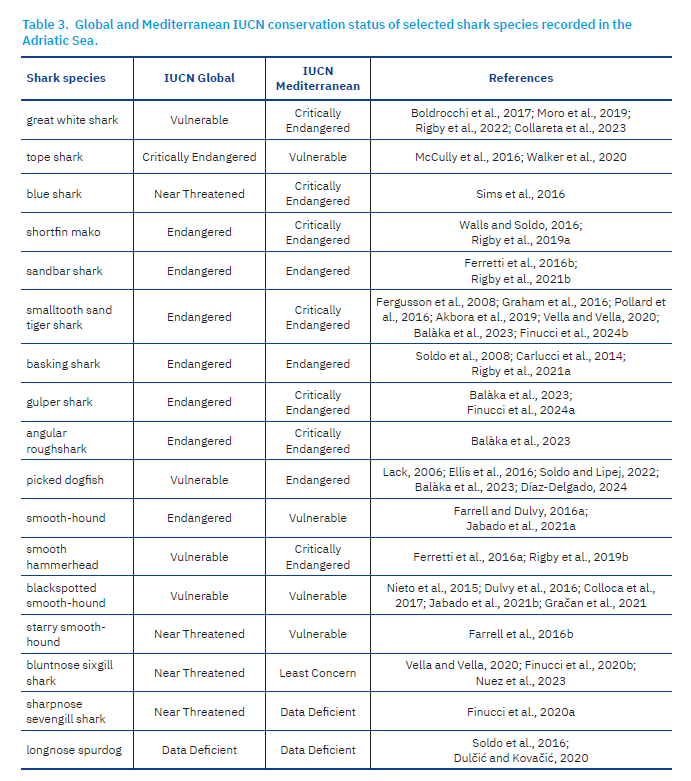
Despite their wide geographic distributions, many shark species in the Adriatic Sea are currently experiencing population declines. Pelagic species such as the blue shark, shortfin mako, and great white shark are classified as Critically Endangered in the Mediterranean due to long-term exploitation, bycatch, and habitat degradation (Sims et al., 2016; Walls and Soldo, 2016; Rigby et al., 2019a, 2022; Shea et al., 2024). Similar concerns apply to several demersal and deep-water species recorded in the Adriatic Sea. The gulper shark and angular roughshark are classified as Endangered globally and Critically Endangered in the Mediterranean, while the blackspotted smooth-hound is classified as Vulnerable in both assessments (Dulvy et al., 2016; Colloca et al., 2017; Gajić et al., 2021; Balàka et al., 2023; Finucci et al., 2024a). These patterns highlight the vulnerability of shark populations in the Adriatic Sea and emphasise the need for improved monitoring and conservation measures.
Overall, comparison with wider Mediterranean and broader-range data indicates that the Adriatic Sea should not be interpreted uniformly for the selected shark species. For some species, such as smooth-hounds and picked dogfish, Adriatic records provide relatively stronger regional information on occurrence, habitat use or feeding ecology. In contrast, rare or highly threatened species, including the shortfin mako, smalltooth sand tiger shark, smooth hammerhead and angular roughshark, are represented mainly by scattered records and/or bycatch observations, while some records are complicated by historical inconsistency or identification uncertainty. In these cases, Adriatic-specific interpretation is limited by uneven sampling, uncertain species identification and the scarcity of standardised monitoring data. Nevertheless, available records suggest that particular Adriatic areas, such as the Kvarner region, channel zones, the central Adriatic and deeper offshore habitats, may be important for documenting regional occurrence patterns and conservation priorities. The Adriatic Sea therefore represents a conservation-relevant regional context, although the degree to which it can be considered biologically or ecologically distinct differs among species and remains limited by current knowledge gaps.
Conservation status
The conservation status of the selected shark species examined in this article is a serious concern. Most of the selected species are classified as threatened at the Mediterranean regional level, and many are undergoing continued population declines driven by overfishing, bycatch, habitat degradation, and climate change (Table 3). Conservation status was reported using only official IUCN Red List categories, with global and Mediterranean regional assessments presented separately. Reliable species-specific estimates of abundance and population size within the Adriatic Sea are unavailable for most selected species, and frequency of occurrence, temporal trends in records, bycatch reports and regional distribution were therefore used as the main conservation-relevant indicators where available.
National legal and fisheries status was considered separately from IUCN conservation categories. Several selected species are listed as strictly protected under Croatian national legislation. Official Croatian fisheries guidance further identifies protected shark and ray species for which retention on board, transhipment, landing, transport, storage, sale, display, and offering for sale are prohibited (Ministry of Environmental and Nature Protection, 2013, 2016; Ministry of Agriculture, 2023). In contrast, Mustelus spp. and picked dogfish are listed among shark taxa for which commercial catch is permitted under Croatian fisheries guidance, provided that specimens are placed on the first-sale market whole and unskinned to allow for species identification (Ministry of Agriculture, 2023). Longnose spurdog was treated cautiously as a fishery-recorded species in the reviewed literature, but not as a separately listed permitted commercial shark category in the consulted Croatian fisheries guidance. These national legal and fisheries categories were not combined with IUCN Red List categories, which are reported separately in Table 3. Despite legal protection and fisheries restrictions, incidental capture remains a major threat, highlighting the need for improved bycatch reporting, species-specific monitoring and coordinated regional management. The angular roughshark is a relevant example of this problem, as recent eastern Adriatic records were mostly associated with trawl catches, while the species is also listed as strictly protected in Croatia (Gajić et al., 2021; Balàka et al., 2023).
Interaction with humans
Human-shark interactions in the Adriatic Sea are rare but should be interpreted cautiously because historical records are uneven and species identification is not always reliable. The absence of documented attacks for a given species should therefore not be interpreted as evidence that the species poses no possible risk. Instead, the likelihood of interaction depends on species ecology, body size, habitat use, abundance, and the degree of spatial overlap with swimmers, divers, and fishers.
Among the selected species, the great white shark is the main species historically associated with severe human-shark interactions in the Adriatic Sea. Six attacks have been reported from the eastern Adriatic Sea (Dulčić and Kovačić, 2020).
For most other selected species, interactions with humans are more relevant in the context of fisheries than recreational exposure. Demersal and deep-water species may be encountered during capture and handling, and squaliform sharks such as the picked dogfish, longnose spurdog and angular roughshark may cause injuries through dorsal-fin spines. For the angular roughshark, documented human interactions in the eastern Adriatic are primarily fishery-related, as recent records were mostly obtained from trawl catches (Gajić et al., 2021; Balàka et al., 2023). Overall, this section does not aim to classify species as dangerous or harmless, but to distinguish documented regional records from a broader biological potential and to avoid interpreting the absence of attacks as proof of absence of risk.
Conclusion
This review provides a conservation-oriented comparative synthesis of 17 selected shark species recorded in the Adriatic Sea. The selected species should not be interpreted as a uniform group, because they differ markedly in level of documentation, habitat use, frequency of occurrence, fisheries interactions and conservation concern. Regional information is stronger for more frequently recorded coastal and channel-associated species, such as smooth-hounds and picked dogfish. In contrast, rare or highly threatened species, including the shortfin mako, smalltooth sand tiger shark, smooth hammerhead and angular roughshark, are mainly documented through scattered records or bycatch observations. Some records are further complicated by historical inconsistency or identification uncertainty.
Identification uncertainty and uneven reporting affect the interpretation of Adriatic shark diversity. Morphologically similar taxa, historical records, taxonomic changes and inconsistent reporting may influence conclusions about species occurrence and distribution. This is particularly relevant for rare or poorly documented species, for which misidentification can affect regional conservation assessment. Reliable species identification, standardised reporting and critical evaluation of historical records are therefore essential for improving future Adriatic shark monitoring and conservation assessment.
From a conservation perspective, the reviewed species include a high proportion of taxa threatened at the Mediterranean regional level. Reliable species-specific estimates of abundance and population size within the Adriatic Sea are unavailable for most selected species. Conservation interpretation therefore depends largely on occurrence records, temporal trends, bycatch reports, habitat associations and legal protection status. This limitation represents an important knowledge gap, particularly for rare, demersal and deep-water species that are often recorded through fisheries interactions rather than systematic monitoring.
The findings presented here support future monitoring and conservation by identifying the need for verified species records, improved bycatch reporting, species-specific data collection and standardised monitoring across the Adriatic Sea. Attention should be directed towards rare and threatened species, bycatch-sensitive demersal taxa and areas repeatedly associated with relevant records, including the Kvarner region, channel zones, the central Adriatic, and deeper offshore habitats. Such data would improve regional conservation assessment, help refine management priorities and support the long-term protection of shark species in the Adriatic Sea.
Statements and declarations
Funding information
The authors declare that no funds, grants, or other support were received during the preparation of this manuscript.
Conflict of interest
The authors declare that they have no competing interests.
Author contribution
Lucija Devčić and Antonio Bradić contributed to the conception and design of the study. Both authors were equally involved in the selection of methodology. Antonio Bradić performed the literature search and data analysis. The first draft of the manuscript was written by Antonio Bradić and critically revised by Lucija Devčić. Both authors read and approved the final manuscript.
Data Availability
The data supporting the results of this study are available from the corresponding author upon reasonable request.
References [… show]
Odabrane vrste morskih pasa zabilježene u Jadranskome moru: usporedni pregled biologije i očuvanja
Antonio BRADIĆ1, abradic@vef.unizg.hr; Lucija DEVČIĆ2* (dopisni autor), lucija.devcic@vef.unizg.hr, orcid.org/0000-0002-3991-6150.Ž
1Veterinarski fakultet Sveučilišta u Zagrebu, 10000 Zagreb, Hrvatska
2Zavod za anatomiju, histologiju i embriologiju, Veterinarski fakultet Sveučilišta u Zagrebu, 10000 Zagreb, HrvatskaPrečnouste su morfološki i ekološki raznolika skupina hrskavičnjača koja zauzima ključne trofičke položaje u morskim ekosustavima. Jadransko more, kao poluzatvoreni sjeverni dio Sredozemnoga mora, predstavlja važno regionalno područje raznolikosti sredozemnih prečnousta. Unatoč toj raznolikosti, mnoge populacije morskih pasa opadaju zbog antropogenih pritisaka, uključujući prekomjerni ribolov, usputni ulov i degradaciju staništa. Primjenom usporednog pristupa temeljenog na pregledu literature sintetizirani su podatci iz znanstvenih radova, specijaliziranih knjiga i procjena IUCN-a radi procjene morfologije, prehrambene ekologije, reprodukcijskih strategija, rasprostranjenosti i statusa očuvanosti 17 odabranih vrsta morskih pasa zabilježenih u Jadranskome moru. Utvrđene su značajne nedosljednosti među izvorima u vrijednostima najveće dužine tijela, reprodukcijskoj klasifikaciji i podatcima o rasprostranjenosti, što upućuje na važne praznine u znanju i otežava usporedbu bioloških podataka među vrstama. Među odabranim vrstama sedam ih je u Sredozemnome moru svrstano u kategoriju kritično ugroženih, dok su još tri vrste svrstane u kategoriju ugroženih. Ti nalazi pokazuju da se znatan udio vrsta obuhvaćenih ovim pregledom suočava s visokim rizikom ugroženosti na regionalnoj razini. Objedinjavanjem raspršenih i često neujednačenih podataka u jedinstven usporedni okvir ovaj rad predstavlja prvu objedinjenu sintezu bioloških i ekoloških podataka te podataka o očuvanosti morskih pasa Jadranskoga mora i naglašava potrebu za daljnjim istraživanjima, provjerenim zapisima vrsta, poboljšanim izvješćivanjem o usputnom ulovu i standardiziranim praćenjem njihovih regionalnih populacija.
Ključne riječi: prečnouste; Jadransko more; prehrambena ekologija; reprodukcija; status očuvanosti.
