
Selective Dry Cow Therapy: economic, environmental, and regulatory perspectives
B.Ljubojević*, K. Zmaić, N. Maćešić, Z. Steiner, M. Samardžija, V. Gantner
Boris LJUBOJEVIĆ*, M.Sc. Forestry (Corresponding author, e-mail: boris.ljubojevic@hrsume.hr), Croatian Forests Ltd., Zagreb, Croatia;
Krunoslav ZMAIĆ, PhD, Full Professor, Faculty of Agrobiotechnical Sciences Osijek, Josip Juraj Strossmayer University of Osijek, Osijek,
Croatia; Nino MAĆEŠIĆ, PhD, Full Professor, Faculty of Veterinary Medicine, University of Zagreb, Zagreb, Croatia; Zvonimir STEINER,
PhD, Full Professor, Faculty of Agrobiotechnical Sciences Osijek, Josip Juraj Strossmayer University of Osijek, Osijek, Croatia; Marko
SAMARDŽIJA, PhD, Full Professor Faculty of Veterinary Medicine, University of Zagreb, Zagreb, Croatia; Vesna GANTNER, PhD, Full
Professor, Faculty of Agrobiotechnical Sciences Osijek, Josip Juraj Strossmayer University of Osijek, Osijek, Croatia
 https://doi.org/10.46419/cvj.57.1.1
▲
Abstract
Mastitis remains one of the most economically important diseases in dairy farming. The aim of this review was to discuss the main ideas, practical benefits, economic impacts, rules and regulations, and environmental aspects of selective dry cow therapy (SDCT) as a means for managing udder health and antibiotic use. Interest is increasing in antimicrobial resistance, environmental pollution, and stronger regulations on antibiotic use in food production, so SDCT has become even more relevant in modern dairy herd management. This method involves selectively treating only cows or quarters at a high risk of intramammary infections at dry-off, mainly based on somatic cell count, clinical history of mastitis, or bacterial culture results. Evidence shows that when used correctly, SDCT can significantly reduce antibiotic use without compromising udder health, particularly if used with internal teat sealants. Economic analyses have indicated that SDCT can cut antibiotic-related costs by up to 50% while keeping mastitis under control, if protocols are followed properly. Global policies, such as the European Green Deal and One Health initiatives, encourage targeted antibiotic use to improve both animal health and environmental conservation in dairy farming. However, challenges still remain in implementation, including the risk of under-treatment, the need for accurate diagnostic tools, and ensuring farmer compliance with selection protocols. Advanced developments in precision dairy farming, such as automated testing and AI-assisted decision-making, have improved the feasibility and success of SDCT in different herd management systems.
Key words: Selective dry cow therapy; antimicrobial resistance; dairy herd management; antibiotic stewardship; precision dairy farming
Introduction
Dry cow therapy (DCT) has long been central to mastitis prevention and the assurance of milk quality in dairy production. El Ashmawy et al. (2022) stated that the primary goal of DCT is to eliminate existing intramammary infections (IMI) during the dry-off period while preventing new infections, thereby protecting udder health and optimising milk production in the subsequent lactation.
Blanket dry cow therapy (BDCT) involves the application of intramammary antibiotics to all dry-off cows. This is done regardless of infection status, and it has been widely used (Berry and Hillerton, 2002; Bradley et al., 2010; Benić et al., 2018). This practice has notably contributed to reducing somatic cell counts (SCC) in milk and the incidence of clinical mastitis, improving the herd health status and increased milk yield (McCubbin et al., 2022). On the other hand, Niemi et al. (2021b) highlighted the growing concerns about the development of antimicrobial resistance (AMR), the presence of antibiotic residues in milk, and potential concerns about environmental contamination, resulting in changes to approaches and a shift towards a more sustainable and rational use of antimicrobials in modern dairy farming.
Selective dry cow therapy (SDCT) has gained recognition as a practical and effective alternative that helps cut antibiotic use while still effectively controlling mastitis (Rowe et al., 2023). Unlike BDCT, which involves the treatment of all cows regardless of their infection status, SDCT is based on a selective approach that allows the use of intramammary antimicrobials only in cows identified as high risk for developing IMI, while for low-risk cows internal teat sealants (ITS) are used, which serve as a physical barrier to bacterial entry (Scherpenzeel et al., 2018). Berry and Hillerton (2002) showed that SDCT reduced new IMI rates from 21.1% to 12.8%, while Navaei et al. (2025) found a lower incidence of new infections in SDCT-treated cows of 11.9% compared to BDCT-treated cows of 14.7%, demonstrating the clinical relevance of risk-based treatment approaches. The advancement of precision dairy technologies, such as real-time SCC monitoring and on-farm microbiological milk testing has made SDCT more convenient. Deng et al. (2020) showed that online California Mastitis Test (O-CMT) sensors provide reliable, on-farm measurements of SCC, making it easier to identify cows at a higher risk for IMI (Scherpenzeel et al., 2016). As a result, this allows good decisions on therapy at dry-off, which can lead to better herd health and welfare. According to Dziuba et al. (2023), using these precision technologies may also reduce antibiotic use without compromising milk yield or cow welfare, contributing to more efficient overall farm management.
Niemi et al. (2021b) and Scherpenzeel et al. (2016) have stated that it is precisely the progress in technological innovations, in combination with regulatory changes and economic factors, that have facilitated the shift from the traditional BDCT approach to the more modern and responsible strategy represented by SDCT. Furthermore, Rowe et al. (2023) emphasised that the incidence of intramammary infections during the dry period has decreased significantly in recent decades, with the share of quarters testing negative on bacterial culture increasing from 44% in 1985 to around 73–95% in recent years, indicating the effectiveness of selective antibiotic treatment in mastitis prevention. SDCT can lower therapy costs by 30–50% depending on herd structure and diagnostic strategy (Scherpenzeel et al., 2018; Vissio et al., 2023). Another factor is increased consumer demand for dairy products free from antibiotics. McCubbin et al. (2022) pointed out that some producers have found opportunities for additional revenue by marketing such products at premium prices in specialised markets.
Despite the clearly recognised benefits, global adoption of SDCT is still inconsistent, with variability due to the different levels of farm infrastructure development, access to diagnostic tools, and farmers’ individual risk perceptions (Niemi et al., 2021a). For example, while Scandinavian and Western European countries have successfully implemented SDCT due to stringent regulations and improved herd management systems, BDCT continues to dominate in high-yielding dairy systems. There, farmers perceived it as a more dependable method for mastitis control (Bradley et al., 2010). Rowe et al. (2023) concluded that the successful implementation of SDCT in practice directly depends on accurate cow selection. It requires strict adherence to evidence-based protocols, and the application of precision dairy technologies that support informed decision-making. McCubbin et al. (2022) emphasised that as antimicrobial resistance regulations become increasingly stringent globally, there is a good chance that SDCT will become the standard approach, as it balances between effective mastitis prevention, optimal milk production, and sustainable herd health management. Further development of precision livestock technologies will probably accelerate the widespread adoption of SDCT, enabling more effective disease control, while reducing reliance on prophylactic antimicrobial use (Rowe et al., 2023).
This review explores the important aspects of selective dry cow therapy, including its principles, benefits, economic implications, regulatory context, and environmental relevance, given its growing role in the treatment of mastitis.
Principles of selective dry cow therapy
Selective dry cow therapy is a targeted approach to mastitis control, focusing on treating subclinical infections and preventing new ones during the dry period, while cutting antibiotic use and maintaining udder health and milk quality (Scherpenzeel et al., 2018). BDCT involves treating all cows with intramammary antibiotics, while SDCT focuses only on high-risk cows; low-risk cows are often managed without antibiotics, sometimes receiving ITS to reduce infection risk (Bradley et al., 2010). Hillerton et al. (2017) described three main cow selection criteria in SDCT: SCC thresholds, mastitis history and bacteriological milk culture results. Multiparous cows with an SCC below 200,000 cells/mL and primiparous cows with values under 100,000 cells/ mL at the last test before dry-off were considered low-risk. If ITS was applied, such cows could be omitted from antibiotic therapy (Nedić et al., 2019; Zecconi et al., 2020; ElAshmawy et al., 2022; Jožef et al., 2022). Consistently high SCC values over multiple test days indicated increased risk, necessitating antibiotic treatment (Scherpenzeel et al., 2016). Rindsig et al. (1978), Bradley et al. (2010) and Rowe (2020) suggested that cows that had experienced two or more clinical cases of mastitis during the same lactation or had recently suffered from severe mastitis should receive antibiotic therapy at dry-off. Scherpenzeel et al. (2016) noted that bacterial culture testing provided the most reliable method for assessing mastitis infection risk. Rapid on-farm culture tests, as shown by Rowe (2020), can indicate a difference between infected and non-infected cows, resulting in a reduction in antibiotic use of up to 50% compared to BDCT, while maintaining mastitis control. Scherpenzeel et al. (2018) showed that the need for specialised equipment and skilled personnel can be a challenge for wide implementation. Furthermore, ElAshmawy et al. (2022) concluded that the application of ITS was crucial in SDCT, because it creates a physical barrier against bacterial penetration during the dry season. Bradley et al. (2010) showed that when correctly applied, ITS could ensure mastitis prevention comparable to BDCT, while Hillerton et al. (2017) emphasised the need to leave universal antibiotic use and adopt more precise terminology that better reflects new practices. Zecconi et al. (2020) showed that skipping or misusing ITS in high-risk cows can increase IMI rates. This highlights the importance of proper technique and decision based on correct information. According to Scherpenzeel et al. (2016), the adoption of SDCT has varied globally due to regional differences in regulations, veterinary supervision and infrastructure, and farm management. Farmers in European countries have switched to SDCT because of strict antibiotic use regulations, while BDCT has remained widely used on dairy farms in North America (Scherpenzeel et al., 2018). Rowe (2020) emphasised that successful implementation of SDCT depends on accurate identification of cows at high risk of IMI. Using selection criteria such as a SCC threshold of 200,000 cells/mL is a way to make decisions about antibiotic treatment at dry-off.
Comparative effectiveness of selective dry cow therapy and blanket dry cow therapy in prevention of mastitis
The transition from BDCT to SDCT resulted in various studies. Those studies compared their effectiveness in preventing mastitis, maintaining udder health and improving production performance of dairy herds. McCubbin et al. (2022) pointed out that BDCT had been the standard for preventing new intramammary infections (IMI) during the dry period, while SDCT turned out to be a workable option that reduced antibiotic use while preserving a similar level of herd health. Multiple studies (Berry and Hillerton, 2002; Bradley et al., 2010; Cameron et al., 2014, 2015) confirmed that when selection criteria, such as SCC thresholds and bacterial culture diagnostics, were used correctly, SDCT achieved mastitis prevention outcomes comparable to those obtained with BDCT. Berry and Hillerton (2002) showed that using selective antibiotic treatment during the dry-off period did not result in an increase in new IMI cases during the subsequent lactation, confirming the feasibility of SDCT. When SDCT was combined with ITS, cows exhibited similar IMI incidence rates as those treated with BDCT (Weber et al., 2021). The risk of IMI could increase if high-risk cows were misclassified or if ITS was improperly applied. That creates the critical importance of correct selection and proper implementation (Cvetnić et al., 2016; Scherpenzeel et al., 2018; Kabera et al., 2020). With regard to SCC and milk yield, SDCT and BDCT gave similar results, but only when ITS was correctly applied and cow selection based on culture and SCC data was precise (Cameron et al., 2015; Zecconi et al., 2019; Gantner et al., 2024). When selection protocols were strictly followed (cows were randomly selected), trials showed that SCC levels in herds treated with SDCT were comparable to those in herds treated with BDCT (McParland et al., 2019). Weber et al. (2021) suggested that SDCT could offer additional benefits for primiparous cows, including reduced antibiotic exposure, improved mammary gland microbiota, and modest improvements in immune function and milk production. One of the main advantages of SDCT is its potential to lower antimicrobial usage without negatively affecting udder health. Ferreira et al. (2022) highlighted that, when cows were carefully selected for treatment, SDCT was associated with substantial reductions in antibiotic use, depending on herd selection accuracy. A meta-analysis by Kabera et al. (2021) found that SDCT led to a 66% reduction in antimicrobial use at dry-off, with no negative impact on IMI cure rates, early lactation yield, or somatic cell counts, assuming ITS was correctly applied in untreated cows. Navaei et al. (2025) conducted a controlled trial involving 291 Holstein cows that found that cure rates for Staphylococcus aureus infections improved from 32.25% (BDCT) to 73.17% (SDCT guided by culture and antibiogram). New IMI rates declined from 42.4% to 22.8%, and clinical mastitis incidence within the first 30 days in milk decreased from 17.2% to 7.8%. This fits with the goals of responsible antibiotic use and the growing consumer demand for antibiotic-free dairy products (McCubbin et al., 2022). Recent advances, including rapid bacterial culture testing and algorithm-based cow selection for SDCT, have significantly improved the ability to target high-risk cows and reduce unnecessary antibiotic use (Cameron et al., 2014; Rowe, 2020; Cvetnić et al., 2021).
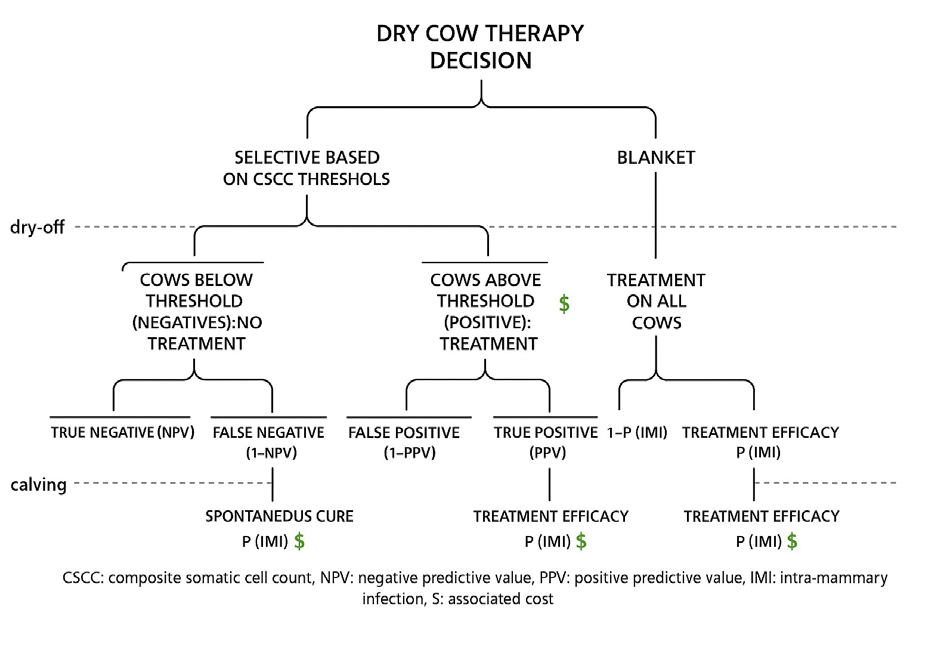
A schematic overview of the decision-making process and outcomes associated with selective versus blanket dry cow therapy is presented in Figure 1.
Dairy farms that implemented data-driven selection models demonstrated infection control rates comparable to those achieved with BDCT. This achieved a significant reduction in antimicrobial use and pointed out the potential benefits of automated selection processes in dairy farm management (Rowe et al., 2020; Ferreira et al., 2022).
Economic and regulatory aspects
Economic and regulatory aspects have significantly influenced the implementation of SDCT. In contrast to BDCT, SDCT offered a targeted and cost-effective approach to mastitis prevention, resulting in a 30–50% reduction in antibiotic-related costs, though this was dependent on herd management practices and the accuracy of cow selection (Scherpenzeel et al., 2018; Kovačević et al., 2022a). Farms that implemented SDCT and had an incidence of antibiotic residue violations, reported notable reductions. This outcome significantly lessens the risk of milk batches being rejected from the market. It also diminished the financial penalties associated with such violations (Niemi et al., 2021b). A study conducted on Swiss dairy farms provided evidence supporting the economic cost-effectiveness of SDCT. These findings showed that there was no significant increase in costs associated with mastitis treatment, despite the reduction in antibiotic use. The results showed that SDCT was consistent with public health objectives through reduced antibiotic consumption, making it financially viable for dairy producers (Bucher and Bleul, 2019). The adoption of SDCT was not only motivated by direct cost savings, but also by shifting market pressures. Processors and retailers began offering price premiums to farms following responsible antimicrobial practices, as consumer demand for antibiotic-free milk increased, accelerating the practical use of SDCT, particularly in regions with stringent milk quality standards, thereby supporting both sustainability and public health goals (Rowe et al., 2023).
Regulatory frameworks are crucial for enabling the implementation of SDCT on dairy farms. Niemi et al. (2021a) and Swinkels (2021) reported that in 2022, the European Union prohibited the routine prophylactic use of antibiotics in livestock. SDCT became the main strategy in addressing antimicrobial resistance (AMR), and a standard practice across many European dairy systems, supported by government-led training programs and financial incentives (Niemi et al., 2020). However, dairy farms in North America retained greater autonomy regarding antibiotic use, and BDCT remained widely practiced there, though industry-led initiatives and shifting consumer expectations are encouraging the adoption of SDCT, particularly since buyers are increasingly demanding compliance with sustainability standards (Rowe et al., 2021; Capel, 2022).
Economic and operational factors have significantly influenced the adoption of SDCT. According to Cameron et al. (2014) and Tomanić et al. (2023b), dairy cows managed under SDCT protocols achieved milk yield and SCC levels comparable to those managed under BDCT protocols, providing that proper selection procedures were followed. However, problems emerged when high-risk cows were misclassified or when ITS was improperly administered. In such cases, the risk of IMI increased during the next lactation, leading to higher treatment costs (Rowe et al., 2023). Vissio et al. (2023) emphasised that large dairy farms, where rapid and accurate decision-making was critical, often faced specific challenges in SDCT implementation. Logistical constraints associated with managing larger herds interfered with precise cow evaluation and timely intervention during the dry period, ultimately affecting the overall effectiveness of the therapy. By minimising the excretion of antibiotics into the environment, SDCT played a main role in promoting environmental sustainability and reducing environmental contamination, while effectively managing the prevalence of mastitis in dairy cows and reducing risks to human health (Scherpenzeel et al., 2018; Niemi et al., 2020; Cvetnić et al., 2022). The economic implications remained a considerable concern, particularly in cases where herds managed under SDCT protocols were not adequately monitored, resulting in an increased prevalence of mastitis. When veterinary management practices were suboptimal, the potential financial benefits associated with reduced antibiotic usage could be offset by elevated treatment costs if a greater number of cows required therapeutic intervention (Swinkels, 2021; Rowe et al., 2023).
Vissio et al. (2023) and Tomanić et al. (2024b) showed that using SCC thresholds of 200,000 cells/mL can be an economically viable solution as a cow selection criterion for SDCT. This is particularly in herds with low intramammary infection prevalence. While future precision dairy technologies could additionally simplify SDCT usage, current SCC-based selection already offers substantial cost savings and improve outcomes of udder health. Regulatory authorities are expected to enforce stricter policies that requires justification for antibiotic usage based on diagnostic data, likely further accelerating SDCT implementation (Capel, 2022). In the future, the successful adoption of SDCT will depend on a combination of factors: economic incentives, robust regulatory frameworks, and technological progress. SDCT is anticipated to become a fundamental component of sustainable dairy farming practices, as global initiatives addressing AMR became increasingly urgent. This approach is expected to establish a balance between economic efficiency (Niemi et al., 2021b) and the principles of responsible antimicrobial stewardship considering regulatory requirements (Scherpenzeel et al., 2018; Niemi et al., 2021a; Kovačević et al., 2022b).
Challenges and risks in adoption of selective dry cow therapy
SDCT presents well documented advantages, though its widespread adoption remains limited because of practical challenges; most notably, difficulties in accurate cow selection, inconsistent farmer compliance, economic pressures, and regional regulatory gaps. Rowe et al. (2020) emphasised that the application of SDCT requires the use of precise diagnostic tools, such as routine SCC monitoring and bacterial culture testing, to effectively identify cows at a high risk of mastitis and requiring antibiotic treatment. Dairy farms without access to on-farm culture or automated SCC monitoring were more susceptible to misclassification, which could lead to an increase in mastitis cases (Dziuba et al., 2023). Many dairy producers have continued to view BDCT as a lower-risk strategy, primarily due to its broad-spectrum antibiotic coverage and the reduced concern about intramammary infections (IMI) during the dry period (Clabby et al., 2022). Hesitancy to adopt SDCT often stems from fears that IMI prevalence might rise in the following lactation if selection protocols are not strictly followed (Guadagnini et al., 2023). This concern was prominent in high-yielding herds, where even minor disruptions to udder health could cause substantial financial losses. Economic consequences of IMI include higher veterinary expenses, lowered milk output, and possible long-term effects on reproductive performance (Hommels et al., 2021). As a result, many farmers are sceptical about implementing SDCT because of concerns about jeopardizing udder health, despite its potential benefits in reducing antibiotic usage, promoting overall herd health, and lowering production costs.
In the Netherlands, careful management practices were part of the adoption of SDCT during the dry period. Mitigating the risk of new IMIs implies a reduction of milk yield before dry-off and requires good attention to udder hygiene (Krattley-Roodenburg et al., 2021). Rowe et al. (2020) stated that reliance only upon SCC thresholds without culture testing could increase the risk of undertreatment, and this risk is higher in regions without financial support for dairy farmers. McCubbin et al. (2022) observed that in SDCT, ITS played a crucial role, because it provides a physical barrier against bacterial invasion in cows not receiving antibiotics during the dry period. Indeed, incorrect administration or omission of ITS in high-risk cows was associated with higher IMI rates in the next lactation (Lipkens et al., 2023). Insufficient farmer training for ITS contributed to unpredictable outcomes and scepticism about the effectiveness of SDCT (Kabera et al., 2021). Economic and logistical limitations on dairy farms complicated SDCT implementation. Large-scale farms equipped with automated milking systems and had access to veterinary support were in a better position to transition from BDCT to SDCT compared to smaller farms with limited infrastructure (Vissio et al., 2023). Individual cow selection and culture-based diagnostics increased labour and resource demands, which could not be applied uniformly across all farms (Cattaneo et al., 2021). Regional regulatory differences also proved to have a substantial impact on SDCT adoption rates. Countries that required veterinary prescriptions for intramammary antibiotics had a higher adoption of SDCT, attributed to the enforcement of antimicrobial stewardship policies (Niemi et al., 2021a). On the contrary, BDCT remained dominant in regions with less stringent regulatory oversight, where farmers retained significant autonomy over antibiotic use during the production cycle (Rowe et al., 2020).
Despite the considerable challenges that could arise in dairy farm management, when SDCT was well implemented (through the integration of SCC analysis), udder health outcomes were comparable to BDCT. Thus, the long-term effectiveness and adoption of SDCT depended on improved farmer education and their access to affordable and reliable diagnostic tools and financial incentives (McCubbin et al., 2022). This remains important for encouraging the adoption of precision dairy technologies (Rowe et al., 2023). Adoption of SDCT in future initiatives should address the economic and logistical constraints faced by dairy producers. Including government subsidies and training programs tailored to dairy farmers is very important. Improvements and simplifications in automated mastitis detection technologies are critical for making SDCT a more accessible and sustainable alternative to BDCT (Dziuba et al., 2023). Domaćinović et al. (2023) stated that successful integration of precision monitoring and mastitis detection technologies in dairy farming requires technological readiness and user-friendly systems adapted to farm size and management capacities.
Environmental and sustainability considerations in selective dry cow therapy
The transition from blanket dry cow therapy to selective dry cow therapy marks a shift in udder health management strategies in dairy production. The aim of this shift was primarily to minimise AMR and reduce the environmental impact of antibiotic usage. Under BDCT, the use of intramammary antibiotics has been linked to the presence of antimicrobial residues in manure, which impacts soil and water ecosystems, disrupting the microbial balance, and contributing to AMR (Bonsaglia et al., 2017; Đuričić et al., 2020; Maćešić et al., 2022). SDCT, on the other hand, applies antibiotics only to those cows identified as being at risk of infection during the dry period. This reduces antibiotic usage and aligns with the principles of the One Health framework, supporting the close relationship of animal health, environmental sustainability, and food safety (Ferreira et al., 2022).
The excretion of antibiotic residues in manure is an environmental problem associated with BDCT. These residues can be retained in agricultural soils and leach into groundwater, posing a risk to ecosystems and drinking water quality, and facilitating the spread of antibiotic-resistant bacteria into human populations (Mondini et al., 2023). Pavesi et al. (2023) wrote that SDCT implementation could lead to a substantial reduction in the antimicrobial load in manure, effectively decreasing environmental contamination without compromising udder health in dairy cows. Müller et al. (2023) emphasised that SDCT played an important role in preserving soil and water quality by preventing antibiotics from disrupting microbial diversity and nutrient cycling within agricultural ecosystems. Limited antibiotic exposure in herds managed under SDCT protocols reduced AMR gene transfer to human pathogens, thereby boosting public health safety and intensifying societal confidence in the dairy sector’s commitment to responsible antibiotic stewardship (Niemi et al., 2021b).
SDCT significantly improved the sustainability of dairy farming by reducing the carbon footprint associated with the production and disposal of antibiotics. According to Bonsaglia et al. (2017), the manufacturing process of antibiotics requires significant energy and natural resources, generating considerable greenhouse gas emissions and pharmaceutical waste. McCubbin et al. (2022) observed that by optimising antibiotic use, SDCT effectively reduced dependence on pharmaceutical inputs. This not only supported the implementation of sustainable dairy practices but also contributed to the preservation of milk quality and animal welfare. SDCT is closely aligned with global sustainability initiatives, including the European Green Deal and the United Nations Sustainable Development Goals, which promote the responsible and prudent use of antibiotics in food production systems (Rowe et al., 2020).
Vanhoudt et al. (2018) emphasised that as consumer awareness of environmental and health-related issues increases, dairy producers implementing SDCT are expected to gain a competitive advantage in markets favouring sustainable production. The successful implementation of SDCT brought numerous benefits; however, it depended on accurate application and ongoing research into alternative mastitis prevention strategies. The integration of probiotic-based dry cow therapies, immunomodulatory treatments and advanced precision diagnostics may substantially enhance the sustainability of SDCT by improving udder health outcomes (Kovačić et al., 2019; McCubbin et al., 2023).
Coordinated efforts among stakeholders in the dairy sector were essential to enable the sustainable implementation of SDCT. Educating farmers on the environmental consequences of excessive antibiotic use was important for facilitating the transition toward adopting SDCT (Weber et al., 2021). Education could encourage farmers to make decisions that benefit both their farms and the sustainability of the dairy sector. The role of SDCT was to become increasingly central, as international efforts to prevent and reduce AMR and environmental degradation intensified. Successful implementation of SDCT depends on accurate diagnostics, evidence-based decision-making and farmer adherence to protocols. By reducing unnecessary antimicrobial use and targeting treatments based on udder health status, SDCT contributes to environmentally responsible mastitis control strategies. These practices support herd health and production efficiency (Scherpenzeel et al., 2018; Rowe et al., 2023).
Future trends related to selective dry cow therapy
Future trends in selective dry cow therapy (SDCT) are linked to advances in precision diagnostics, alternative mastitis prevention strategies and the development of regulatory frameworks (Mimoune et al., 2021). According to Rowe et al. (2020), tools such as regression or machine-learning methods for generating predictive models could evaluate more complex algorithms that include more data points than have traditionally been used. This would consequently improve treatment precision and reduce unnecessary antibiotic use. Advances in artificial intelligence (AI) and machine learning (ML) models improved SDCT decision-making by analysing SCC trends, clinical mastitis history, and milk composition data to predict the risk of IMI, thereby optimising antibiotic application (Vanhoudt et al., 2018). The use of robotic milking systems enhanced AI-guided mastitis detection, enabling early interventions and keeping antibiotic reliance to a minimum (Weber et al., 2021).
Research into alternative mastitis prevention strategies continues to evolve (Lamari et al., 2021; Niemi et al., 2021b; Ferreira et al., 2022; Tomanić et al., 2023a; Kovačević et al., 2025). McCubbin et al. (2022) argued that bacteriophage therapy and antimicrobial peptides could offer effective mastitis prevention while reducing the risk of AMR. Bonsaglia et al. (2017) and Tomanić et al. (2024a) noted that plant-derived antimicrobial compounds and natural biofilm inhibitors had the potential to reduce the prevalence of intramammary infections in dairy cows.
The implementation of SDCT has been strongly influenced by both regulatory measures and initiatives within the dairy industry. With the introduction of EU veterinary legislation in 2022 restricting the routine prophylactic use of antibiotics in livestock, many dairy farms across Europe were compelled to shift toward selective treatment protocols (Rowe et al., 2020). Comparable efforts promoting responsible antibiotic use have also emerged in the United States and Australia (McCubbin et al., 2023). According to Capel (2022), future policy developments require farms to apply validated selection criteria, such as SCC thresholds or bacteriological testing, ensuring that antibiotics are administered only when clinically justified. Growing environmental concerns are further reinforcing this transition, as SDCT limits antibiotic discharge into soil and water ecosystems, contributing to more sustainable farming practices (Maćešić et al., 2022). Moreover, farms that implement SDCT may benefit economically by accessing premium markets that favour milk produced under antibiotic-responsible and environmentally conscious standards (Rowe et al., 2023). More research will be needed to refine AI-supported decision tools. It is also important to explore non-antibiotic options for mastitis prevention and improve access to on-farm diagnostics (Pavesi et al., 2023). According to Müller et al. (2023), farmer education and training are essential for successful implementation and compliance with best practices.
It is to be expected that SDCT will become the standard approach to dry cow therapy worldwide. Rowe et al. (2023) stated that the integration of precision dairy farming technologies, mastitis prediction models and sustainable infection control strategies would improve the effectiveness of SDCT, reducing its environmental impact and antimicrobial footprint. Bonsaglia et al. (2017), Mondini et al. (2023) and Müller et al. (2023) concluded that future research should focus on defining cow selection protocols, improving diagnostic accuracy and developing antibiotic-free alternatives. This would ensure that SDCT will remain a practical and effective solution for modern dairy herd management.
Conclusions
Selective dry cow therapy (SDCT) reduces antibiotic use while preserving udder health and maintaining milk production. It is therefore a sustainable approach to mastitis control in dairy herds. Its effectiveness depends on precise cow selection and adherence to pre-established protocols. Regional differences in regulatory frameworks and farmer engagement are limiting factors for wider implementation. However, continued education, improved access to reliable diagnostic methods and targeted financial incentives can greatly facilitate wider implementation. SDCT also supports environmental sustainability by reducing antibiotic residues due to its selectivity in selection. Within the constantly evolving dairy industry, SDCT is consistent with the goals of economically and environmentally sustainable milk production.
References [… show]
Selektivna terapija zasušenja mliječnih krava: ekonomski, ekološki i regulatorni aspekti
Boris LJUBOJEVIĆ, mag. ing. šum., Hrvatske šume d.o.o., Zagreb, Hrvatska; dr. sc. Krunoslav ZMAIĆ, redoviti profesor, Fakultet agrobiotehničkih znanosti Osijek, Sveučilište Josipa Jurja Strossmayera u Osijeku, Osijek, Hrvatska; dr. sc. Nino MAĆEŠIĆ, redoviti profesor, Veterinarski fakultet Sveučilišta u Zagrebu, Zagreb, Hrvatska; dr. sc. Zvonimir STEINER, redoviti profesor, Fakultet agrobiotehničkih znanosti Osijek, Sveučilište Josipa Jurja Strossmayera u Osijeku, Osijek, Hrvatska; dr. sc. Marko SAMARDŽIJA, redoviti profesor Veterinarski fakultet Sveučilišta u Zagrebu, Zagreb, Hrvatska; dr. sc. Vesna GANTNER, redovita profesorica, Fakultet agrobiotehničkih znanosti Osijek, Sveučilište Josipa Jurja Strossmayera u Osijeku, Osijek, Hrvatska
Prepoznajući važnost mastitisa u mliječnom govedarstvu, cilj je ovog pregleda bio analizirati načela, prednosti, ekonomske učinke, regulatorne aspekte i ekološku održivost selektivne terapije zasušenja mliječnih krava (SDCT). Zbog sve veće zabrinutosti oko antimikrobne rezistencije (AMR), onečišćenja okoliša i sve strožih propisa o primjeni antibiotika u proizvodnji hrane, SDCT je postala važna strategija u suvremenom upravljanju mliječnim stadima. Ova metoda uključuje selektivno liječenje samo onih krava ili četvrti koje su pri zasušenju procijenjene kao visoko rizične za razvoj intramamarnih infekcija, često na temelju broja somatskih stanica, povijesti kliničkog mastitisa ili rezultata bakterijske kulture. Istraživanja pokazuju da pravilnom primjenom SDCT-a može doći do znatnog smanjenja uporabe antibiotika bez ugrožavanja zdravlja vimena, osobito kada se kombinira s unutarnjim čepovima za sisu. Ekonomske analize pokazuju da SDCT može smanjiti troškove antimikrobne terapije i do 50 %, uz uvjet da se protokoli dosljedno provode. Nadalje, globalne politike održivosti, poput Europskog zelenog plana i inicijativa “Jedno zdravlje”, promiču ciljanu uporabu antibiotika radi poboljšanja zdravlja životinja i očuvanja okoliša u mliječnom sektoru. Ipak, u provedbi i dalje postoje izazovi, uključujući rizik od nedovoljnog liječenja, potrebu za preciznim dijagnostičkim alatima te osiguranje poštivanja selekcijskih protokola od strane proizvođača. Napredak u tehnologijama preciznog mljekarstva, poput automatiziranog testiranja i donošenja odluka uz pomoć umjetne inteligencije, poboljšao je izvedivost i učinkovitost SDCT-a u različitim sustavima upravljanja stadima.
Ključne riječi: selektivna terapija zasušenja mliječnih krava, antimikrobna rezistencija, management mliječnog stada, odgovorno korištenje antibiotika, precizna animalna proizvodnja
