
Cortisol as a biomarker for stress: A review of sampling methods in small ruminants
S.Fruk Šimunec, I. Žura Žaja*, J. Pejaković Hlede, A. Shek Vugrovečki, A. Ružić and D. Đuričić
Stefani FRUK ŠIMUNEC1, sfruk@vef.unizg.hr, orcid.org/0009-0002-1810-226X; Ivona ŽURA ŽAJA1* (corresponding author), izzaja@vef.unizg.hr, orcid.org/0000-0002-0595-2524; Jadranka PEJAKOVIĆ HLEDE1, jpejakovic@vef.unizg.hr, orcid.org/0000-0002-4551-086X;Ana SHEK VUGROVEČKI1, ashek@vef.unizg.hr, orcid.org/0000-0002-8261-5310; Anamaria RUŽIĆ2, asluganovic@vef.hr, orcid.org/0009-0002-6002-3127; Dražen ĐURAČIĆ1, ddjuricic@vef.unizg.hr, orcid.org/0000-0002-8013-2091.
1Department of Physiology and Radiobiology, Faculty of Veterinary Medicine University of Zagreb, 10000 Zagreb, Croatia
2Novartis Croatia d.o.o., 10000 Zagreb, Croatia

https://doi.org/10.46419/cvj.57.3.10
Abstract
Cortisol is a key biomarker of stress and hypothalamic-pituitary-adrenal (HPA) axis activity in an organism. Different biological samples are used for measuring cortisol levels, such as blood, saliva, milk, urine, faeces, and hair. Blood plasma or serum cortisol measurements are widely applied to quantify acute stress response in farm animals, but stress sampling and rapid hormonal changes can undermine accuracy in results. Saliva has proven to be a reliable alternative sample for assessing free cortisol, offering a less stressful approach with minimal triggering of the stress response. Cortisol determination in milk is a non-invasive method of limited applicability for lactating ruminants, though physiological parameters such as milk yield and stage of lactation can influence its interpretation. Concentrations of cortisol in urine reflect the cumulative cortisol secretion over time, making it a valuable indicator of chronic stress, though research on small ruminants remains limited. Similarly, faecal cortisol metabolites offer a non-invasive means of assessing adrenal activity with delayed but integrated hormonal fluctuations. Hair and wool analysis provide insight into long-term stress exposure, though factors such as seasonal variation and local synthesis complicate its application. This review highlights the strengths and challenges associated with different cortisol sampling methods, emphasising the importance of multiple biological sample approaches for accurate welfare assessments in ruminants.
Key words: biological samples; cortisol; ruminants; stress; welfare assessment
Introduction
Cortisol is the most widely used research marker to estimate animal welfare, as it is a key indicator for the stress response measurement of the hypothalamic-pituitary-adrenal (HPA) axis (Diaz et al., 2013). The axis is accountable for the vertebrate’s ability to adapt to seasonal changes and physiological stresses by controlling the release of the glucocorticoid hormone group, including corticosterone and cortisol (Landys et al., 2006; Dulude-de Broin et al., 2019).
Stress is defined as the biological and behavioural reaction of an animal to situations that may threaten its physiological balance (Botia et al., 2024), including handling or social interactions that can occur during different stages of the production cycle (Langendijk and Soede, 2023; Botia et al., 2024). Pregnancy, parturition, and lactation are periods that may involve stress and inflammation, which can trigger the HPA axis, leading to the release of glucocorticoids (Kaiser, 2018; Botia et al., 2024; Wirthgen et al., 2024). When a threat is detected, the HPA axis is activated, leading to the release of large quantities of cortisol. It begins with the release of corticotropin-releasing hormone (CRH) by the hypothalamus, which induces the pituitary gland to release adrenocorticotropic hormone (ACTH). Adrenocorticotropic hormone then induces cortisol release from the adrenal glands into the bloodstream (Mormède et al., 2007; Andansan et al., 2020). These metabolic hormones play vital roles in balancing energy, and constitute a part of the acute response to stressors (Sapolsky et al., 2000; Landys et al., 2006; Dulude-de Broin et al., 2019).
Under physiological conditions, glucocorticoids regulate circadian rhythms and undergo seasonal modulation to address physiological needs throughout the year (Romero, 2002; Landys et al., 2006; Dulude-de Broin et al., 2019). Glucocorticoid concentrations peak in response to acute stressors, redirecting energy investment toward short-term survival at the expense of long-term processes (Hawlena and Schmitz, 2010; Dulude-de Broin et al., 2019). While this mechanism is vital for immediate threats, chronically elevated glucocorticoid levels negatively affect immune defence, reproduction, and overall survival (Wingfield and Sapolsky, 2003; Dulude-de Broin et al., 2019). Therefore, both baseline and stress-induced HPA axis activity are effective indicators of an animal’s life-history strategies and ecological pressures (Landys et al., 2006; Dulude-de Broin et al., 2019).
The stress associated with blood collection for plasma cortisol measurement (animal restraint, venipuncture, etc.) has prompted researchers to explore alternative methods for assessing cortisol levels and its metabolites. Alternative biomatrices, including saliva, urine, milk, faeces, and hair, have been explored as less invasive indicators of stress (Kim et al., 2021; Ataallahi et al., 2022; Ataallahi et al., 2023; Lončarić et al., 2024).
Saliva has been confirmed as a feasible medium to assess cortisol response, and this method shown to be technically viable and less stressful for animals (Andansan et al., 2020). Milk cortisol has been utilised as a marker to assess animal welfare in cows milked using automatic milking systems (Hagen et al., 2004; Gygax et al., 2006; Diaz et al., 2013) compared to those milked in conventional parlours, and milk cortisol levels have also been correlated with animal behaviour (Fukasawa and Tsukada, 2010; Diaz et al., 2013).
Measuring cortisol metabolites in faeces is another potential avenue of quantifying animal physiology, though species, sex, and age differences must be considered (Dulude-de Broin et al., 2019). Hair or wool, above all other constituents, has the advantage of capturing glucocorticoid fluctuations over longer periods of time. Hormone incorporation into hair is thought to occur during the anagen phase when the hair bulb is intimately related to the capillary network surrounding the follicles, although the precise mechanisms remain unclear (Pragst and Balikova, 2006; Dulude-de Broin et al., 2019). This makes hair a suitable contender for quantifying long term stress exposure in animals (Dulude-de Broin et al., 2019). Measuring cortisol levels in urine shows promise, though this method in small ruminants remains underexplored, highlighting the need for further research in this area.
Determination of cortisol level in blood plasma or serum in ruminants
The concentration of cortisol in blood has proven to be a useful indicator of stress (Barell, 2019), although caution is advised, since not every stressor causes an increase in glucocorticoid concentrations (Ralph and Tilbrook, 2016; Barell, 2019). Blood plasma cortisol measurements have been employed to evaluate various potentially distressing farm procedures, such as castration in calves (Stafford and Mellor, 2005; Barrell, 2019) and both castration and tail docking in lambs (Barrell, 2019). Despite its widespread use, caution is advised when interpreting cortisol levels in bodily fluids (Ralph and Tilbrook, 2016; Barrell, 2019). One issue is the sampling method itself. For example, manually restrained red deer stags sampled via jugular venipuncture had a mean plasma cortisol concentration of 56.5 ng/mL, compared to just 8.4 ng/mL when sampled remotely using a backpack while undisturbed at pasture (Barrell, 2019). Even when intravenous cannulas are used, animals may respond to the human presence, leading to elevated plasma cortisol levels. Ready-to-release cortisol stores can result in rapid increases, as seen in calves 10 minutes after administration of ACTH or CRH (Van Reen et al. 2005; Barrell, 2019). Thus, even remote sampling may inadvertently trigger cortisol release, and the same applies to saliva samples. Additionally, experts found inconsistencies between cortisol responses to exogenous CRH or ACTH and behavioural tests, with an age-dependent increase in responsiveness in calves (Van Reen et al., 2005; Barrell, 2019). Consequently, it can be concluded that relying on a single cortisol measurement in bodily fluids is unlikely to accurately reflect an animal’s welfare.
Determination of cortisol level in saliva in ruminants
Numerous studies have confirmed the use of saliva as a reliable method for evaluating cortisol response. Some studies show that the approach is technically viable, causes less stress to the animal (Andansan et al., 2020), and enables the measurement of free cortisol, which is the only form present in saliva (Mormède et al., 2007; Cook, 2012; Andansan et al., 2020; Lončarić et al., 2024).
Approximately 80% of cortisol in the body is bound to corticosteroid-binding globulins, with an additional 10% bound to other compounds, and around 10% existing in its free form (Cook, 2012; Andansan et al., 2020). Among these forms, only the free cortisol is biologically active. However, plasma assays often do not differentiate between the free and bound forms (Mormède et al., 2007; Cook, 2012; Andansan et al., 2020). As a result, cortisol levels are typically reported as total cortisol.
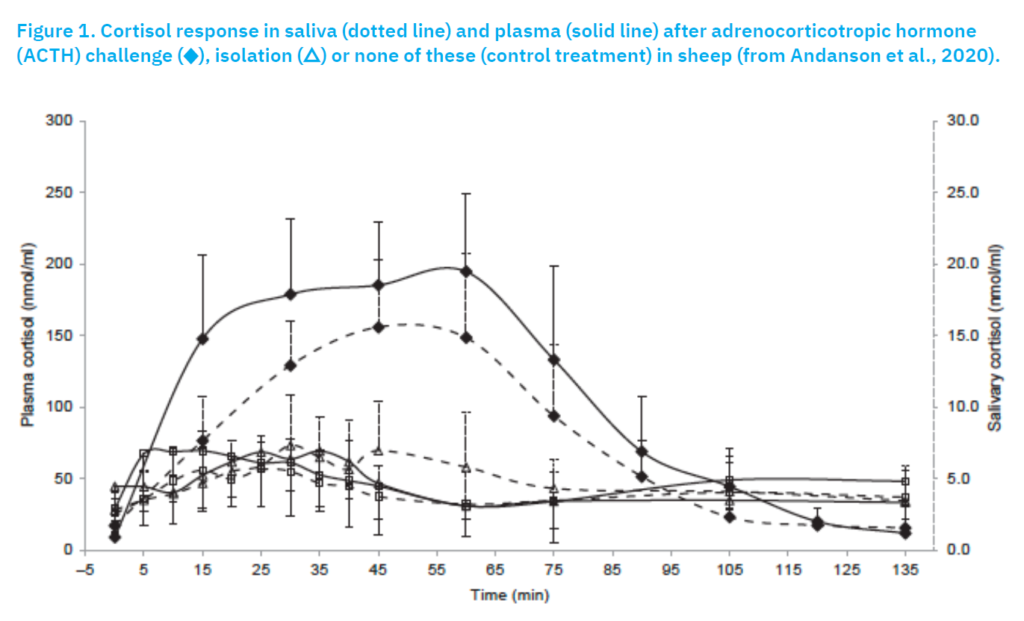
Andanson et al. (2020) demonstrated a strong correlation between cortisol levels in sheep’s saliva and blood (Figure 1). Importantly, they concluded that the saliva to blood ratio of cortisol changes depending on the cortisol level. They also confirmed that collecting saliva does not cause cortisol to rise, while venipuncture does, particularly in unhabituated animals. These findings can help decide whether to use saliva or blood samples to measure stress in sheep (Figure 1). The same authors applied an ACTH challenge test to stimulate the adrenal glands and measure their cortisol response. Cortisol was measured with radioimmunoassay in both plasma and saliva, with a high correlation found between the fluids.
Determination of cortisol level in milk in ruminants
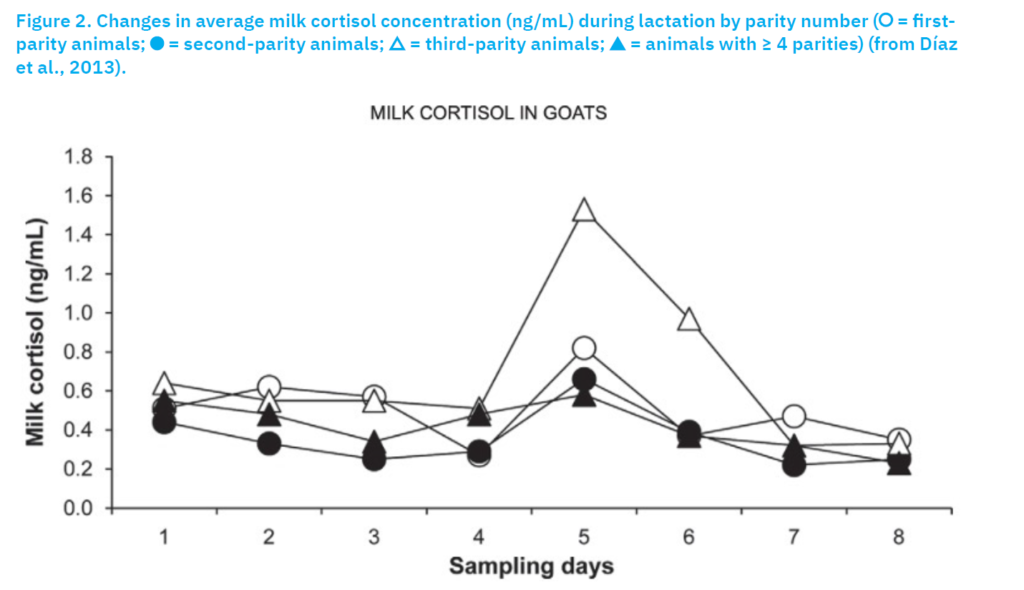
Measuring cortisol levels in milk provides a non-invasive method for assessing stress in small lactating ruminants, making it particularly valuable for welfare evaluation, as the sampling process itself does not induce stress (Romero et al., 2015). However, cortisol concentrations in goat milk can vary due to physiological factors such as milk yield, lactation stage, and parity, meaning that fluctuations do not always indicate stress (Díaz et al., 2013).
Environmental fluctuations can profoundly influence the dairy industry, a key branch of global agriculture. Elevated temperatures are a major concern, as they induce heat stress in cattle, leading to reduced feed intake, lower milk yield, impaired fertility, heightened susceptibility to disease, and overall welfare challenges (Toughdory et al., 2022; Ataallahi et al., 2023). A central feature of this physiological response is the systemic release of cortisol into the bloodstream, as an adaptive mechanism to help cattle cope with thermal stress (Ataallahi et al., 2020; Kim et al., 2021; Ataallahi et al., 2023).
Milk synthesis is highly dependent on blood circulation; approximately five hundred litres of blood must pass through the udder to produce one litre of milk (Ataallahi et. al., 2023; Pellegrino et. al., 2023). Nonetheless, blood flow is not the only determinant of milk output; genetic background, nutritional status, and farm management practices also play decisive roles (Toughdory et al., 2022, Ataallahi et al., 2023). Dairy milk is recognised as a nutrient-rich biological matrix, supplying proteins, fats, carbohydrates, vitamins, and minerals in a balanced and easily digestible form, making it one of the most valuable food sources for human nutrition (Lim et al., 2020; Toughdory et al., 2022; Ataallahi et al., 2023).
Monitoring stress in lactating cows is crucial for safeguarding animal welfare, optimising farm management, and ensuring milk quality (Ataallahi et al., 2023). Stress can be assessed through measurement of physiological markers such as cortisol. While blood sampling has traditionally been used for this purpose, it is invasive and may itself increase stress levels (Ghassemi et al., 2019; Ataallahi et al., 2023). Milk cortisol concentrations have gained attention, as alterations in systemic cortisol levels are frequently reflected in milk. Elevated milk cortisol concentration has been associated not only with stress or illness in cattle but also with environmental, nutritional, and management-related factors, including housing quality, feeding regimes, milking procedures, and handling practices (Ataallahi et al., 2023). Stress-inducing conditions such as heat, poor ventilation, overcrowding, and excessive noise can markedly increase milk cortisol concentration, while dietary imbalances may further influence hormonal regulation. Effective monitoring and control of these variables are therefore essential to maintaining optimal milk cortisol concentration and to minimise stress in dairy herds (Ataallahi et al., 2023).
Unlike many bioactive molecules, cortisol is relatively stable under thermal processing. Consequently, pasteurisation and sterilisation procedures used to ensure milk safety and shelf life appear to have minimal influence on milk cortisol concentrations in both bovine and human milk (Malekinejad and Razabakhsh, 2015; Vass et al., 2020; Ataallahi et al., 2023). Nevertheless, such treatments can alter the microbial and nutrient profile of milk, potentially reducing its nutritional and functional value (Moro et al., 2019; Zhao and Mao, 2019; Van Lieshout et al., 2020; Ataallahi et al., 2023).
Furthermore, some research has suggested that mechanical milking can be a source of stress, particularly for primiparous cows during their initial milking sessions (Negrão, 2008; Diaz et al., 2013). This stress is often associated with their interactions with humans and the challenge of adapting to the unfamiliar milking environment and equipment (Negrão, 2008; Diaz et al., 2013).
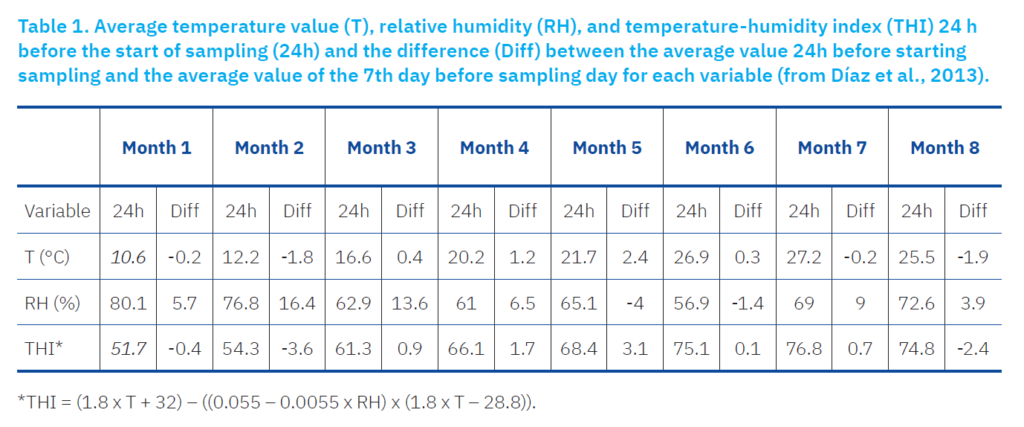
Díaz et al. (2013) concluded that in Murciano-Granadina goats, milk cortisol levels could serve as an indicator of how external factors (such as management practices, mechanical milking, diet, housing conditions, and environmental influences) affect stress and overall welfare. However, interpreting these levels requires careful consideration, as physiological factors like milk yield, parity, and lactation stage can also influence cortisol concentrations independently of stress (Díaz et al., 2013). In that study, a sharp rise in temperature and drop in relative humidity, led to an increase in the temperature-humidity index, specifically observed on the day before sampling in month 5, which may have caused thermal stress, resulting in higher milk cortisol levels (Table 1, Figure 2) (from Díaz et al., 2013).
Determination of cortisol level in urine in ruminants
Urinary cortisol is widely recognised as a cumulative indicator of circulating cortisol levels, reflecting hormonal fluctuations over an extended period of time (Brooks, 1979; Miller et al., 1991).
Miller et al. (1991) conducted a study on bighorn sheep in which prolonged administration of ACTH over 29 days resulted in elevated cortisol concentrations in both urine and faeces, indicating that excreta can serve as a non-invasive tool for assessing chronic stress responses to environmental conditions. While plasma cortisol provides a real-time snapshot of an organism’s physiological response to stressors, urinary cortisol offers a more integrated measure by averaging circulating levels over several hours. This occurs because free cortisol is continuously filtered into urine via glomerular filtration, reducing the influence of short-term fluctuations observed in plasma samples (Brooks, 1979; Miller et al., 1991). The excretion of free cortisol follows concentration gradients, facilitating its elimination through urine (Brooks, 1979) and potentially through faeces as well, reinforcing the value of excreta-based monitoring for assessing long-term physiological stress in wildlife research (Miller et al., 1991). Despite its potential applications, studies on urinary cortisol determination in small ruminants remain scarce, highlighting the need for further research in this area.
Determination of cortisol level in faeces in ruminants
As mentioned, the measurement of glucocorticoid metabolites in faeces is another non-invasive method to assess recent adrenal activity. This approach has been validated for dairy cows by Morrow et al. (2002), with the timing of faecal metabolite elevations closely aligned with intestinal transit times. While cortisol metabolites levels in faeces are lower than corresponding plasma levels, the method is sensitive enough to detect changes due to environmental transitions or transportation (Morrow et al., 2002; Dulude-de Broin et al., 2019). Despite encouraging findings, many researchers advocate combining this technique with other indicators for a more reliable stress assessment (see review Barell, 2019).
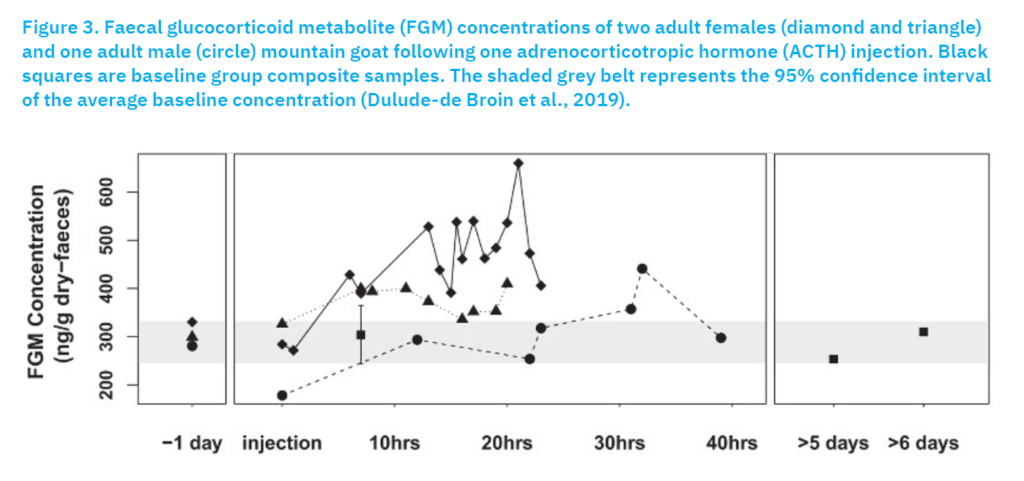
The ACTH challenge in Dulude-de Broin et al. (2019) showed a distinct increase in faecal glucocorticoid metabolite concentrations in two of three injected animals (Rocky Mountain goat) and a moderate rise in the third. The adult male and one female peaked at 192% (32 h) and 223% (21 h) of baseline, respectively. The second female exhibited elevated levels (127%) the next morning, with a peak (131%) at 20 h post-injection (Figure 3).
Determination of cortisol level in hair or wool in ruminants
Cortisol and its metabolites can be measured in blood, saliva, urine, and faeces to evaluate stress over short periods, ranging from minutes to days. However, for a broader perspective on HPA axis activity and chronic stress exposure, cortisol analysis in hair or wool is a more suitable approach (Barrell, 2019; Heimburge et al., 2019). Despite its advantages, several factors complicate interpretation. Since skin cells and hair follicles contain the necessary components for local corticosteroid synthesis, cortisol can be produced independently of central regulatory mechanisms (Slominski et al., 2007; Barrell, 2019) and therefore may not accurately represent systemic levels (Dulude-de Broin et al., 2019). Cortisol incorporation into hair occurs at the follicle bulb, situated several millimetres beneath the skin’s surface, which introduces a delay in its detection after shaving (Meyer et al., 2012; Barrell, 2019). Seasonal variations in hair growth rate and skin blood circulation, along with external influences such as chemical degradation, grooming behaviours, ultraviolet radiation, and sweat, can also impact cortisol levels. Research comparing conventional biological samples such as blood, faeces, and saliva to hair, as well as studies investigating the effects of stress-related conditions on hair cortisol levels in both human and animal models, have demonstrated that hair serves as a reliable matrix for glucocorticoid analysis (Carlitz et al., 2014; Tallo-Parra et al., 2015; Short et al., 2016; Dulude-de Broin et al., 2019). Nonetheless, the non-invasive collection and convenient storage of hair or wool samples make this method appealing for assessing long-term stress (Barrell, 2019; Heimburge et al., 2019).
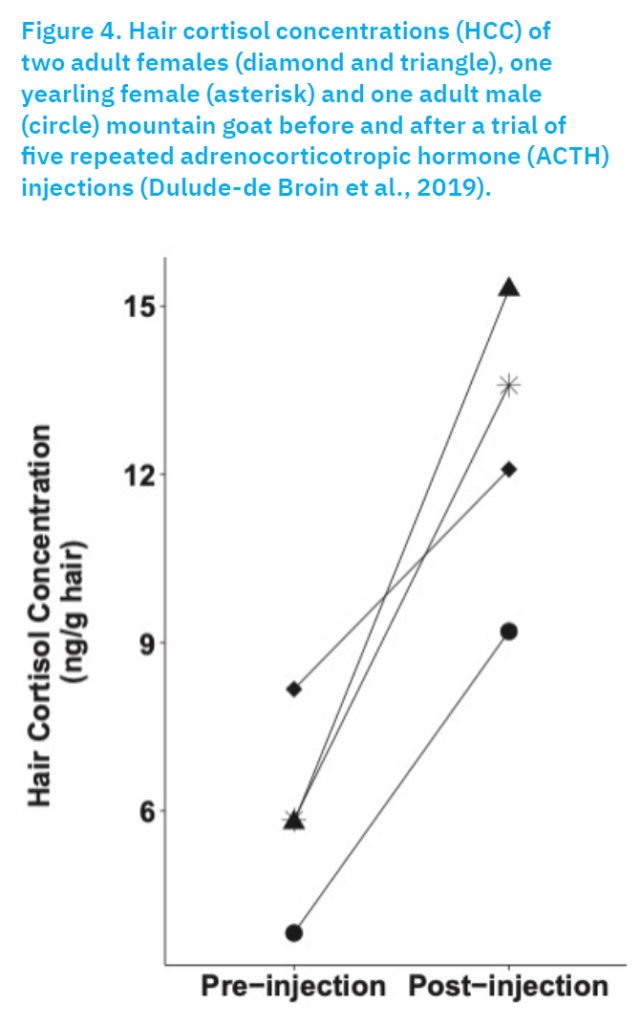
Research on cattle has shown that hair cortisol concentrations significantly increase in response to substantial stressors, such as major changes in stocking density, though smaller modifications do not always elicit a notable response (Silva et al., 2016; Barrell, 2019). Similarly, studies examining the effects of calf castration on hair cortisol have yielded inconsistent results (Creutzinger et al., 2017; Barrell, 2019). In sheep, significant stressors like heat exposure and water deprivation have been linked to increased hair cortisol concentrations (Ghassemi-Nejad et al., 2014; Barrell, 2019), while in cows, clinical illness and pregnancy have also been associated with elevated levels (Burnett et al., 2015; Barrell, 2019). However, as Burnett et al. (2015) pointed out, hair cortisol measurement may be less effective in detecting mild stress or subclinical conditions. Experimental findings further support the utility of hair cortisol measurement. In response to ACTH administration, hair cortisol levels exhibited a marked increase, with relative elevations of 264%, 147%, 240%, and 233% observed across individuals (Dulude-de Broin et al., 2019). These results reinforce the capacity of hair cortisol to reflect prolonged HPA axis activity, although further research refining standardised sampling methods and recognising inherent limitations is needed to optimise its application in animal welfare assessments (Figure 4).
Concluding remarks
The measurement of cortisol concentrations across biological samples provides informative data regarding stress and animal welfare. Each method, whether based on blood plasma, saliva, milk, urine, faeces, or hair, offers specific advantages and limitations that must be considered when selecting the most suitable method for a particular study. Blood plasma levels of cortisol remain a widely used indicator of stress, particularly in acute stress measurements. However, the sampling process itself might be stressful, thereby biasing results. Saliva presents a non-invasive avenue through which free cortisol, its biologically active form, can be assessed independent of corticosteroid-binding globulins. Although promising such advantages, variations in the saliva-to-blood cortisol ratio require careful interpretation. Milk cortisol analysis represents an interesting non-invasive method, especially in lactating animals. Yet, physiological conditions like lactation stage and yield have been shown to affect cortisol levels regardless of stress, and therefore require analysis within context. Urinary cortisol gives an integrated measure of stress over longer time periods, reducing the effect of short-term variability present in plasma samples. Despite this, studies on its use in small ruminants are still scarce. Faecal cortisol metabolite measurement also enhances non-invasive stress assessment, reflecting adrenal activity in the hours or days preceding sampling. Though validated in some species, variations in intestinal transit time and metabolism require species specific standardisation. Hair cortisol measurement is a long-term stress exposure measure, which is effective in chronic HPA axis activity capture. Yet, interpretation may be complicated by such influences as seasonal hair growth, local cortisol production, and exogenous environmental influences.
With the limitations of each method, a multimodal approach that includes various cortisol measurement techniques together with behavioural and physiological observations may provide a more integrated evaluation of stress and animal welfare. Method refinement, validation of multiple biological sample correlations, and protocol standardisation to enhance the robustness of cortisol as a biomarker for stress evaluation should be the priority in future research. Finally, the integration of cortisol measures with physiological and behavioural measures will advance stress measurement validity and result in improved welfare practice across animal species.
References [… show]
Kortizol kao biomarker stresa – pregled metoda prikupljanja uzoraka u malih preživača
Stefani FRUK ŠIMUNEC1, sfruk@vef.unizg.hr, orcid.org/0009-0002-1810-226X; Ivona ŽURA ŽAJA1* (dopisni autor), izzaja@vef.unizg.hr, orcid.org/0000-0002-0595-2524; Jadranka PEJAKOVIĆ HLEDE1, jpejakovic@vef.unizg.hr, orcid.org/0000-0002-4551-086X;Ana SHEK VUGROVEČKI1, ashek@vef.unizg.hr, orcid.org/0000-0002-8261-5310; Anamaria RUŽIĆ2, asluganovic@vef.hr, orcid.org/0009-0002-6002-3127; Dražen ĐURIČIĆ1, ddjuricic@vef.unizg.hr, orcid.org/0000-0002-8013-2091.
1Zavod za fiziologiju i radiobiologiju, Veterinarski fakultet Sveučilišta u Zagrebu, 10000 Zagreb, Hrvatska
2Novartis Hrvatska d.o.o., 10000 Zagreb, HrvatskaKortizol je jedan od glavnih pokazatelja stresa i aktivnosti hipotalamičko-hipofizno-adrenalne (HPA) osi u organizmu. Za mjerenje razine kortizola mogu se koristiti različiti biološki uzorci, kao što su: krv, slina, mlijeko, urin, izmet i dlaka. Mjerenja kortizola u krvnoj plazmi ili serumu najčešće se primjenjuju za kvantificiranje akutnog stresnog odgovora u domaćih životinja, no uzorkovanje životinja pod stresom i brze hormonske promjene mogu narušiti objektivnost rezultata. Slina se pokazala pouzdanim alternativnim uzorkom slobodnog kortizola, nudeći manje stresan pristup prikupljanja uzoraka uz minimalno izazivanje stresnog odgovora u životinja. Kortizol u mlijeku pruža neinvazivnu metodu ograničene primjenjivosti u preživača u laktaciji, ali na njegovu interpretaciju utječu fiziološki čimbenici poput količine mlijeka i stadija laktacije. Koncentracija kortizola u urinu odražava kumulativno izlučivanje kortizola tijekom duljeg razdoblja, zbog čega predstavlja vrijedan pokazatelj kroničnog stresa, premda su dosadašnji podatci o primjeni ove metode kod malih preživača još uvijek ograničeni i upućuju na potrebu za daljnjim istraživanjima. Slično tome, metaboliti kortizola u izmetu omogućuju neinvazivnu procjenu aktivnosti nadbubrežne žlijezde, s odgođenim, ali cjelovitim odrazom hormonskih promjena u tijelu. Ova metoda je jednostavna za praćenje kroničnog stresa, jer izmet prikazuje fluktuacije hormona tijekom dužeg vremena. Analiza je posebno korisna kad se želi izbjeći stres prouzročen uzorkovanjem, a istovremeno dobiti pouzdane informacije o funkciji nadbubrežne žlijezde. Analiza kortizola u dlaci i vuni pruža uvid u dugotrajnu izloženost stresu, iako čimbenici poput sezonskih varijacija i lokalne sinteze kompliciraju njegovu uporabu. Ovaj pregledni članak naglašava prednosti i nedostatke povezane s različitim metodama uzorkovanja kortizola, ističući važnost analize više uzoraka za točnu procjenu dobrobiti preživača.
Ključne riječi: biološki uzorci, kortizol, preživači, stres, procjena dobrobiti
