
Gonadotropin regimen and dose predict superovulatory ovarian response in Ouled Djellal ewes: a stepwise regression study
R.Lamraoui*, Y. Belkhiri, D. E. Gherissi, F. Afri-Bouzebda, Z. Bouzebda, A. Ferag, F. Chacha and S. Benbia
Ramzi LAMRAOUI1* (corresponding author), r.lamraoui@univ-batna2.dz, orcid.org/0000-0001-9952-627X; Yamina BELKHIRI1, y.belkhiri@univ-batna2.dz, orcid.org/ 0000-0002-6215-1758; Djallel Eddine GHERISSI2, d.gherissi@univ-soukahras.dz, orcid.org/0000-0003-1615-1658; Farida BOUZEBDA-AFRI2, bfafri@yahoo.fr, orcid.org/0000-0002-4811-327X; Zoubir BOUZEBDA2, bouzebdaz@yahoo.fr, orcid.org/0000-0002-1865-5836; Aziza FERAG3, ferag.aziza@gmail.com, orcid.org/0000-0002-3966-896X; Faicel CHACHA4, f.chacha@crbt.dz, orcid.org/: 0000-0002-8089-8214; Souheyla BENBIA1, s.benbia@univ-batna2.dz, orcid: 0000-0002-9558-1711.
1Department of Biology of Living Organisms, Faculty of Natural and Life Sciences. University of Batna 2, Batna (05110), Algeria
2Laboratory of Animal Productions, Biotechnologies and Health, Institute of Agronomic and Veterinary Sciences, University of Souk-Ahras, Souk-Ahras (41000), Algeria
3Laboratory of Science and Techniques for Living, University of Souk-Ahras, Souk Ahras (41000), Algeria
4Biotechnology Research Center, Constantine, Algeria

https://doi.org/10.46419/cvj.57.3.8
Abstract
This study aimed to evaluate the effects of gonadotropin regimen (PMSG alone vs. PMSG + GnRH or PMSG + hCG) and dose on superovulatory responses in 35 Ouled Djellal ewes during the breeding season. Intravaginal sponges containing 40 mg fluorogestone acetate were inserted for 14 days in all ewes. Two days before sponge removal, ewes were randomly assigned to seven treatment groups differing by regimen and dose. Outcomes were corpora lutea (CL) count, anovulatory follicles (AF), ovulation rate (OR), and serum progesterone (P4). Associations were assessed using stepwise regression analysis. Ewes receiving PMSG + GnRH or PMSG + hCG exhibited stronger ovarian responses than those given PMSG alone. Final stepwise models explained 41.3% of variance in CL, 20.5% in AF, 27.10% in P4, and 23.60% in OR. In each model, molecule type entered first and contributed more to model fit than dose, indicating that regimen exerted a greater influence than dose escalation. In conclusion, combining PMSG with either hCG or GnRH improves ovarian response parameters and overall model predictability compared with PMSG alone. These findings support evidence-based optimisation of superovulation protocols in Ouled Djellal ewes to enhance prolificacy, increase embryo yield, and accelerate dissemination of elite genetics in advanced breeding programmes.
Key words: Ouled Djellal breed; superovulation; PMSG; hCG; GnRH; progesterone; ovulation rate; stepwise regression; embryo transfer
Introduction
Superovulation remains the most critical and limiting step in embryo production, as it allows the generation of multiple embryos in utero following controlled hormonal stimulation of donor females. This biotechnological technique is widely applied to increase the reproductive output of genetically superior individuals, thereby accelerating genetic progress and shortening inter-generation intervals (Yao et al., 2021). This mode of production initiated the development of embryo transfer technology, as well as the production of embryos in vitro, following the maturation and fertilisation of oocytes collected either from live animals or post-mortem (Lamraoui et al., 2014, Afri-Bouzebda et al., 2015).
In conservation programmes, superovulation and embryo transfer (ET) play an important role in preserving genetic diversity in endangered sheep populations while enhancing the contribution of elite females to breeding schemes (Kumar et al., 2019).
In all species, the principle of superovulation is to overcome the decline in endogenous follicle-stimulating hormone (FSH) secretion caused by follicular dominance, through the administration of supraphysiological doses of exogenous gonadotropins (Lamraoui et al., 2014; Afri-Bouzebda et al., 2015; Emperaire, 2015). In practice, ovarian stimulation is generally induced at the end of a standard oestrus synchronisation protocol, such as the use of intravaginal sponges impregnated with progestogen, and can be achieved using a variety of hormonal preparations exhibiting pituitary or placental gonadotropic activity (Lamraoui et al., 2014; Afri-Bouzebda et al., 2015).
Pregnant mare serum gonadotropin (PMSG) is a glycoprotein hormone secreted in large quantities by the endometrial cups of pregnant mares between 40–130 days of gestation. This unique gonadotropin possesses both follicle-stimulating hormone (FSH) and luteinising hormone (LH) activities within a single molecular structure (PMSG) (Somanjaya et al., 2021). Proposed mechanisms by which PMSG promotes superovulation include: 1) accelerating the growth of small follicles into growing follicles; 2) increasing the recruitment of preantral follicles; 3) decreasing the proportion of antral follicles undergoing atresia as a result of increased growth of large or small antral follicles; and 4) rescuing atresia follicles (mild stage) to be able to grow and ovulate (Supriatna, 2019). Its long half-life permits single-dose administration, although variability in individual responses has been reported (Lamraoui et al., 2014; Afri-Bouzebda et al., 2015).
The physiologic action of human chorionic gonadotropin (hCG) is characterised by a greater and more stable affinity for the LH/hCG receptor compared to endogenous LH because of its increased glycosylation. This structural feature, combined with its prolonged plasma half-life (24–33 hours versus 10–12 hours for LH), explains the more pronounced in vivo biological effect (Choi and Smitz, 2014). hCG preparations are used to induce ovulation at the end of the follicular stimulation, and When administered in the presence of a mature follicle, hCG induces ovulation regardless of the gonadotropin used to stimulate development (Emperaire, 2015). After a single intramuscular injection of hCG, complete follicular rupture actually occurs within approximately 40 h (Fischer et al., 1993). The physiological function of hCG is known to be the stimulation of progesterone synthesis by ovarian luteal cells in early pregnancy, thereby supporting embryo implantation and maintenance of gestation (Cole, 2009).
Administration of exogenous gonadotropin‑releasing hormone (GnRH) induces a gonadotropin surge by prompting the release of pituitary stores of follicle‑stimulating hormone (FSH) and luteinising hormone (LH), which may trigger ovulation of mature follicles (Emperaire, 2015).
Two major limitation of ET in small ruminants are the marked between‑donor variation in superovulatory response and the proportion of embryos available for transfer (Lamraoui et al., 2014; Afri‑Bouzebda et al., 2015; Maciel et al., 2019; Oliveira et al., 2019). Variability in individual superovulatory responses arises from intrinsic factors (e.g., age, genetics, ovarian status) and extrinsic factors (e.g., season, nutrition, and exogenous gonadotropin preparations) (Oliveira et al., 2021). Variability in individual superovulatory responses poses a significant challenge to the economic feasibility of embryo transfer in animal breeding programmes. However, the factors contributing to this variability are not yet fully characterised.
The objective of this study was to quantify how the type and dose of administered exogenous gonadotropins influence the ovarian response to superovulation in Ouled Djellal ewes. To achieve this, we applied stepwise analyses to identify the factors with the greatest impact on the ovarian responses. The findings are intended to inform evidence‑based optimisation of superovulation protocols and embryo‑production programmes in Ouled Djellal ewes.
Materials and Methods
Ethical statement
The experimental procedures reported in this experiment were carried out according to the Internal Committee for the Care and Use of Animals of the University of Batna 2.
Study region
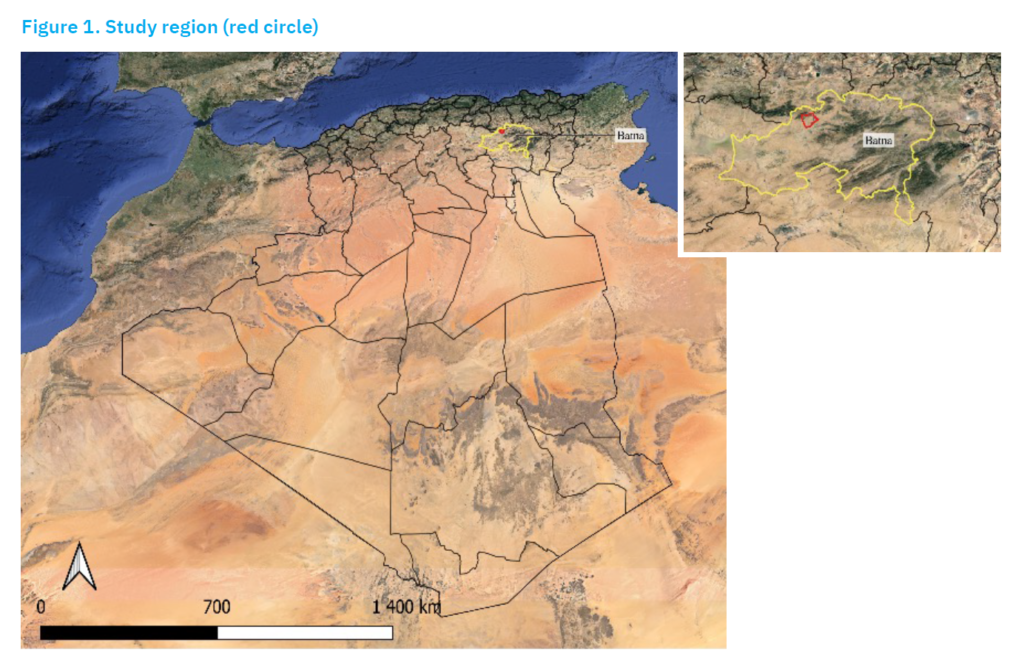
The experiment was carried out in the town of Ras El Aioun, Department of Batna, in northeast Algeria, situated at an altitude of 900–1100 meters (Figure 1). Its elevated position influences both the climate and the landscape. The town is characterised by a semi-arid climate.
Animals and Treatments
The present investigation was performed during the breeding season (September) on 35 adult Ouled Djellal ewes that were clinically healthy, non-lactating, and non-pregnant. Animals were reared in a semi-intensive system with natural lighting and had a mean body weight of 55±4.2 kg at an average age of 25±3.5 months. None of these females had previously undergone superovulation treatment. Throughout the experiment period, water and feed were provided ad libitum; the ration consisted of hay supplemented with a pelleted concentrate that included 14% protein, along with barley as an energy source.
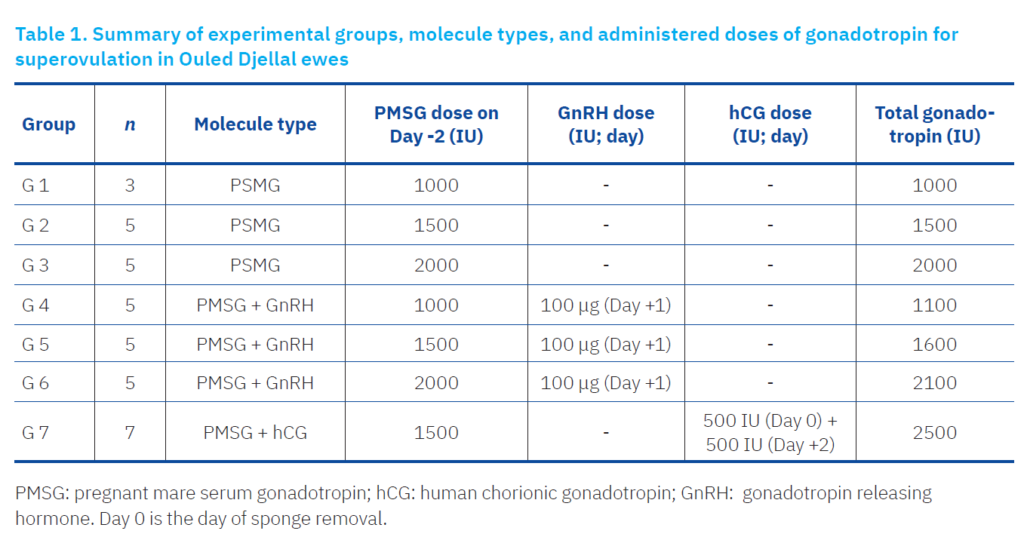
Oestrus was synchronised during the breeding season using 40 mg fluorogestone acetate (Syncro-Part®, CEVA Santé animale) intravaginal sponges inserted for 14 days. For clarity, day 0 is defined as sponge removal. Two days prior to sponge removal (Day -2), ewes were randomly assigned to seven groups and received an injection of PMSG (Folligon, Intervet® International, The Netherlands) (Table 1). The PMSG-only pool (n=13) was subdivided into three groups that received a single dose of PMSG, at doses of either 1000 IU (G1, n= 3), 1500 IU (G2, n=5), or 2000 IU (G3 n=5) on Day -2. The PMSG + GnRH pool (n=15) included three groups that received PMSG at doses of 1000 IU (G4, n=5), 1500 IU (G5, n=5), or 2000 IU (G6, n=5) on Day -2, followed by gonadotropin‑releasing hormone (GnRH; Fertagyl®, Intervet International) 100 μg i.m. on Day +1. The last group (G7; n=7) received 1500 IU PMSG on Day -2, followed by two injections of hCG (500 IU i.m.) (Chorulon®, Intervet International, Boxmeer, The Netherlands), the first on Day 0 and the second on Day + 2.
Control of the ovarian response
Laparotomy
On the eighth day post-sponge removal, an anterior mid-ventral laparotomy was conducted to assess the ovarian response (Baird, 2013). The superovulatory response was assessed by individual enumeration of corpora lutea (CL) and anovulatory follicles (AF) subsequent to the exposure of the reproductive tract (Lamraoui et al., 2014; Afri-Bouzebda et al., 2015).
Progesterone analysis
Blood samples (10 mL) were collected via jugular venipuncture into vacutainers on Day +8 (following sponge removal). Samples were centrifuged for 10 minutes at 2000×g, after which the serum was aspirated and stored at -20°C until analysis. Serum progesterone (P4) concentrations were quantified by radioimmunoassay (RIA) analysis. The sensitivity of the test was 0.05–60 ng/mL, and the intra- and inter-assay coefficients of variation were 5.8% and 9.0%, respectively.
Statistical Analysis
Statistical analysis was performed using SPSS 27.0 (SPSS Inc, Chicago, IL, USA). Data were summarised as mean ± standard error of the mean (SEM) by treatment group. The Kolmogorov-Smirnov test was used to assess the normality of data distribution. Stepwise regression analysis was performed to investigate predictor variables sequentially, with variables being added to or removed from the initial model one at a time based on their statistical significance (Belkhiri et al., 2025). The aim was to focus on factors that can effectively explain variations in ovarian response, thereby providing practical and evidence-based recommendations to enhance embryo production.
In the present study, two independent variables (molecule type and molecule dose) were examined in relation to key superovulatory ovarian response parameters, including corpora lutea count, anovulatory follicle count, progesterone concentration, and ovulation rate. Stepwise regression was employed to refine the model by eliminating variables with minimal impact on these dependent outcomes, ensuring that only the most influential predictors were retained for interpretation.
Results
Effect of molecules on ovarian response parameters
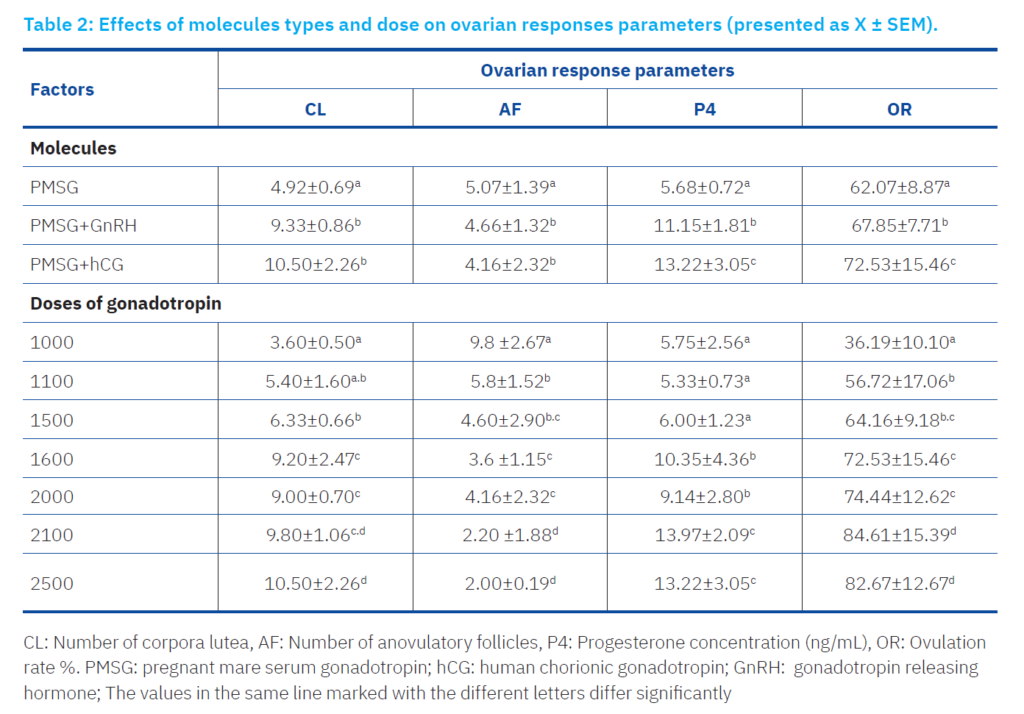
As indicated in Table 2, both molecule type (PMSG, PMSG + GnRH, PMSG + hCG) and administered dose significantly influenced the superovulatory ovarian response. The PMSG + hCG protocol yielded significantly higher (P<0.05) P4 levels (13.22±3.05 ng/mL) and ovulation rate (OR) (72.53±15.46%) compared to the PMSG-only protocol (P4: 5.68 ± 0.72 ng/mL; OR: 62.07 ± 8.87%) and PMSG + GnRH protocol (P4: 11.15 ± 1.81 ng/mL; OR: 67.85 ± 7.71%). The highest CL count was observed with the PMSG + hCG protocol. In addition, our results showed that increasing the dose of molecules led to an increase in the CL count, P4 level, and OR, whereas the AF count decreased with higher doses.
Stepwise analyses
Table 3 presents the regression parameters, including the coefficient of determination (R²) and the standard error of the estimate (SEE), for the predicted ovarian response variables (Y).
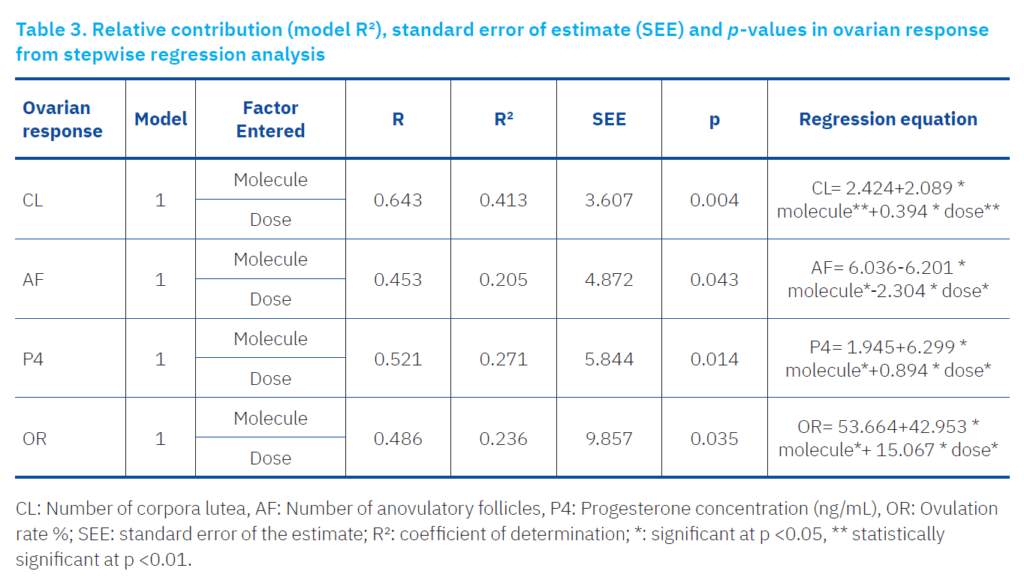
The results of this study showed that Model 1, identified as the best model (p ≤ 0.004), indicated that both molecule type and dose were significant predictors of CL count, with an R² value of 41.30% and SEE of 3.607. In the stepwise regression, molecule type entered the model first, followed by dose. The resulting equation obtained from the stepwise regression model was:
The molecule coefficient (2.089) exceeded that of dose (0.394), suggesting that the type of molecule used (PMSG alone vs. PMSG + GnRH or PMSG + hCG) exerted a greater influence on CL formation than dose alone.
Similarly, both molecule type and the administered dose were significant predictors of AF formation, as indicated by an R² value of 20.50% and SEE of 4.872. In this model, molecule type was again entered first, followed by dose. The regression equation was:
The negative coefficient for molecule (-6.201) suggests that the administration of PMSG + GnRH or PMSG + hCG, compared to PMSG alone, significantly reduced AF formation. Likewise, the negative dose coefficient (-2.304) implies that increasing the dose leads to fewer AF, likely by enhancing ovulatory response and limiting follicular persistence.
Furthermore, serum progesterone (P4) was significantly associated with molecule type and dose in the stepwise regression, as shown by a positive correlation (R = 0.521, p = 0.014), explaining 27.10% of the variation, with an SEE of 5.844. Molecule type was entered first in the regression, followed by dose. The resulting equation was:
The positive coefficient for molecule (+6.299) indicated that the administration of PMSG+GnRH or PMSG+hCG, compared to PMSG alone, is associated with a higher P4, consistent with enhanced luteal (CL) function. Likewise, the positive coefficient for dose (+0.894) indicated that increasing the gonadotropin doses is associated with increased progesterone production.
Finally, the best stepwise model (Model 1; p = 0.035), indicated that the type of molecule and the administered dose were significant predictors of ovulation rate (OR), with an R² of 23.60% and SEE of 9.857. Molecule type was entered first, followed by dose. The regression equation was:
The positive coefficient for molecule (+42.953) suggests that the administration of PMSG + GnRH or PMSG + hCG, relative to PMSG alone, is associated with higher OR. Additionally, the positive coefficient for dose (+15.067) indicates that increasing gonadotropin dose is associated with further improvement in ovulation rate.
Discussion
Superovulation is a pivotal step for enhancing embryo production, improving embryo quality, increasing cryopreservation success, and optimising fertility outcomes in sheep and goats. It remains the primary reproductive technology used for embryo production in these species (Mayorga et al., 2011; Alkan et al., 2021; Selionova et al., 2023). However, outcomes are often unpredictable, which remains a major limitation (Oliveira et al., 2021). Variability in ovarian responses and embryo production has been linked to numerous intrinsic and extrinsic factors across breeds of sheep and goats kept in temperate, subtropical, and tropical climates (Bartlewski et al., 2016).
The objective of this study was to investigate the influence of gonadotropin regimen (PMSG alone, PMSG + GnRH, or PMSG + hCG) and dose on ovarian response following superovulation treatment in Ouled Djellal ewes. Using stepwise regression, we evaluated the relative contribution of these factors to key ovarian response. To our knowledge, this study stands out as the first analysis applying a stepwise regression to superovulatory responses in Ouled Djellal ewes.
Evaluating superovulatory responses is particularly important in high genetic merit ewes, where maximising embryo yield improves the efficiency of selection and dissemination of genetics. In the Ouled Djellal breed, anarchic or uncontrolled breeding practices have been reported (Djaout et al., 2017); this situation has the possible consequence of the disappearance of phenotypic standards, loss of genetic potential, and the increase of consanguinity in the herds. Superovulation, embryo production, and transfer techniques are valuable tools for conserving and managing sheep genetic resources (Gharbi et al., 2018).
Our findings demonstrate that stepwise regression analysis identified molecule type as the primary predictor of ovarian response, with the final models explaining 41.3% of the variance in CL, 20.5% in AF, 27.10% in P4, and 23.60% in OR. In all cases, molecule type entered the model before dose, and both predictors remained significant, indicating that the gonadotropin regimen (PMSG vs. PMSG + GnRH or PMSG + hCG) exerts a stronger influence than dose alone. While the effects of protocol type on superovulation outcomes are well documented, the dose–response component remains poorly characterised in the literature, limiting direct comparison with our findings. This lack of comparative data highlights the complexity of superovulation outcomes, which are known to be influenced by multiple other factors beyond molecule type and dose, notably the ovarian status at treatment onset, including the number and size of antral follicles and the presence of corpora lutea, as well as breed, age, season, and nutritional status (Khan et al., 2022). Prior work also highlights the correlation between the superovulatory response and the number of small follicles (Gonzalez-Bulnes et al., 2000; Mossa et al., 2006), the presence of a large/dominant follicle (Gonzalez-Bulnes et al., 2002; Gonzalez-Bulnes and Veiga-Lopez, 2005), and the presence/absence of CL at the start of treatment (Gonzalez-Bulnes et al., 2002).
Our results indicated that the CL count was significantly higher in ewes treated with PMSG combined with hCG or GnRH than in those receiving PMSG alone. According to Khan et al. (2007) and Afri-Bouzebda et al. (2015), GnRH or hCG treatment after sponge removal increased the CL count and improved luteal function by inducing ovulation. Consistent with our findings, Kelidari et al. (2010) and Shabankareh et al. (2012) also reported that repeated injections of hCG following sponge removal led to an increase in the CL count.
Furthermore, adding hCG or GnRH at the end of the PMSG superovulation protocol significantly increased mean serum P4 levels. Consistent with our results, hCG is recognised for its strong luteotropic activity, enhancing luteal steroidogenic capacity and thereby increasing P4 release (Vergani et al., 2020; Dias et al., 2022; Rodrigues et al., 2023). Although hCG and GnRH can exert comparable ovarian effects, their mechanisms and kinetics differ: hCG acts independently of the pituitary via LH/hCG receptors and has a longer plasma half-life than endogenous LH, providing a more sustained luteotropic drive (Schmitt et al., 1996). As a result, hCG persists longer in the bloodstream and can stimulate both the primary corpus luteum and the formation of accessory corpora lutea. By contrast, GnRH acts indirectly by eliciting pituitary LH release; both GnRH-mediated LH and hCG, due to its LH-like activity, can deliver luteotropic support to the corpus luteum (Khan et al., 2007). In sheep, hCG treatment has been associated with an increase in large luteal cells, the appearance of additional corpora lutea on the ovarian surface, and/or an increase in the number of progesterone-secreting luteal cells, accompanied by a reduction in small luteal cells and elevated serum P4 (Schmitt et al., 1996; Nikbakht et al., 2022).
In the present study, administering hCG or GnRH after sponge removal significantly reduced the number of AF. In contradiction with our results, Armstrong et al. (1982) and Kelidari et al. (2010) found in goats that it was not possible to reduce the number of AF after eCG-superovulation followed by GnRH or hCG. According to Driancourt (2001), in superovulated females, the incidence of ovulatory failures increased, likely due to the reduced size and compromised maturation of their follicles, which may also be reflected in altered circulating gonadotropin profiles. In superovulated sheep, preovulatory follicles are typically smaller and undergo earlier maturation compared to those seen in females that have not been stimulated, leading to potential discrepancies in blood LH levels and their correlation with follicular response. Kelidari et al. (2010) proposed that the problem of AF may result not from an insufficient LH surge, but rather from some follicles failing to respond to LH at the time of release, which could also manifest in abnormal blood concentrations of LH. Armstrong et al. (1982) and Pendleton et al. (1992) suggested that ovulatory failure may be attributed to asynchronous follicular development, potentially leading to a deficiency of LH receptors in follicles still in earlier stages of maturation at the time of the endogenous LH surge, with these issues also affecting blood levels of the hormone. In this context, our post-removal GnRH/hCG trigger may have improved the synchronisation of LH-like signalling with follicular maturity, thereby reducing AF. Differences in species, breed, dose, timing, and number of GnRH/hCG injections likely contribute to the divergent outcomes reported across studies.
Conclusion
In conclusion, stepwise regression analysis identified the gonadotropin regimen as the primary factor influencing ovarian response, followed by the dose administered which provided additional explanatory power. Protocols combining PMSG with hCG or GnRH consistently outperformed PMSG alone, improving CL formation, elevating P4, increasing ovulation rate, and reducing anovulatory follicles, while yielding better model fit. These findings support the evidence-based optimisation of superovulation protocols in Ouled Djellal ewes, with implications for enhancing prolificacy, maximising embryo yield, and accelerating the dissemination of elite genetics in advanced reproductive biotechnology programs.
References [… show]
Režim aplikacije gonadotropina i predviđanje doze za superovulacijsku reakciju jajnika u ovaca pasmine ouled djellal: istraživanje postupne regresije
Ramzi LAMRAOUI1* (dopisni autor), r.lamraoui@univ-batna2.dz, orcid.org/0000-0001-9952-627X; Yamina BELKHIRI1, y.belkhiri@univ-batna2.dz, orcid.org/ 0000-0002-6215-1758; Djallel Eddine GHERISSI2, d.gherissi@univ-soukahras.dz, orcid.org/0000-0003-1615-1658; Farida BOUZEBDA-AFRI2, bfafri@yahoo.fr, orcid.org/0000-0002-4811-327X; Zoubir BOUZEBDA2, bouzebdaz@yahoo.fr, orcid,org/0000-0002-1865-5836; Aziza FERAG3, ferag.aziza@gmail.com, orcid.org/0000-0002-3966-896X; Faicel CHACHA4, f.chacha@crbt.dz, orcid.org/0000-0002-8089-8214; Souheyla BENBIA1, s.benbia@univ-batna2.dz, orcid.org/0000-0002-9558-1711.
1Department of Biology of Living Organisms, Faculty of Natural and Life Sciences. University of Batna 2, Batna (05110), Algeria
2Laboratory of Animal Productions, Biotechnologies and Health, Institute of Agronomic and Veterinary Sciences, University of Souk-Ahras, Souk-Ahras (41000), Algeria
3Laboratory of Science and Techniques for Living, University of Souk-Ahras, Souk Ahras (41000), Algeria
4Biotechnology Research Center, Constantine, Algeria
Cilj je ovoga istraživanja procjena učinka režima aplikacije gonadotropina (sam PMSG usproredno s PMSG+ GnRH ili PMSG+hCG) i doze na superovulacijske reakcije u 35 ovaca pasmine ouled djellal tijekom sezone janjenja. Svim su ovcama 14 dana stavljane intravaginalne spužvice koje su sadržale 40 mg fluorogeston acetata. Dva dana prije uklanjanja spužvica, ovce su nasumice raspoređivane u sedam skupina koje su se razlikovale po režimu i dozi. Rezultati su bili razina žutog tijela (corpus luteum, CL), anovulatorni folikuli (AF), stopa ovulacije (OR) i koncentracija progesterona (P4) u serumu. Korelacije su se procjenjivale analizom postupne regresije. Ovce koje su primale PMSG + GnRH ili PMSG + hCG iskazivale su snažniju reakciju jajnika od onih koje su primale samo PMSG. Konačni postupni modeli objasnili su varijancu od 41,3 % kod CL-a, 20,5 % kod AF-a, 27,10% kod P4 i 23,60% kod OR-a. U svakome modelu, tip molekule koji je prvi unesen više je doprinosio modelu nego dozi, naznačavajući da je režim imao jači utjecaj nego povećavanje doze. Stoga se može zaključiti da kombinacija PMSG-a bilo s hCG-om ili GnRH-om bolje utječe na parametre reakcije jajnika i općenito predvidljivosti modela nego sam PMSG. Navedeni nalazi podržavaju optimizaciju superovulacijskih protokola na temelju dokaza kod ovaca pasmine ouled djallal da bi se povećala plodnost, povećalo stvaranje embrija i pojačala diseminacija visokovrijedne genetike u naprednim programima uzgoja.
Ključne riječi: pasmina ouled djellal, superovulacija, PMSG, hCG, GnRH, progesteron, stopa ovulacije, postupna regresija, transfer embrija
