
Determination of metals and aflatoxin M1 in the milk of Croatian Cold-Blooded mares in different stages of lactation
A.Končurat, T. Sukalić, D. Mišetić Ostojić, M. Benić, M. Sedak and N. Bilandžić*
Ana KONČURAT1, koncurat.vzk@veinst.hr, orcid.org/0000-0002-7520-5751; Tomislav SUKALIĆ1, sukalic.vzk@veinst.hr, orcid.org/0009-0000-5003-6122; Dijana MIŠETĆ OSTOJIĆ 2, misetic.vzr@veinst.hr, orcid.org/0000-0002-3740-5082; Miroslav BENIĆ3, benic@veinst.hr, orcid.org/0000-0001-7594-520X; Marija SEDAK4, sedak@veinst.hr, orcid.org/0000-0001-6861-0436; Nina BILANDŽIĆ4* (corresponding author), bilandzic@veinst.hr, orcid.org/0000-0002-0009-5367.
1Department for Diagnostics, Veterinary Department Križevci, Croatian Veterinary Institute, 48260 Križevci, Croatia
2Laboratory for Microbiology and Analytical Chemistry, Veterinary Department Rijeka, Croatian Veterinary Institute, 51000 Rijeka, Croatia
3Laboratory for Mastitis and Raw Milk Quality, Department of Bacteriology and Parasitology, Croatian Veterinary Institute, 10000 Zagreb, Croatia
4Laboratory for the Determination of Residues, Department of Veterinary Public Health, Croatian Veterinary Institute, 10000 Zagreb, Croatia

https://doi.org/10.46419/cvj.57.3.5
Abstract
In this study, the concentrations of metals (arsenic (As), cadmium (Cd), copper (Cu), mercury (Hg) and lead (Pb)), and aflatoxin M1 were analysed in mare’s milk samples taken from eight mares over a period of six months during lactation. The results showed that the concentrations of metals in milk occurred in the following order: Cu > Pb > Hg > Cd > As. Key findings of the study included the determined content of metals, depending on lactation stages and animal husbandry practices. Copper had the highest concentration among the metals analysed, while Cd and As were not detected. No statistically significant differences were found in the levels of heavy metals or aflatoxin M1 across different lactation stages. However, statistically significant differences in aflatoxin M1 concentrations were observed depending on the type of animal husbandry, illustrating the influence of environmental and husbandry conditions on milk contamination. The study concludes that there is no toxicological risk for consumers of Croatian Cold-Blooded mare’s milk, which is an important finding for food safety and public health. The significance of this study lies in the provision of valuable data on the safety of mare’s milk, especially with regard to its possible contamination with toxic heavy metals and aflatoxin M1. The main objective was to determine the presence and concentrations of the listed contaminants, to evaluate the influence of lactation stage and husbandry, and to assess compliance with established safety standards.
Key words: metals; aflatoxin M1; mare’s mi
Introduction
The consumption of mare’s milk has a long tradition, especially in Central Asia and Eastern Europe, while its popularity has spread to other parts of Europe in recent decades (Martuzzi et al., 2024). The production and processing of mare’s milk is developing mainly in countries such as France, Italy, Greece and Germany (Barłowska et al., 2023), but there are also significant developments in China (Guo et al., 2019).
Due to its composition, mare’s milk offers considerable nutritional benefits that differ from other commonly consumed milks, such as cow’s and goat’s milk. It has a higher lactose content, similar to human milk, contains 70–80% water and its dry matter consists of lactose, proteins, fats, and minerals. Its protein structure, about 50% casein and 40% whey, is similar to that of human milk, making it suitable for people who are sensitive to cow’s milk proteins. Mare’s milk also has a complete amino acid profile that supports human health (Mazhitova and Kulmyrzaev, 2016). Although its total fat content is lower than cow’s milk, it is rich in beneficial polyunsaturated fatty acids such as alpha-linolenic acid and linoleic acid (Czyżak-Runowska et al., 2021). Its mineral content is lower, but still relevant, and it contains vitamins such as vitamin C, making it particularly valuable (Blanco‐Doval et al., 2024).
As milk is a crucial source of nutrition, it is very important that it is free from harmful xenobiotics and environmental pollutants. The health safety of milk is also affected by the presence of various harmful substances of chemical origin. In addition to antibiotics, anti-parasitics and hormones, the most important residue groups include mycotoxins, heavy metals and pesticides (Schopf et al., 2022). Food safety problems caused by contamination with organic pollutants have increased significantly in recent years. The pollutants are absorbed via the respiratory tract or the food chain. Many toxic substances such as dioxins, pesticides, metals and metalloids accumulate along the food chain, most of which are of anthropogenic origin. Apart from the fact that milk is an extremely biologically valuable food due to its composition, it is also a suitable medium for the development of microorganisms due to its nutritional value, so that the health safety assessment should also take this aspect into account (Czyżak-Runowska et al., 2018; Končurat et al., 2019).
Heavy metal contamination in mare’s milk poses a health risk comparable to those found in cow’s and goat’s milk. Research on heavy metal concentrations in mare’s milk is limited and mainly focuses on regions where its consumption is traditional (Alipour et al., 2023; Migdał et al., 2023). Heavy metals are generally characterised as a group of inorganic elements with metallic properties and high density. A common classification defines heavy metals as those with a density greater than 5 g/cm³, encompassing approximately 53 elements in the periodic table of elements (Duffus, 2002; Tchounwou et al., 2012; İrdemez et al., 2022). This category includes transition metals and certain metalloids known for their potential toxicity and adverse effects on human health and the environment (Feng et al., 2013). The toxicity of heavy metals often correlates with their density, with metalloids such as arsenic (As) posing risks even at low exposure levels. These elements are often referred to as trace elements as they occur in minimal concentrations (Duffus, 2002; Tchounwou et al., 2012). In this study, the heavy metals refer specifically to cadmium (Cd), arsenic (As), lead (Pb) and mercury (Hg). Monitoring these toxicologically significant metals in mare’s milk is crucial to ensure food safety and consumer health, especially as mare’s milk is often consumed raw, either fresh or frozen (Hazeleger et al., 2016; Blanco-Doval et al., 2024).
Mare’s milk can become contaminated with heavy metals through various exposure routes, including feed, water, and environmental factors (Elafify et al., 2023). The most frequently detected heavy metals in mare’s milk are As, Cd, Hg and Pb (Miclean et al., 2019; Alipour et al., 2023). These contaminants can enter the milk via contaminated feed, water, or soil, and their presence can be exacerbated by environmental factors such as industrial activities or pesticide use (Zhou et al., 2019). Research indicates that heavy metals can accumulate in the
tissues of dairy animals and subsequently transfer into the milk, a phenomenon underscored by the non-biodegradable nature of these elements (Kambli et al., 2019). Long-term exposure to these metals can lead to severe health issues, including neurological, gastrointestinal, cardiovascular, immunological, and renal damage, particularly in the case of Pb exposure (World Health Organization, 2023).
Lead, a bluish-grey metal found in trace amounts in nature, is primarily released into the environment by anthropogenic activities, including fossil fuel combustion and mining, which contribute significantly to its increased environmental concentrations (Tchounwou et al., 2012). Similarly, As is a ubiquitous element detected in various environmental matrices, and its inorganic forms include trivalent arsenite and pentavalent arsenate (Decastro et al., 2014). The adverse health effects of As exposure can include skin lesions, gastrointestinal symptoms and various types of cancer (World Health Organization, 2019a). Cadmium poses significant environmental risks due to its widespread distribution in the Earth’s crust and its common use in industrial applications (Tchounwou et al., 2012). Exposure to Cd can result in toxic effects on the kidneys and respiratory system, and it is classified as a human carcinogen (World Health Organization, 2019b). Mercury exists in different forms: elemental, inorganic and organic, each presenting distinct toxicity profiles (Clarkson et al., 2003; Zahir et al., 2005). Exposure to high levels of Hg can affect multiple systems, including the nervous and immune systems, which can lead to serious health consequences (World Health Organization, 2021).
In contrast, essential heavy metals, such as copper (Cu), play vital biochemical and physiological roles in both plants and animals. As an essential micronutrient, Cu is crucial for various biological processes (Puchkova et al., 2018). However, its excessive intake can lead to adverse effects (Gall et al., 2015; Monteverde et al., 2022). Monitoring of heavy metal residues in milk is essential to ensure food safety. Many European countries enforce regular monitoring and analyses to prevent contamination, especially given the detrimental effects of heavy metals on human health (Bilandžić et al., 2021). Nevertheless, the European Union currently only sets maximum permitted concentrations in raw cow’s milk for Pb and aflatoxin M1 (AFM1) (European Commission, 2023).
Recent studies have shown that elevated levels of heavy metals in milk can pose a significant public health risk (Alinezhad et al., 2024). Concerns about high concentrations of heavy metals, particularly Pb and Cd, persist even in pasteurised and sterilised milk, highlighting the need for stringent regulations in the dairy industry.
Aflatoxins (AF) are toxic metabolites produced by moulds such as Aspergillus flavus and Aspergillus parasiticus, and they further complicate food safety (Varga et al., 2020). Given their global occurrence, toxicity, and economic impact, AFs are among the most important groups of mycotoxins, with aflatoxin B1 (AFB1) most frequently detected in contaminated agricultural samples. AFM1 is a derivative of AFB1 found in human and animal milk if the food or feed is contaminated with AFB1 (Pleadin et al., 2023). Once consumed, AFB1 is metabolised in the liver into its hydroxylated form, AFM1, which is then excreted through the mammary glands into milk. The concentration of AFM1 in milk can vary based on factors such as dietary composition, the presence of other feed contaminants, and the overall health of the animal. Studies have reported that animal milk can contain measurable amounts of AFM1, which has been associated with the quality of feed provided (Marchese et al., 2018). AFB1 is notably the most carcinogenic of these substances, with AFM1 being its primary hydroxylated derivative (Elgerbi et al., 2004). AFM1 is less toxic than AFB1; however, both are classified as carcinogens for humans (Group 1) by the International Agency for Research on Cancer (IARC, 2012).
All these factors underline the importance of analysing for the presence of AFM1 and heavy metals in mare’s milk, as their contamination poses a significant health risk to the human population.
The aim of this study was to evaluate the concentrations of heavy metals, in particular As, Cd, Cu, Pb, Hg, and the concentration of AFM1 in mare’s milk. The aim was to assess the safety and quality of mare’s milk for human consumption, taking into account possible health risks due to contamination. In addition, the factors influencing these contaminants were investigated to improve the understanding of the food safety of mare’s milk.
Materials and Methods
Sampling
The study was conducted on milk samples from clinically healthy mares (n=8) of the indigenous Croatian Cold-Blooded breed. Mares were kept in their owners’ stables and spend the grazing season on communal pastures within Lonjsko Polje Nature Park. This area is located in the rural central region of Croatia, along the middle reaches of the Sava River, between the city of Sisak and the town of Nova Gradiška (Lonjsko Polje Nature Park Bulletin, 2008).
The mares, aged between 5 and 9 years, foaled from late February to early May. They were housed in brick stables with wooden or concrete floors. They were fed in mangers, with a diet consisting of concentrates and meadow hay. The concentrate was a mixture of ground maize and oats in equal proportions. The foals of the mares included in the study were weaned at the age of 6–7 months.
The volume of milk collected varied according to milking conditions, ranging from a minimum of 50 mL to a maximum of 350 mL, with the majority of samples between 200–250 mL. Two hours prior to sampling, the foals were separated from their mothers, remaining in close enough proximity to prevent suckling and ensure that the mares had sufficient milk for the study. If a mare showed extreme restlessness and irritability due to separation and milk let-down could not be stimulated by other means (such as gentle udder massage or contact with the foal), the foal was permitted to suckle briefly before removing it to commence milking.
During the six-month lactation period, milk samples were taken from eight mares on days 10, 40, 60, 120 and 180 (± 2 days) by manual milking. All sampling sessions were successful, except for one mare at the first milking on day 10, so a total of 39 samples were collected. The colostrum period was not included in the study. The milk was filled into glass bottles, labelled, transported to the laboratory and stored at 4–8°C until analysis.
Standard preparation
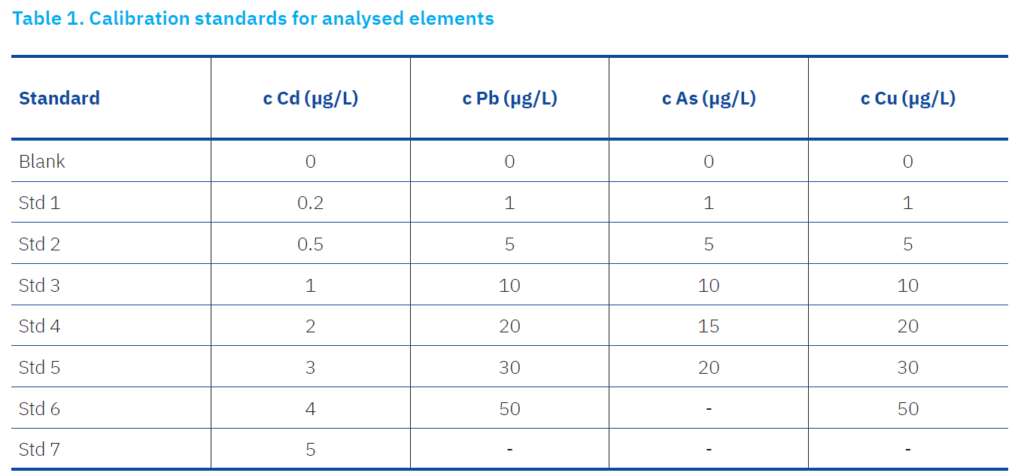
All reagents used were at least reagent grade, including HNO3 (69.5%, Analytical Reagent grade, Carlo Erba, Cornaredo, Italy), H2O2 (30–32%, Ultrapure-for trace analysis, Carlo Erba, Cornaredo, Italy), and HCl (37% Analytical Reagent grade, Carlo Erba, Cornaredo, Italy). Double deionised water (Milli-Q Millipore, 18.2 MΩ/cm resistivity) was used for all dilutions. Calibration standards were prepared using element standard solutions at a concentration of 1 g/L for each element (Table 1), supplied by Perkin Elmer (Perkin Elmer, USA). The stock solution was diluted with 0.2 % (v/v) HNO3.
Matrix modifiers consisting of 0.005 mg Pd(NO3)2 and 0.003 mg Mg(NO3)2 (Perkin Elmer, USA) were used for atomisation of As, Cd, Cu and Pb. When preparing the working standards for mercury (Hg), 1 mL concentrated HNO3, 0.1 mL 10% K2Cr2O7, and 0.1 mL concentrated HCl were added to each working standard, all prepared in amber glass volumetric flasks.
Sample preparation
The sample preparation for the metal determination in mare’s milk was carried out by wet digestion in a microwave oven to destroy the organic components of the sample. The microwave digestion of samples was performed according to a predefined programme. Samples (0.5 g) were digested with 4 mL HNO3 (65% v/v) and 2 mL H2O2 (30% v/v) using a closed microwave system Multiwave 3000 (Anton Paar, Graz, Austria). A blank digestion was performed in the same way for comparison. The digestion programme started at a power of 500 W, was then ramped up for 1 min and held for 4 min. The digestion programme commenced at a power of 500 W, followed by a 1 min ramp-up time and a 4 min hold time. In the next step, the power was increased to 1000 W, with a ramp-up time of 5 min and a hold time of 5 min. The final step began at 1400 W, a ramp-up time of 5 min and a holding time of 10 min. After digestion, the samples were diluted with double deionised water to a final volume of 50 mL.
Determination of metals
The analyses of As, Cd, Cu and Pb were carried out by graphite furnace atomic absorption spectroscopy using an AAnalyst 800 atomic absorption spectrometer (Perkin Elmer, USA) equipped with an AS 800 autosampler (Perkin Elmer, USA). For the graphite furnace measurements, argon was used as inert gas and pyrolytically coated graphite tubes with a platform were used. The atomic absorption signal was measured in peak area mode against a calibration curve. Mercury (Hg) in mare’s milk samples was quantified without acid digestion using the AMA-254 (Advanced Mercury Analyzer, Leco, Poland), which uses direct combustion of the sample in an oxygen-rich atmosphere.
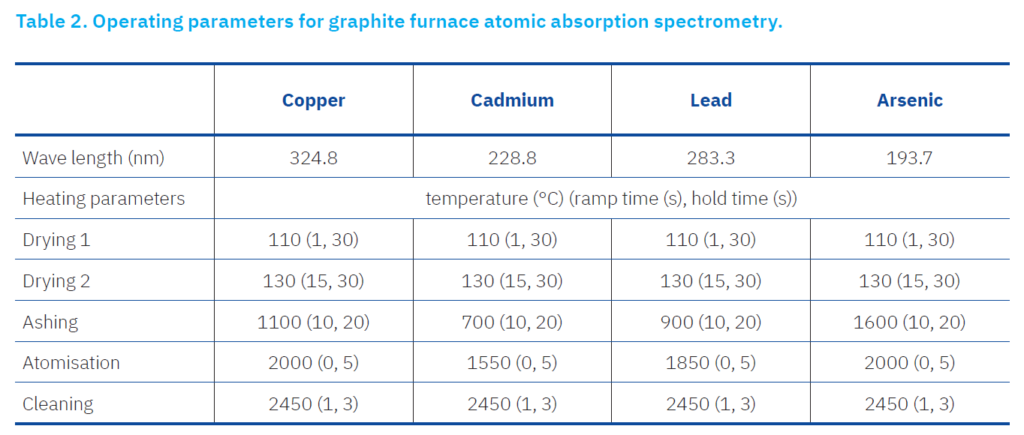
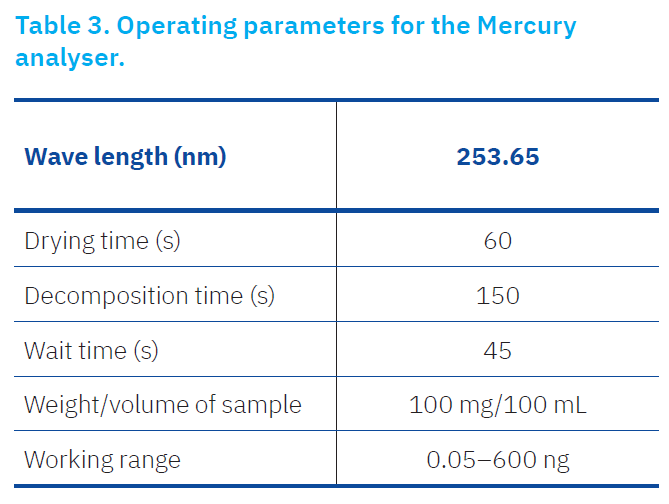
The operating parameters for the atomic absorption spectrometry analyser and the graphite furnace programme were summarised as in Table 2. In the gas phase, the argon flow was set to 250 mL/min, while the sample volume was 20 µL, and the modifier volume was 5 µL for all measured metals. The parameters for the Mercury analyzer are listed in Table 3.
All samples analysed in batch were comprised of a reagent blank control, negative control (a sample not found to contain the analysed analyte in previous analyses) and certified reference material, prepared in duplicate.
The limits of detection (LODs) were calculated as three times the standard deviation of 10 consecutive measurements of the reagent blank value multiplied by the dilution factor used for sample preparation. LOD values determined were (mg/kg): As 0.0003, Cd 0.0003, Cu 0.002, Hg 0.002, and Pb 0.004.
Determination of AFM1
The concentration of AFM1 was determined using the enzyme immunoassay (EIA) method by R-Biopharm RIDASCREEN® kit (R-Biopharm AG, Darmstadt, Germany). The test is based on the antigen-antibody reaction for the detection of AFM1. The wells were coated with immobilised antibodies, followed by the addition of anti-aflatoxin antibodies, samples and an enzyme conjugate. Free AFM1 competes with the conjugate for binding sites. After washing out the unbound conjugate, a substrate 3,3′,5,5′-Tetramethylbenzidine (TMB) was added and the reaction stopped with sulphuric acid. The colour intensity measured at 450 nm is inversely related to the levels of AFM1. The EIA kit used supports a total of 96 tests. Milk samples were stored at 2–8ºC (up to 24 hours) or at -18ºC (up to three months) and centrifuged to remove fat prior to analysis. Absorbance values are expressed as percentages relative to the zero standard. Preparation of standard stock and working solutions was as previously described (Bilandžić et al., 2014a).
The method was validated according to the guidelines of the European Commission (European Commission, 2002) and previously described (Bilandžić et al., 2014a). The LOD and limit of quantification (LOQ) were calculated by adding three and 10 times the standard deviation of 20 blank samples to the mean blank value. The validation resulted in the following values (ng/kg): LOD 22.2, LOQ 34.2.
Statistical analysis
Statistical calculations were conducted using Small Stata 13.1 (StataCorp LP, 4905 Lakeway Drive, USA). Concentrations were expressed as median, minimum, and maximum values. The Shapiro-Wilk test was employed to assess the distribution of the data. Statistically significant differences (P < 0.05) in metal concentrations across different days of lactation, as well as for AFM1 between sampling locations, were analysed using the Kruskal-Wallis test.
Results and Discussion
Concentrations of toxic heavy metals (Pb, Cd, Hg, As) in mare’s milk
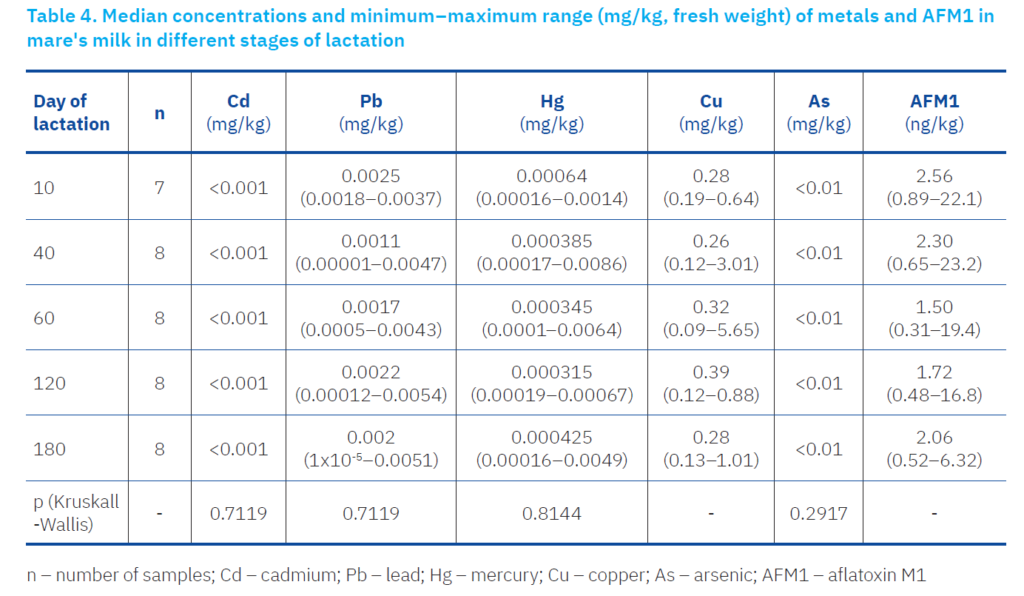
Concentrations of heavy metals in mare’s milk at different stages of lactation, specifically between days 10 and 180, are presented in Table 4. The median concentrations of metals were as follows (mg/kg): Pb 0.001–0.0025, Hg 0.00064–0.000425. As and Cd were not detected in any of the milk samples. There were no statistically significant differences (p > 0.05) in the concentrations of heavy metals across the various stages of lactation.
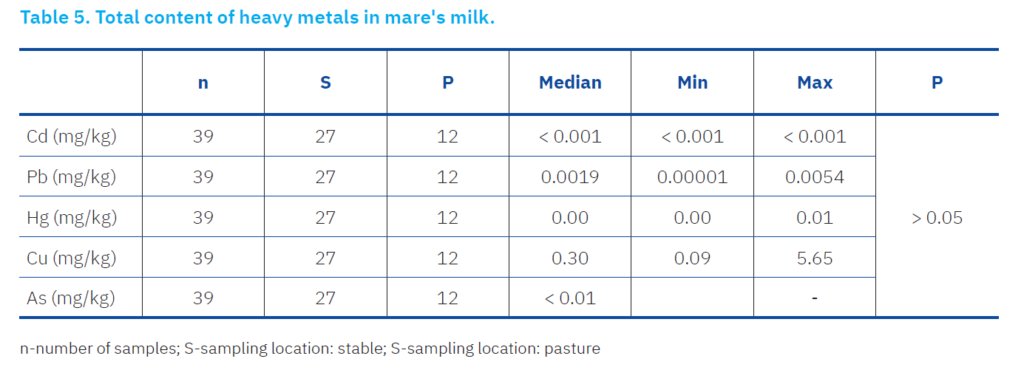
The concentrations of the analysed metals in mare’s milk are presented in Table 5. A comparison of the contaminant concentrations in the mare’s milk of animals housed in stables versus those grazing on pasture revealed that the observed differences in metal concentrations were not statistically significant (P > 0.05).
The Pb content was low with a mean concentration of 0.0019 mg/kg, and an observed range of concentrations from 0.00001 to 0.0054 mg/kg. As expected, all Pb concentrations in the mare’s milk samples were well below the maximum limit of 0.020 mg/kg (wet weight) set by the European Commission Regulation (European Commission, 2023), considering that the animals were grazing on the common pastures in Lonjsko Polje Nature Park.
Compared to Croatian studies on Pb concentrations in cow and goat milk conducted between 2010 and 2014 (Bilandžić et al., 2016), where Pb concentrations ranged between 10.8 and 12.2 µg/kg in cow’s milk and between 9.33 and 60.0 µg/kg in goat’s milk, the concentrations found in mare’s milk were almost ten times lower. This can be attributed to nutritional and environmental factors. The diet of the mares in this study was primarily based on forages such as hay, ground maize and oats, and pasture grass, which generally have lower levels of contamination than the concentrates commonly fed to dairy cows. Miclean et al. (2019) measured the metal content in raw milk and reported a median Pb content of 0.018 mg/kg. They also found that the presence of Pb in dairy products could be related to the chemical affinity of casein for lead. In a study focusing on heavy metals in mare’s milk, Alipour et al. (2023) found Pb concentrations ranging from 4.8 to 10.24 µg/L, which is lower than the 0.069 mg/kg reported by Kalashnikova et al. (2019).
In contrast to the results of this study, Kalashnikova et al. (2019) reported Cd and As concentrations of 0.004 mg/kg and 0.016 mg/kg, respectively, while Alipour et al. (2023) observed ranges of 0.7 to 6.6 µg/kg for Cd and 0.69 to 1.4 µg/kg for As.
A study specifically examining raw milk in Yazd, Iran, indicated the presence of heavy metals, with concentrations depending on various environmental factors and feeding conditions. That study indicated that mare’s milk can accumulate heavy metals from contaminated soils and feeds, reflecting the level of environmental pollution in the surrounding area (Alipour et al., 2023). In addition, systems such as soil-feed-milk-manure act as conduits for the transfer of heavy metals, and establish a link between the contamination of pastures and the quality of milk produced (Kozhanova et al., 2021).
Concentrations of trace element (Cu) in mare’s milk
Copper, as an essential microelement involved in various biochemical processes, should be present in food; however, excessive amounts can lead to toxic effects. There is a scarcity of data regarding Cu and other trace elements concentrations in mare’s milk. In a study examining the macro- and microelement content (Csapó-Kiss et al., 1995), it was found that the Cu content in mare’s milk was 1.5 to 2.5 times higher than in cow’s milk, while other trace elements were present in lower or comparable amounts (Blanco-Doval et al., 2024). According to Alipour et al. (2023), the Cu concentration in raw mare’s milk was between 72.11 and 75.12 µg/L, indicating a relatively low content compared to other dairy products, although certain types of milk may exhibit higher levels of this essential trace element.
In this study, the Cu concentration in mare’s milk ranged from 0.09 to 5.65 mg/kg, with a median value of 0.30 mg/kg (Table 5). Exceptionally high Cu concentrations (3.01, 3.33, 5.65 and 4.01 mg/kg) were detected in the milk samples of four mares from the same owner that were collected on day 60 of the study (Table 6). These mares were housed in stalls during this period and were fed mainly hay. Although the concentrations of contaminants in feed were not analysed in this study, a research study conducted in Poland from 2016 to 2018 (Kołacz et al., 2020) measured Cu and zinc concentrations in hay and wheat grain, reporting Cu values ranging from 3.87 to 5.27 mg/kg in wheat and a maximum concentration of 10.10 mg/kg in hay.
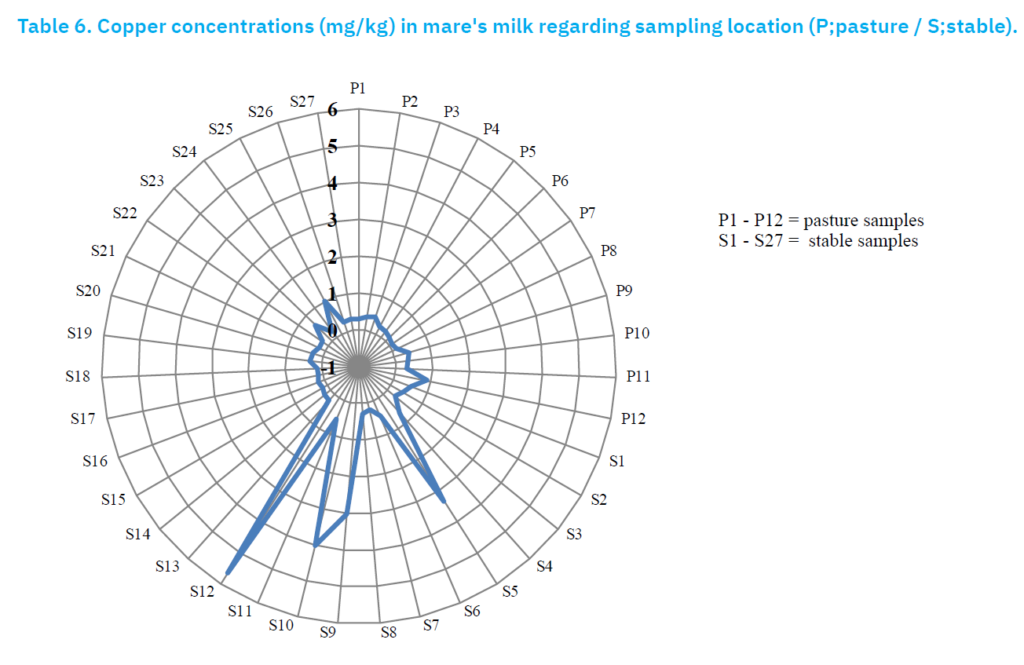
It has been reported that monogastric species and hindgut-fermenting herbivores use metabolisable dietary energy more efficiently than ruminants, especially at higher cell wall content. It is also known that the influence of diet on milk composition is more direct in the Equidae family species than in ruminants (Doreau and Martin-Rosset, 2011; Miraglia et al., 2020). Due to the lack of data regarding the origin of the meadow hay fed to mares, we can only hypothesise that the feed contributed to the temporary increase in Cu levels. This assumption is supported by the fact that the Cu concentrations in the milk samples of the same animals on day 40 of lactation were significantly lower (i.e., 0.30, 0.69, 0.22 and 0.15 mg/kg). Similarly, Cu concentrations of 0.54, 0.46, 0.42 and 0.12 mg/kg were found on day 120 of lactation.
In studies on raw cow’s milk (Miclean et al., 2019), a Cu content of 0.0286 mg/kg was determined, which is comparable to the values in mare’s milk (0.030 mg/kg). Sujka et al. (2019) reported that the Cu content in dairy products varies greatly, ranging from 0.0015 to 4.94 mg/kg. A study on mare’s milk from Inner Mongolia reported a Cu concentration of 0.11 mg/kg (Guo et al., 2019). In a risk assessment study from Iran (Alipour et al., 2023), the Cu content in mare’s milk was estimated at 72.11 to 75.12 µg/L, which is lower than the 0.126 mg/kg reported by Bilandžić et al. (2014b) and also lower than the results of the current study. In donkey’s milk, Cu concentrations ranged from 0.08 to 0.3 mg/kg, with an average value of 0.16 mg/kg (Fantuz et al., 2009). In summary, the Cu concentrations in mare’s milk observed in our study are consistent with and comparable to results in the current literature, suggesting that Cu levels are influenced by factors such as dietary intake and lactation stage. Further research with large-scale sampling and evaluation across different feeds and mare breeds could provide valuable insights into optimising the nutritional value of mare’s milk, particularly with regard to Cu and other trace elements.
Concentrations of AM1 in mare’s milk
Median levels of AFM1 in mare’s milk at different stages of lactation ranged from 1.50 to 2.56 ng/kg (Table 4), with an overall median of 2.02 ng/kg (Table 7). The analysis of AFM1 concentrations in mare’s milk reveals significant differences between the sampling sites. The median AFM1 concentration in stable samples was 2.55 ng/kg, which was significantly higher than the median concentration in pasture samples, recorded at 1.39 ng/kg, with statistical significance confirmed (p<0.001). Nevertheless, all AFM1 values were well below the maximum permitted limit of 50 ng/kg established by the European Commission (European Commission, 2023).
In recent times, high AFM1 contamination reported in different milk types and dairy products has become an important public health issue worldwide. Contrary to this study, higher levels of AFM1 in mare milk have been reported (6.48–25.45 ng/kg) with an overall mean of 3.39±5.87 ng/L (Aydemir Atasever et al., 2020).
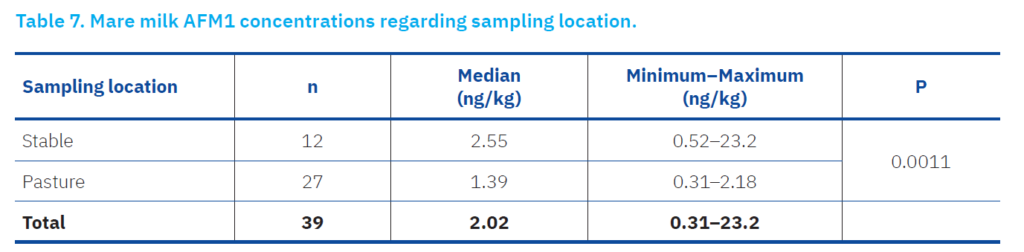
These results highlight the significant influence of environmental conditions and feeding practices in conjunction with the respective sampling locations on AFM1 concentrations in mare’s milk. Pasture conditions do not create an environment conducive to increased mould growth and AFB1 production, so the levels of AFM1 are also low. The increased AFM1 concentrations in the milk sampled in the stables could be an indication of the quality and type of forage used, as farmers use stored forage, which may have higher AFB1 concentrations compared to fresh pasture forage (Li et al. 2017). Feed storage conditions in the barns should be controlled to reduce the number of moulds that develop during storage and thus the risk of AFB1 contamination.
In addition to determining the presence of AFM1 and heavy metals, it would be useful to extend further analysis to the determination of other critical contaminants in mare’s milk, such as mycotoxins, pesticides, biogenic amines and pathogenic bacteria. Such a comprehensive analysis could contribute significantly to reducing health risks and increasing food safety for consumers.
Conclusions
The analysis of toxic heavy metals and trace elements in mare’s milk provides valuable insights into the safety and quality of this product. The Pb concentrations were notably low, well below the maximum limit of 0.020 mg/kg established by the European Commission. This suggests that the environmental conditions in Lonjsko Polje Nature Park are instrumental in maintaining low heavy metal concentrations in mare’s milk. In comparison to other studies involving cow and goat milk, mare’s milk demonstrated a significantly lower Pb content.
The analysis of trace elements revealed varying concentrations of Cu, with significant peaks observed on specific days of lactation, particularly influenced by dietary factors. This underscores the necessity for ongoing research to determine the effects of different feeding practices on trace element content.
Significant differences in contaminant indicators in mare’s milk were observed exclusively for AFM1, particularly concerning sampling location. Milk sourced from contaminant-free pastures, such as those in Lonjsko Polje Nature Park, exhibited lower AFM1 values, whereas milk from stables showed higher concentrations. The elevated AFM1 levels detected in milk from mares kept indoors were likely attributable to the use of feed that may contain increased levels of aflatoxin. Nevertheless, all AFM1 concentrations remained well below the maximum permitted levels, indicating safety in terms of mycotoxin contamination.
Although mare’s milk typically contains low levels of heavy metals and aflatoxins, continuous monitoring, along with careful attention to feeding practices and environmental factors, is essential to ensure the safety of this dairy product. Further research involving larger sample sizes and diverse feeding methods would enhance our understanding of the nutritional value and contamination risks associated with mare’s milk, ultimately helping to realize the health benefits of this unique dairy product for consumers.
References [… show]
Određivanje metala i aflatoksina M1 u mlijeku hrvatskih hladnokrvnih kobila u različitim fazama laktacije
Ana KONČURAT1, koncurat.vzk@veinst.hr, orcid.org/0000-0002-7520-5751; Tomislav SUKALIĆ1, sukalic.vzk@veinst.hr, orcid.org/0009-0000-5003-6122; Dijana MIŠETIĆ OSTOJIĆ2, misetic.vzr@veinst.hr, orcid.org/0000-0002-3740-5082; Miroslav BENIĆ3, benic@veinst.hr, orcid.org/0000-0001-7594-520X; Marija SEDAK4, sedak@veinst.hr, orcid.org/0000-0001-6861-0436; Nina BILAMDŽIĆ4* (dopisni autor), bilandzic@veinst.hr, orcid.org/0000-0002-0009-5367.
1Laboratorij za dijagnostiku, Veterinarski zavod Križevci, Hrvatski veterinarski institut, 48260 Križevci, Hrvatska
2Laboratorij za mikrobiologiju i analitičku kemiju, Veterinarski zavod Rijeka, Hrvatski veterinarski institut, 51000 Rijeka, Hrvatska
3Laboratorij za mastitise i kakvoću sirovog mlijeka, Odjel za bakteriologiju i parazitologiju, Hrvatski veterinarski institut, 10000 Zagreb, Hrvatska
4Laboratorij za određivanje rezidua, Odjela za veterinarsko javno zdravstvo, Hrvatski veterinarski institut, 10000 Zagreb, Hrvatska
Ovim istraživanjem analizirane su koncentracije metala (arsena (As), kadmija (Cd), žive (Hg), olova (Pb) i bakra (Cu)), kao i aflatoksina M1, u uzorcima kobiljeg mlijeka prikupljenog od osam kobila tijekom šestomjesečne laktacije. Rezultati su pokazali da su koncentracije metala u mlijeku rasle u sljedećem redoslijedu: Cu > Pb > Hg > Cd > As. Ključni nalazi istraživanja uključuju utvrđene koncentracije metala, u odnosu na faze laktacije i načine držanja životinja. Bakar je imao najveću koncentraciju među analiziranim metalima, dok su koncentracije Cd i As bile ispod granice detekcije (LOD). Nisu uočene statistički značajne razlike u razinama teških metala i aflatoksina M1 tijekom različitih faza laktacije. Međutim, utvrđene su statistički značajne razlike u koncentracijama aflatoksina M1 ovisno o načinu uzgoja životinja, što ukazuje na utjecaj okolišnih faktora i uvjeta uzgoja na kontaminaciju mlijeka. Ova studija zaključuje da za potrošače mlijeka hrvatskih hladnokrvnih kobila ne postoji toksikološki rizik, što predstavlja značajan nalaz s obzirom na sigurnost hrane i javno zdravlje.
Ključne riječi: metali, aflatoksin M1, kobilje mlijeko
